From digitising artefacts and building databases to using QR codes coupled with 3D technology for heritage interpretation, Dak Lak Province is gradually modernising the ways it preserves, manages and promotes cultural values.
Expanding access to heritage
Technology is opening up new ways for the public to engage with heritage while supporting management efforts. Rather than simply viewing artefacts behind display cases or reading information panels, visitors to Phu Yen Museum can now look up artefact details on computers through an online collection management system. Museum staff can also quickly retrieve information involving artefact names, identification codes, characteristics and storage locations, replacing time-consuming manual searches through paper records.
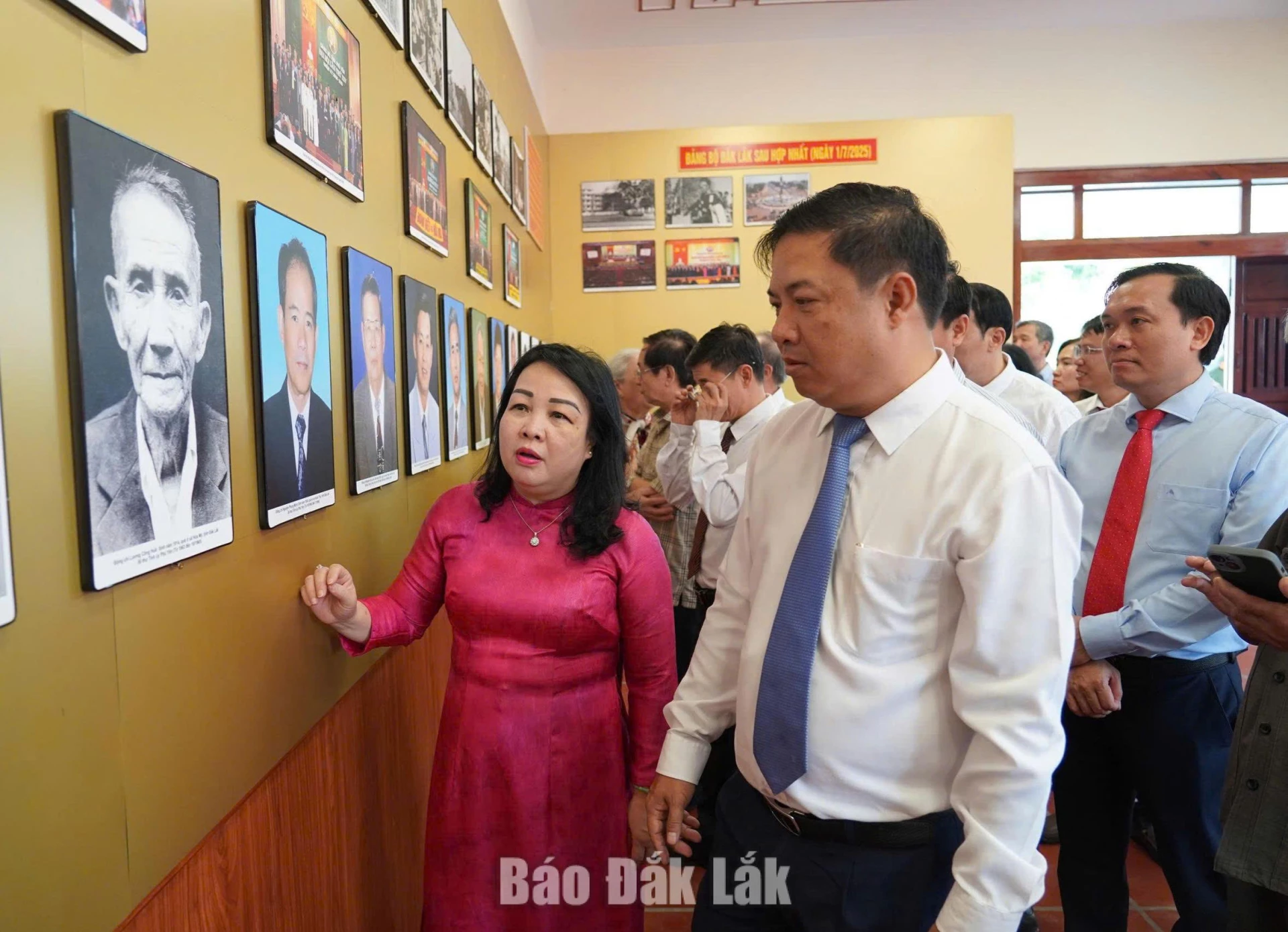 |
| Comrade Luong Nguyen Minh Triet, Member of the Party Central Committee, Secretary of the Provincial Party Committee and Head of the Provincial National Assembly delegation, together with comrade Cao Thi Hoa An, Member of the Party Central Committee, Standing Deputy Secretary of the Provincial Party Committee and Chairwoman of the Provincial People’s Council, joining other delegates in visiting the exhibition house at the historical site where Phu Yen’s first Communist Party cell was established, now located in Dong Xuan Commune, Dak Lak Province. |
In 2023, Dak Lak Museum piloted an automatic Audio Guide system integrated with QR codes for 33 representative artefacts in its permanent exhibition galleries, allowing visitors to independently access detailed information about the collections.
QR code applications have also been extended to outdoor areas, linking museum visits with environmental education. Accordingly, all trees across the museum grounds have been labelled with QR codes containing eight standardised information fields, including species names, scientific names, origins, distribution and uses.
The museum has also made 68 videos introducing its tree collection available on its official YouTube channel, Plants in DakLak Museum, along with 10 videos featuring thematic exhibitions on its web portal. These resources enable the public to explore local heritage remotely.
Another notable development is the digitisation of exhibition spaces using 3D technology. Dak Lak Museum has completed 3D scans of all permanent exhibition spaces, as well as its thematic exhibition on traditional costumes of ethnic groups in Dak Lak. This allows audiences at home and abroad to explore the provincial distinctive cultural heritage without geographical constraints. Interactive screens installed in exhibition areas also enable visitors to look up information independently.
These approaches make exhibitions more visually engaging as well as encourage visitors to explore heritage actively, particularly schoolchildren, students and younger audiences.
Digitalisation for long-term heritage preservation
In line with the Prime Minister’s Programme on the Digitisation of Vietnamese Cultural Heritage for 2021 - 2030, tasks involving the digitisation of heritage site records, museum artefacts, and tangible along with intangible cultural heritage have been incorporated into local plans for developing science and technology, promoting innovation while advancing digital transformation.
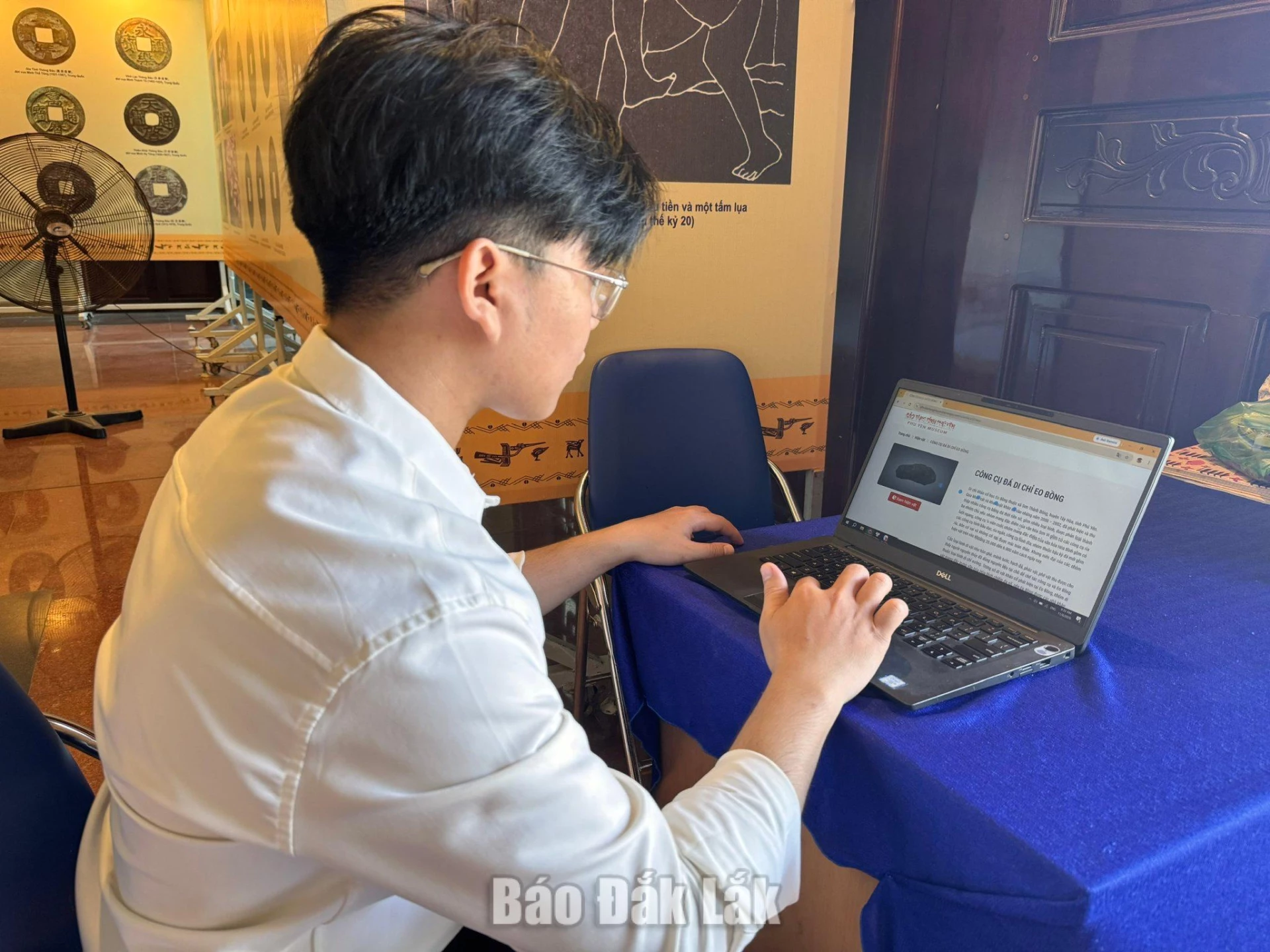 |
| Local resident exploring information about artefacts on Phu Yen Museum’s website. |
Ms. Vo Thi Phuong, Director of Dak Lak Museum, said the museum would continue improving its automatic Audio Guide system integrated with QR codes, accelerate artefact digitisation and coordinate the provision of data for integration into the provincial digital map of tourist destinations. These efforts are expected to help connect heritage information with tourism promotion activities.
In practice, heritage digitisation goes beyond converting documents into electronic formats or uploading artefact images to the internet. More importantly, it involves building an interconnected, reliable data system that can be effectively exploited over the long term. Alongside investment in infrastructure, equipment and software, specialist staff also need to be equipped with technological skills alongside expertise in digitisation. When properly implemented, technology can become an effective tool for supporting heritage conservation, management and the promotion of its values.
Translated by HAI LOAN