
Alongside investing in infrastructure and improving digital platforms, Dak Lak is focusing on building a digital data system to effectively harness this resource in service of government agencies, enterprises combined with residents.
Dak Lak has identified digital data development as one of its key priorities in implementing Politburo Resolution No. 57-NQ/TW on breakthroughs in the development of science and technology (S&T), innovation along with national digital transformation (DX).
Comrade Do Huu Huy, Alternate Member of the Party Central Committee, Deputy Secretary of the Provincial Party Committee and PPC Chairman, emphasised that the data centre is not merely technical infrastructure but also a foundation for the province to harness a precious resource of the 21st century. Data must be built to the standards of being “accurate, complete, clean and live”, while also being shared to generate real value for the community. From this data, the agriculture sector can forecast crop seasons as well as optimise production, the tourism sector can develop products that match market demand, and the authorities will have a firmer basis for policymaking alongside can support enterprises timely.
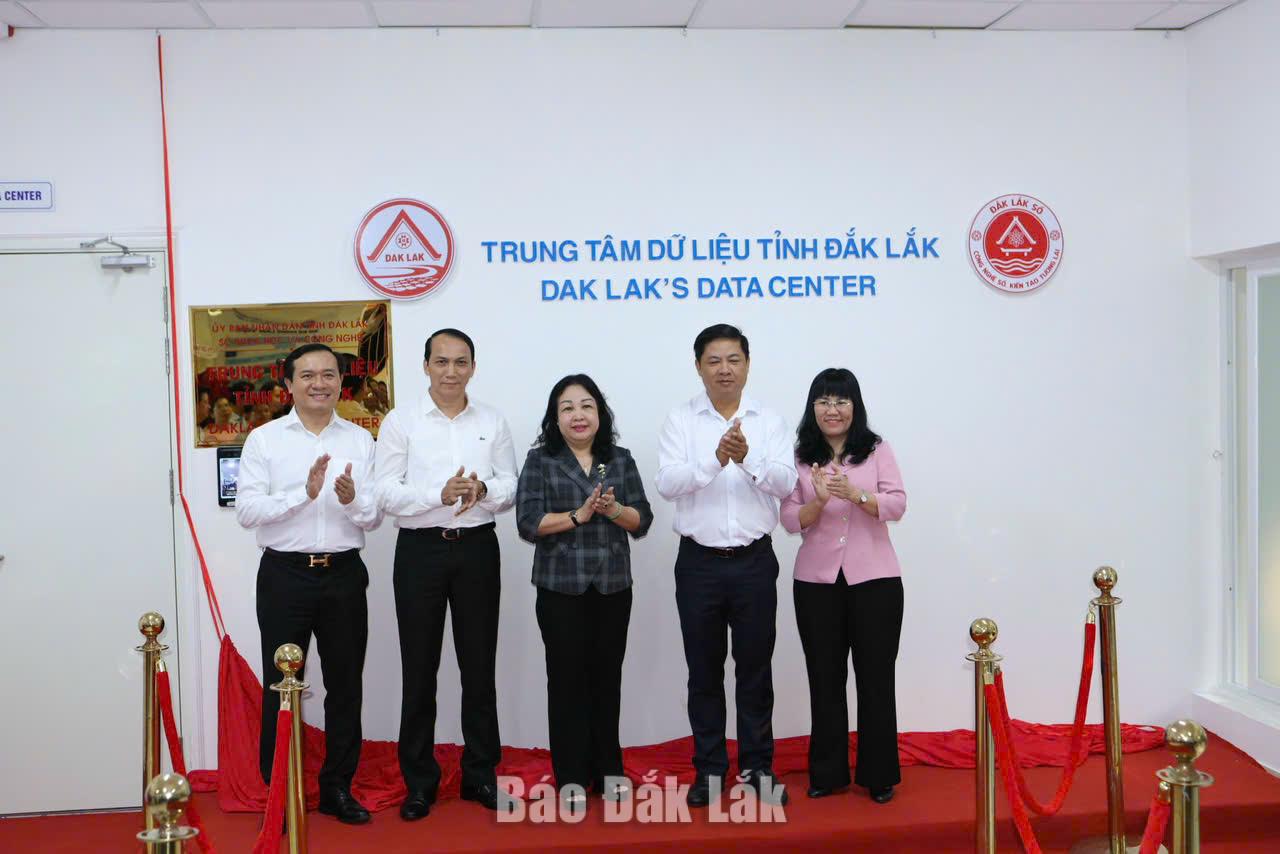 |
| Dak Lak provincial leaders inaugurating the provincial data centre. |
To translate this vision into practice, the province is gradually completing its architectural frameworks to establish a unified foundation for data connection, integration, sharing and exploitation, while expanding telecommunications infrastructure. To date, mobile network coverage has reached 100% of the population, including 4G coverage at 100% and 5G coverage at 96%.
One practical application is the Dak Lak Provincial Management Dashboard, which has been operational since September 15, 2026. It allows provincial leaders to track the task implementation progress in one place and promptly identify targets at risk of delay so that timely corrective action can be taken.
The effectiveness of data connection is also evident in essential sectors. All 340 medical examination and treatment facilities province-wide have deployed information lookup with citizen identity cards or VNeID. More than 2.58 million health insurance cards have been synchronised, while 769,900 electronic health records have been integrated. Connecting population data with healthcare data helps simplify medical examination alongside treatment procedures and make it easier for residents to use the services.
Putting data into practice at the grassroots
Drawing on the provincial data infrastructure and shared systems, DX is being embedded strongly in the operations of grassroots authorities.
In Ea Kao Ward, IT is being applied to administration, document processing together with administrative procedure handling. Currently, 100% of the ward's officials and civil servants use the document management and administration system. All documents issued by the Ward’s Party Committee coupled with People's Committee are processed and digitally signed online. The application of population data, electronic identification combined with digital platforms also helps shorten processes and serve residents more efficiently.
 |
| Officers at the Ea Kao Ward Public Administration Service Centre processing applications based on digital data. |
However, departments, agencies along with 102 communes and wards are required to proactively connect to as well as update data in the shared system, ensuring that information is accurate, synchronised and shareable. Simultaneously, officials' together with civil servants' capacity to exploit data must be strengthened, personal data protection enhanced and information security ensured.
Comrade Ra Lan Truong Thanh Ha, Deputy Director of the Dak Lak Provincial Department of S&T, said that developing shared data requires close coordination among departments, agencies and localities. Sector-specific databases must be standardised as well as regularly updated to ensure their connectivity, sharing and exploitation.
In 2025, the digital economy accounted for 7.67% of Dak Lak's GRDP. The province aims to increase this share to approximately 30% by 2030. Achieving this target requires the province to standardise, connect alongside effectively exploit data, turning it into value for management, production and business, as well as a new growth driver.
Translated by KHUONG THAO