Fuel price fluctuations are placing additional pressure on construction firms, particularly contractors involved in key infrastructure projects.
Nang Ban Mai Investment Group JSC is currently implementing several major provincial projects, including coastal road sections and Tuy Duong resettlement area. Mr. Pham Van Nhat, Head of Technical Department, said most construction vehicles run on diesel, driving costs upward. However, as contracts were signed earlier, price adjustments remain difficult. For long-term projects, continuous fuel price volatility has complicated financial planning. Enterprises have been forced to accept lower profit margins to maintain progress while avoiding risk of contract breaches.
According to a representative of Thanh Trung JSC, although some contracts include price adjustment clauses, revisions depend on official price indices announced by State authorities. Market prices have fluctuated rapidly and rising far beyond these indices, making cost balancing increasingly challenging for businesses.
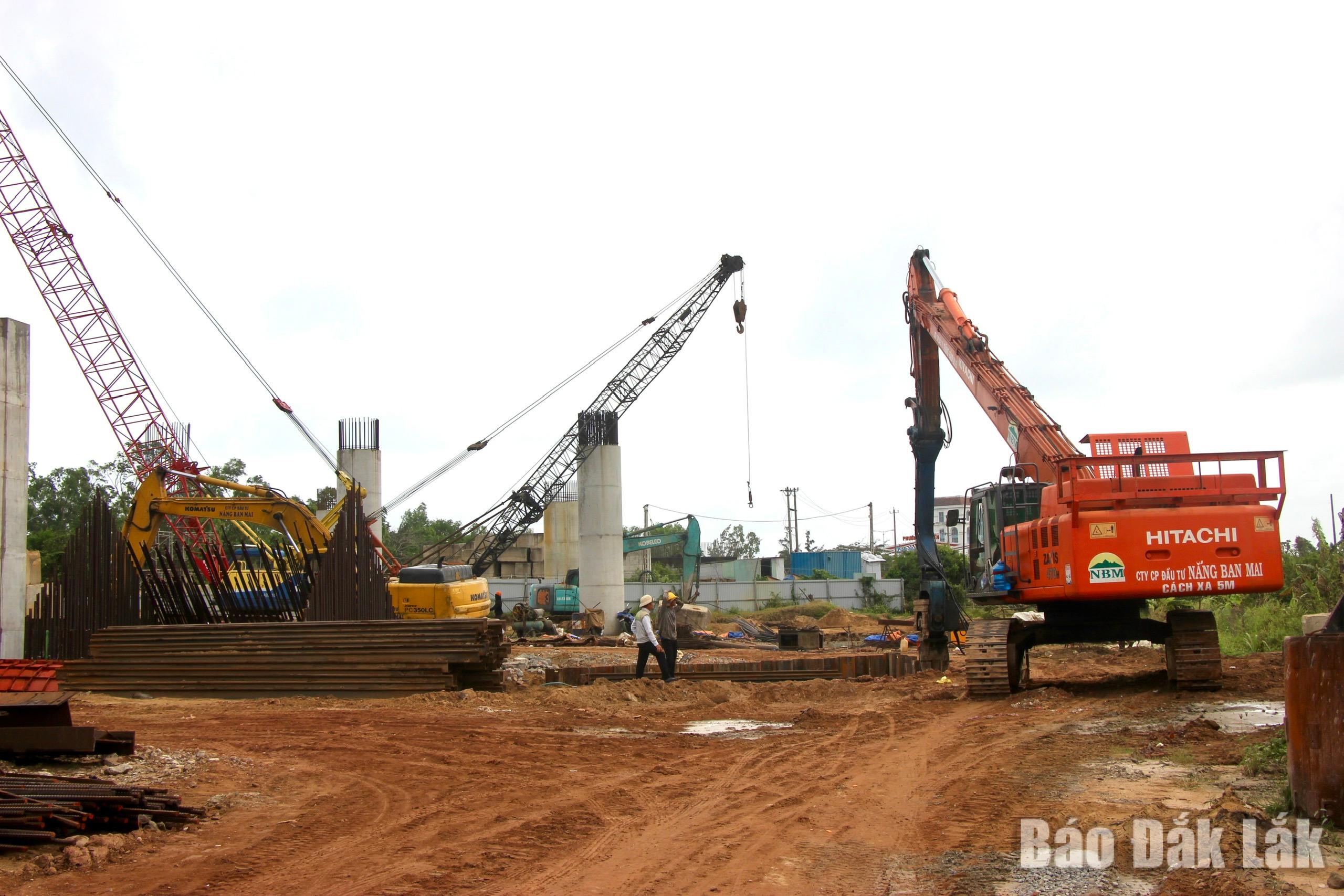 |
| Contractor ensuring progress on handed-over sections of coastal road project. |
Under mounting cost pressure, construction firms have proactively introduced various measures to reduce fuel consumption while optimising construction processes. These include rearranging work shifts, limiting machinery operation during peak hours, intensifying equipment maintenance to minimise fuel waste, alongside strict control of consumption norms for each project component. Simultaneously, companies have taken initiative in securing fuel supply at reasonable levels, ensuring construction activities proceed without disruption.
Policy boost needed
Amid continued upward volatility in fuel prices, many enterprises believe internal measures such as cost-cutting and operational optimisation can only partly ease pressure, while broader challenges still require support from macro-level policies as well as mechanisms.
During a working visit to Dak Lak, Deputy Prime Minister Ho Quoc Dung directly listened to difficulties faced by investors alongside contractors. Representing investor for Component Project 2, Mr. Pham Van Trinh, Deputy Director of Railway Project Management Board under Ministry of Construction, expressed hope that Government together with relevant ministries and agencies would soon introduce timely regulatory measures, ease supply constraints, establish price stabilisation mechanisms for fuel, thereby supporting contractors while ensuring key projects meet scheduled completion.
Deputy Prime Minister Ho Quoc Dung affirmed that Government consistently understands challenges faced by businesses, remaining committed to accompanying them in overcoming difficulties. He also emphasised that investors along with contractors must uphold strong responsibility, preventing fuel-related constraints from disrupting construction progress or causing adverse impacts on site operations. Overarching goal, he stressed, is to ensure projects remain on schedule, reaching completion on time.
In addition, Prime Minister Pham Minh Chinh recently signed Official Dispatch No. 25/CD-TTg, calling for stronger measures in managing and stabilising prices of fuel, raw materials, construction materials, while removing bottlenecks, accelerating progress of key transport infrastructure projects.
Despite numerous challenges, construction firms continue to prioritise progress assurance, particularly for major transport projects playing a crucial role in socio-eco development alongside regional connectivity. This represents not only an economic requirement but also a political responsibility, contributing to realisation of national strategic infrastructure development goals.
Translated by HAI LOAN