In recent years, the PPC has issued a series of plans shaping a strategic vision aimed at increasing total factor productivity (TFP) contribution to 42 percent by 2030. More than a numerical target, this represents a profound transformation, placing science, technology alongside innovation (STI) at the centre of efforts addressing real-world challenges.
Bringing science, technology and innovation into fields and farms
In durian-growing areas in Ea Ba and Song Hinh communes, the sight of farmers using smartphones to scan QR codes on each product batch has become increasingly common.
Mr. Cao Nguyen Lam, a long-time durian grower in Ea Ba, shared: “Previously, despite careful cultivation, our products still struggled to gain trust from distant customers. Now, with traceability technology, every stage, from fertilisation, irrigation through harvesting is updated on system. Buyers simply scan code to verify information. As a result, selling prices are higher while market access has become more stable”.
 |
| A training course on innovation for youth union members organised by the Department of Science and Technology. |
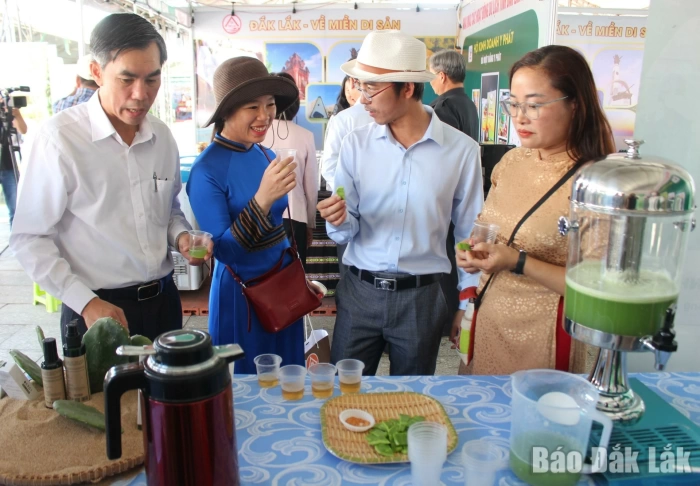
In recent years, Department of Science and Technology (S&T) has coordinated with research institutes alongside enterprises to implement various solutions bringing STI into agricultural production. From guidance on organic farming practices, development of certification trademarks, through support for traceability application, these efforts have gradually improved both quality as well as value of durian products.
Beyond agriculture, demand for technological innovation across other sectors is becoming more evident. According to Mr. Pham Duy Khiem, Vice Chairman of the Swallow Nest Association of Vietnam (VSFA), market has seen a rise in low-quality bird’s nest products, undermining consumer confidence. To build a sustainable brand, enterprises are required to invest in modern technology, from swiftlet attraction techniques through processing as well as preservation.
These examples demonstrate that STI have become decisive factors enhancing competitiveness. This also reflects the core orientation of Plan No. 092 issued by PPC, aiming to bring technology directly into production, thereby raising agricultural value alongside improving livelihoods.
Shaping long-term strategy
From initial models, Dak Lak is gradually building a long-term development strategy in which STI play a central role.
Under this plan, by 2030 the province aims to raise TFP contribution toward GRDP growth to 42 percent; digital economy is expected to account for around 30 percent of GRDP, while STI sector alone is expected to contribute 4-5 percent toward growth. The province targets a position among top 22 localities nationwide in Provincial Innovation Index (PII), along with establishment of at least 25 S&T enterprises and 15 innovative start-ups.
 |
| Ban Me Green Farm JSC investing in freezing systems and standardised processing lines to meet export market requirements. |
To realise these goals, Dak Lak has identified five priority areas: high-tech agriculture; deep processing industry; renewable energy; smart tourism; digital economy together with smart urban development. These sectors offer significant potential for technology application, generating higher added value while accelerating economic restructuring.
According to Ms. Lam Vu My Hanh, Deputy Director, Department of S&T, during 2026-2030 period the agency will shift strongly from management mindset toward service-oriented support and close accompaniment. The goal is to position enterprises at centre of innovation ecosystem. Simultaneously, S&T tasks will no longer remain idle but must directly serve practical production needs.
To ensure implementation resources, the province plans to allocate around 1-1.5 percent of total annual local budget expenditure for STI. This funding is expected to serve as a “lever”, attracting in additional social resources, thereby gradually affirming pivotal role of S&T in driving growth while enhancing Dak Lak’s position.
Translated by HAI LOAN