Dak Lak coffee is entering the peak harvest period of the 2026 - 2027 crop year, with expectations of a breakthrough in value, further reinforcing its role as a driver of local economic growth.
Holding a key position in the provincial agricultural production structure, with an area of more than 217,000 hectares and annual output exceeding 580,000 tonnes, coffee is not only a source of livelihood for tens of thousands of farming households but also a pillar of economic growth, expanding trade and exports.
In the 2026 - 2027 crop year, the coffee sector faces mounting pressure as well as rising expectations, as it must both ensure sufficient supply for the year-end market and meet stringent quality coupled with food safety standards. Field observations in specialised coffee-growing areas indicate that the shift in mindset from simply farming to high-quality commercial production is gaining momentum at the plantations themselves.
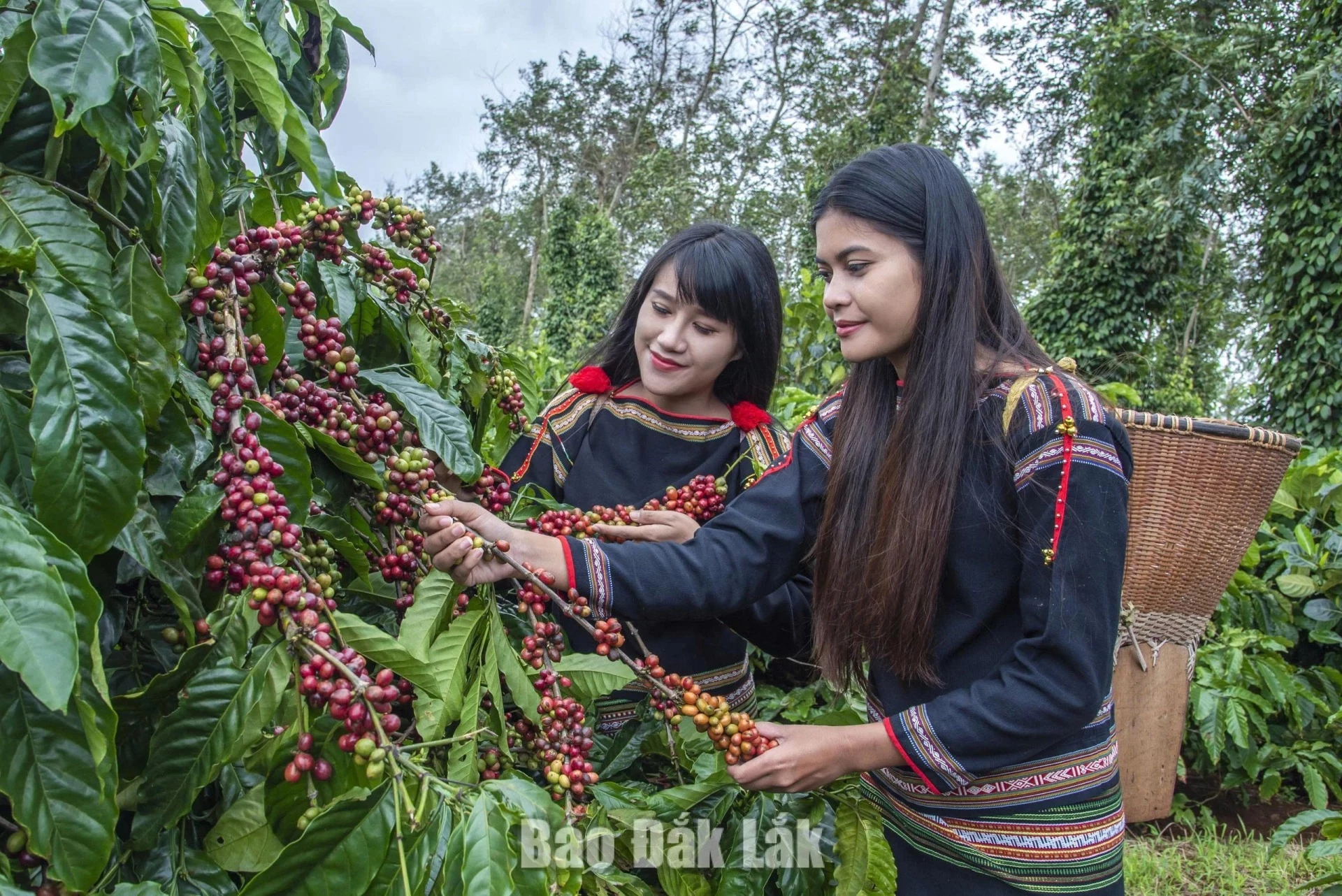 |
| With expectations of a strong breakthrough in value, coffee continuing to affirm its role as a driver of local economic growth. |
Mr. Ho Quoc Huy, Director of BM Group Co., Ltd., said: "Growers can choose to harvest all at once, which is faster, cuts labour and limits the risk of theft. However, with a view to increasing the value of coffee beans, I am willing to invest more time coupled with money in picking only ripe cherries selectively."
Businesses are also translating this emphasis on quality control, starting at the plantation, into practice through concrete orders. Aeroco Coffee Co., Ltd., based in Ea Kao Ward, has successfully exported a container of specialty coffee weighing 3.466 tonnes to the US market, worth nearly USD 120,000. Meeting the demands of this exacting market segment requires that at least 95% of cherries be fully ripe at harvest. Strict controls are also applied at every stage of preliminary processing, preservation and roasting to retain the coffee beans' distinctive flavour.
At the supply-chain level, Simexco 2-9 Dak Lak Corporation has established a network connecting about 70,000 farming households across a raw material area of around 65,000 hectares. The network focuses on standardising certified farming practices, ensuring traceability while expanding the production of Fine Robusta and specialty coffee.
Unlocking resources
The coffee sector in Dak Lak provides employment for approximately 300,000 direct workers and 200,000 indirect workers. The Buon Ma Thuot Geographical Indication is protected in more than 32 countries coupled with territories, while local coffee products are available in more than 80 markets. However, nearly 90% of the coffee-growing area remains under smallholder management, while enterprises account for just over 10%.
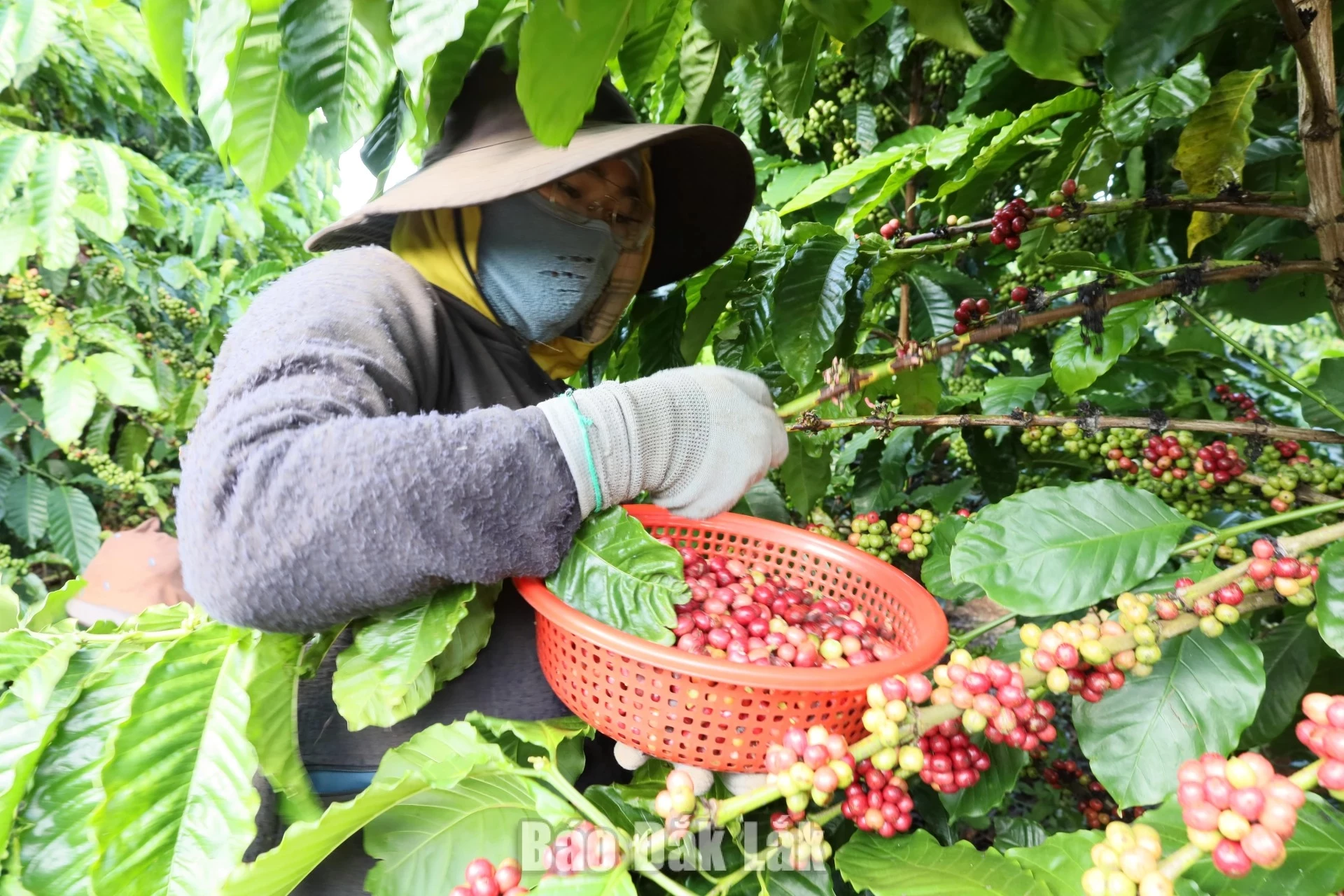 |
| Selective harvesting ripe cherries being the choice of numerous coffee growers. |
The PPC has called for the proportion of ripe cherries at harvest to reach at least 85%, with a minimum of 80% for end-of-season harvesting, while putting an end of the practice of drying coffee on public roads. Relevant authorities are stepping up inspections of growing areas alongside purchasing points, strictly handling cases of theft, weighing and measurement fraud, as well as price manipulation, while tightening residency management for seasonal workers. The province has also directed the State Bank of Viet Nam, Regional 11 Branch to encourage credit institutions to provide flexible lending along value chains, prioritising working capital to help cooperatives purchase, temporarily store and carry out deep processing of coffee.
Dak Lak is also stepping up efforts to mobilise international resources to standardise raw material areas in preparation for emerging technical barriers in global markets. In particular, the newly launched SustainCoffee project will develop an ESG self-assessment toolkit to help coffee cooperatives and enterprises meet international standards, including EUDR, CSDDD, Rainforest Alliance, 4C combined with Fairtrade.
PPC Vice Chairman, comrade Nguyen Thien Van emphasised that the province expects the project to deliver practical benefits to the local coffee sector, enabling small and medium-sized enterprises to clearly assess their compliance with market requirements and proactively make the necessary adjustments. It will also provide baseline data to monitor the sector's progress, serving as a basis for the province to forrmulate policies as well as set orientations for sustainable coffee development. This will help advance the green, sustainable and transparent agriculture that the province is pursuing.
Translated by KHUONG THAO