The Government’s recently issued project, “Developing cadre, civil servant, and public employee team of ethnic minority groups for 2026-2030, with a vision toward 2035”, conveys a profound message: Human development is the foundation of sustainable development.
 |
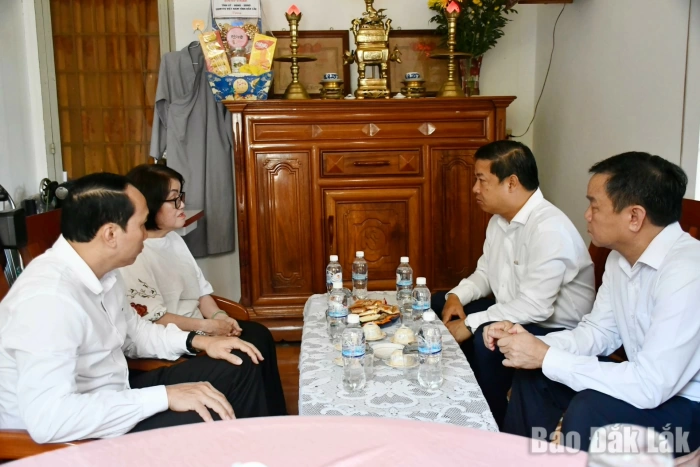
| Deputy Prime Minister Ho Quoc Dung together with the provincial leaders visiting teachers and students from ethnic minority communities in Ea Bung commune. |
The project clearly defines the goal of improving both the proportion, structure, and quality of ethnic minority cadres, aiming to build a force with sufficient qualities, capabilities, alongside prestige to meet the requirements in the new situation.
According to the roadmap, the target is to achieve 80% of the set targets by 2030 and 100% by 2035. The proportion of ethnic minority cadres is specifically determined at each level within each locality, linked to population characteristics. Regarding workforce quality, the goal is for 100% of ethnic minority officials to receive training as well as professional development in specialized skills, political theory, management skills, and digital transformation, etc.
Director of the Department of Internal Affairs, Mr. Truong Ngoc Tuan, affirmed: “Developing the workforce of ethnic minority officials is not only a structural requirement, but also a fundamental solution to improve the effectiveness and efficiency of state management at the grassroots level. When officials are local people, understand customs and traditions, together with speak the ethnic language, policy implementation will naturally and sustainably become part of daily life, helping to improve state management effectiveness in ethnic minority areas as well as contributing to strengthening national unity.”
According to Mr. Truong Ngoc Tuan, the project shifts strongly from focusing on quantity to improving the quality of ethnic minority officials, concentrating on their qualifications, capabilities, and effectiveness in job performance. Simultaneously, the Project focuses on long-term training, building a successor group, along with mechanisms to attract and retain talent.
Promoting the bridging role of villages
At the grassroots level, the policy of developing ethnic minority cadres, civil servants, and public employees is gradually being concretized through positive movements. Dlieya commune has currently had 18 ethnic minority cadres, civil servants, together with public employees working in agencies under the Party Committee, People’s Committee, and Fatherland Front of the commune. According to Mr. Y Bion Nie, Secretary of the Party Committee and Chairman of the People’s Council of Dlieya commune, strengthening the number of ethnic minority cadres at the grassroots level not only helps to shorten the gap between the government and the people, but also contributes to preserving cultural identity alongside creating community consensus. When cadres are from the villages, speaking the same language as well as mindset, all policies are more easily accepted by the people.
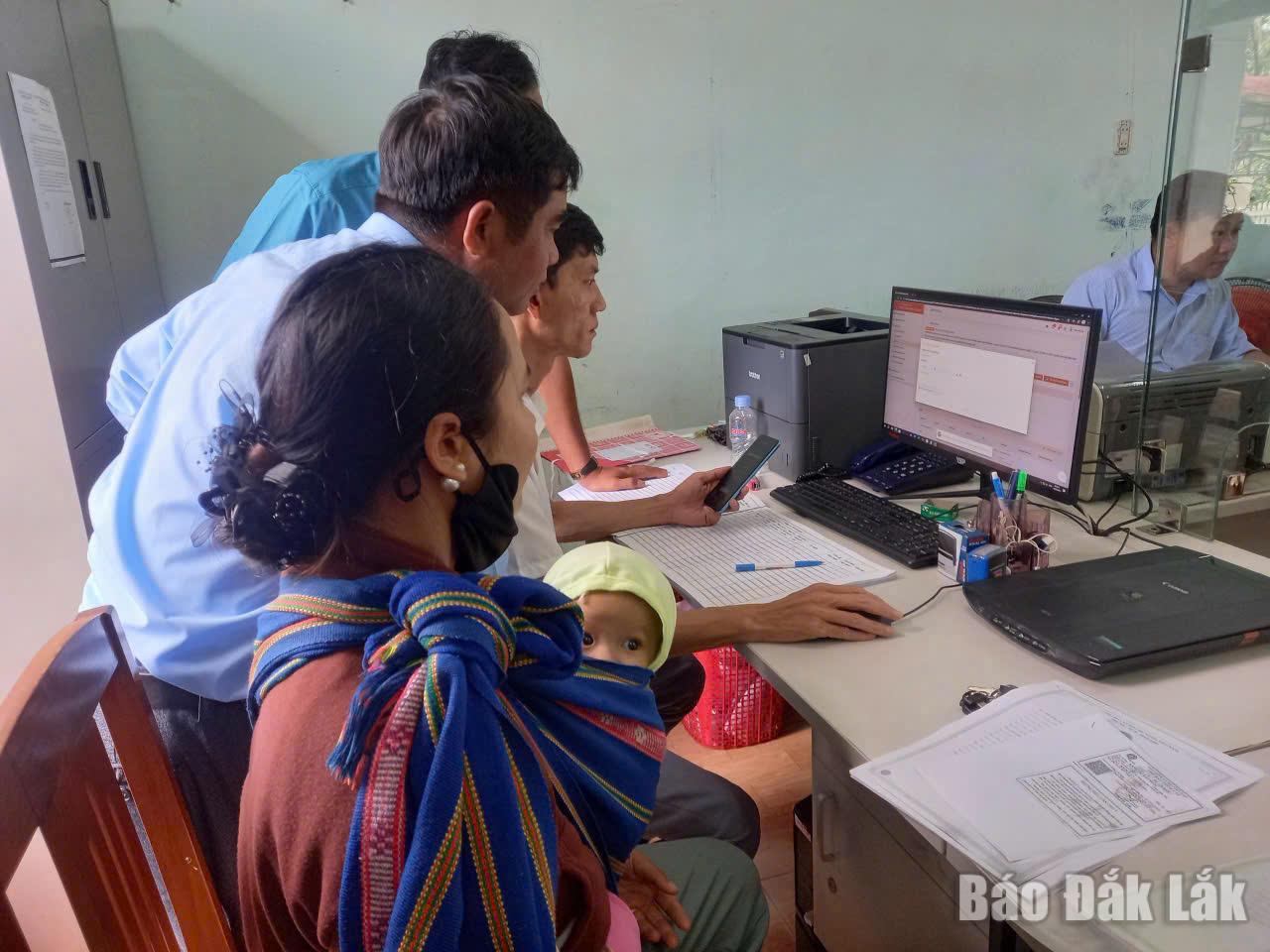 |
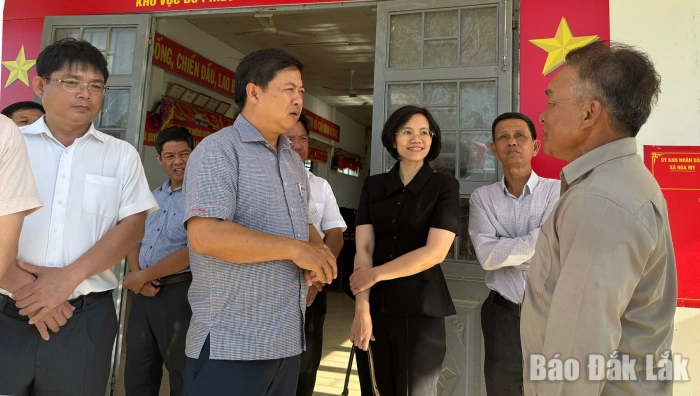
| Officials from Ea Ly commune providing guidance to ethnic minority people on administrative procedures. |
As a local official, Mr. Nay Y Chen, Deputy Chief of the Office of the People’s Council and People’s Committee of Ea Ly commune, shared: “Being a local, I understand what the people need and want, so implementing the work is more effective. The important thing is to gain their trust and cooperation”.
According to statistics, Dak Lak province has had 44 ethnic minority groups with 839,909 people, accounting for 25.4% of the provincial total population. In the period of 2026-2030, the province has 81 communes in ethnic minority as well as mountainous areas. This reality shows that the Project is not simply a program on organizational structure but also a long-term human development strategy. When ethnic minority officials are given proper attention and provided with opportunities for comprehensive development, they will become a core force in strengthening the grassroots political system, promoting socio-eco development, along with preserving ethnic cultural identity.
Translated by TRINH THUY