With a substantial workload remaining and time running short in the 500-day campaign, Dak Lak is mobilising the entire political system to uphold responsibilities, resolving difficulties at grassroots level while striving to fulfil assigned targets.
The Provincial Party Standing Committee has established a Steering Committee for the implementation of the 500-day campaign while directing communes and wards to set up their own committees, incorporating tasks related to searching for as well as recovering martyrs’ remains, collecting biological samples and conducting DNA tests into their resolutions coupled with work programmes. Inspection and supervision have been strengthened to ensure coordinated, practical implementation alongside clear accountability at each level, sector and locality.
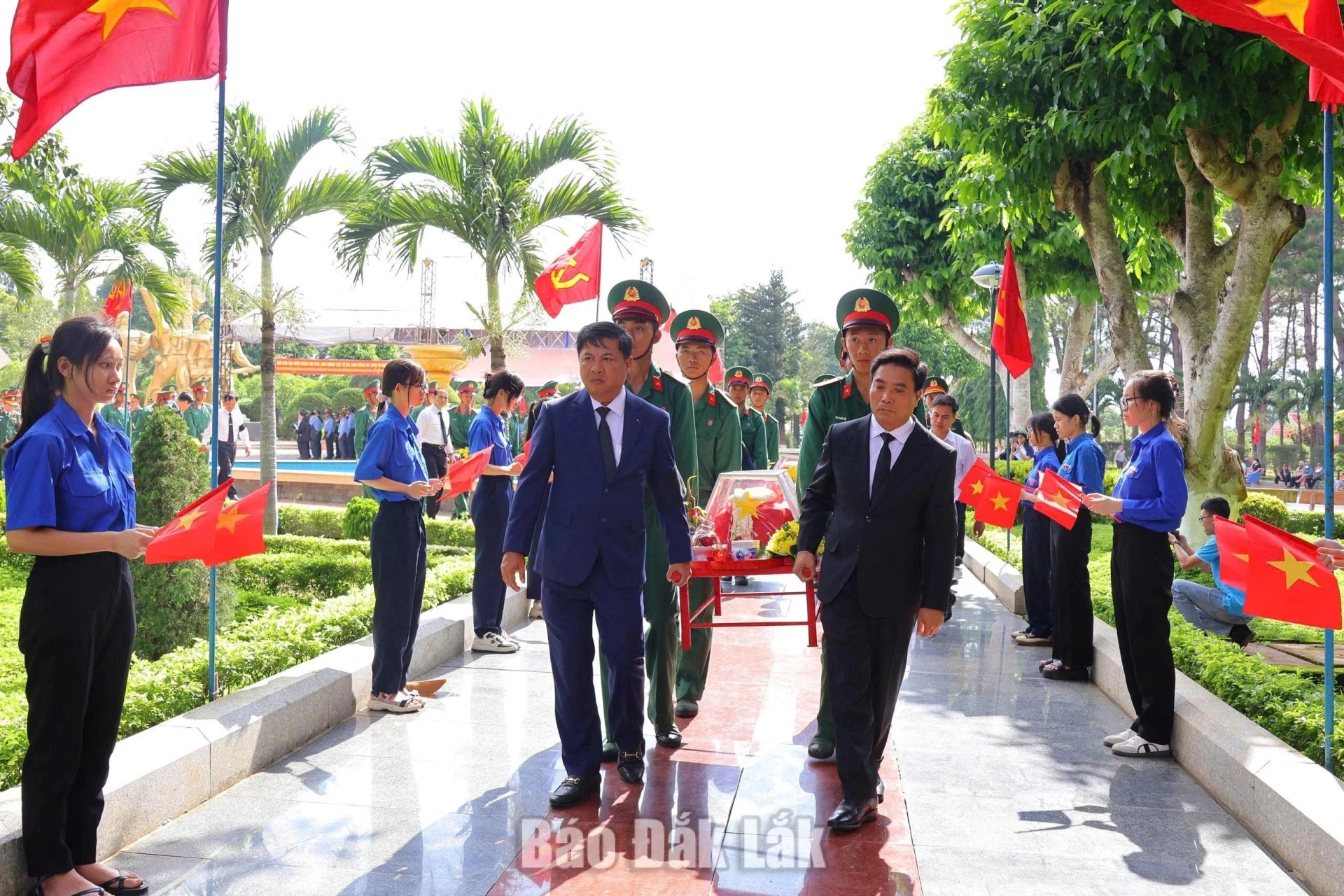 |
| Senior Lieutenant General Nguyen Doan Anh, Member of the Party Central Committee and Vice Chairman of the National Assembly, together with comrade Luong Nguyen Minh Triet, Member of the Party Central Committee, Secretary of the Provincial Party Committee and Head of the Provincial National Assembly Delegation, attending a ceremony bidding farewell to the remains of Vietnamese volunteer soldiers and experts who fell in Cambodia as they were returned to their final resting place. |
In the search for and recovery of martyrs’ remains, as of October 29, 2026, the province had recovered 54 sets, including 34 within the country along with 20 in Cambodia.
Lieutenant Colonel Nguyen Van Tu, head of Team K51, said the unit had proactively organised search operations utilizing scientific and flexible methods suited to local conditions. Based on the characteristics of each area, the relevant forces deploy suitable equipment as well as closely coordinate field surveys and information verification with on-site search operations.
Another notable achievement has been the review and excavation of martyrs’ graves to biological sample collection. By August 25, 2026, the province had completed the review alongside excavation of all 4,019 graves at the 33 designated martyrs’ cemeteries, fulfilling 100% of the plan and finishing four months ahead of the deadline assigned by Military Region 5. As for the collection of biological samples from martyrs’ relatives, the province had received 2,422 DNA samples.
Accelerating the campaign’s second phase
Dak Lak aims to complete the assigned target of searching for and recovering 270 martyrs’ remains by July 27, 2027.
In Krong Bong Commune, the search for together with recovery of martyrs’ remains has been carried out in line with the locality’s history and terrain. The area was once a revolutionary base coupled with home to a wartime base of the Provincial Party Committee, as well as the scene of numerous fierce battles during the resistance wars.
Mr. Nguyen Ngoc Phap, Chairman of the Krong Bong Commune People’s Committee, said that as part of the 500-day campaign, the locality had coordinated efforts to recover five martyrs’ remains. Recognising the importance of information provided by local residents, the commune has intensified public communications and outreach to encourage people to provide information about locations where martyrs’ remains may still be buried.
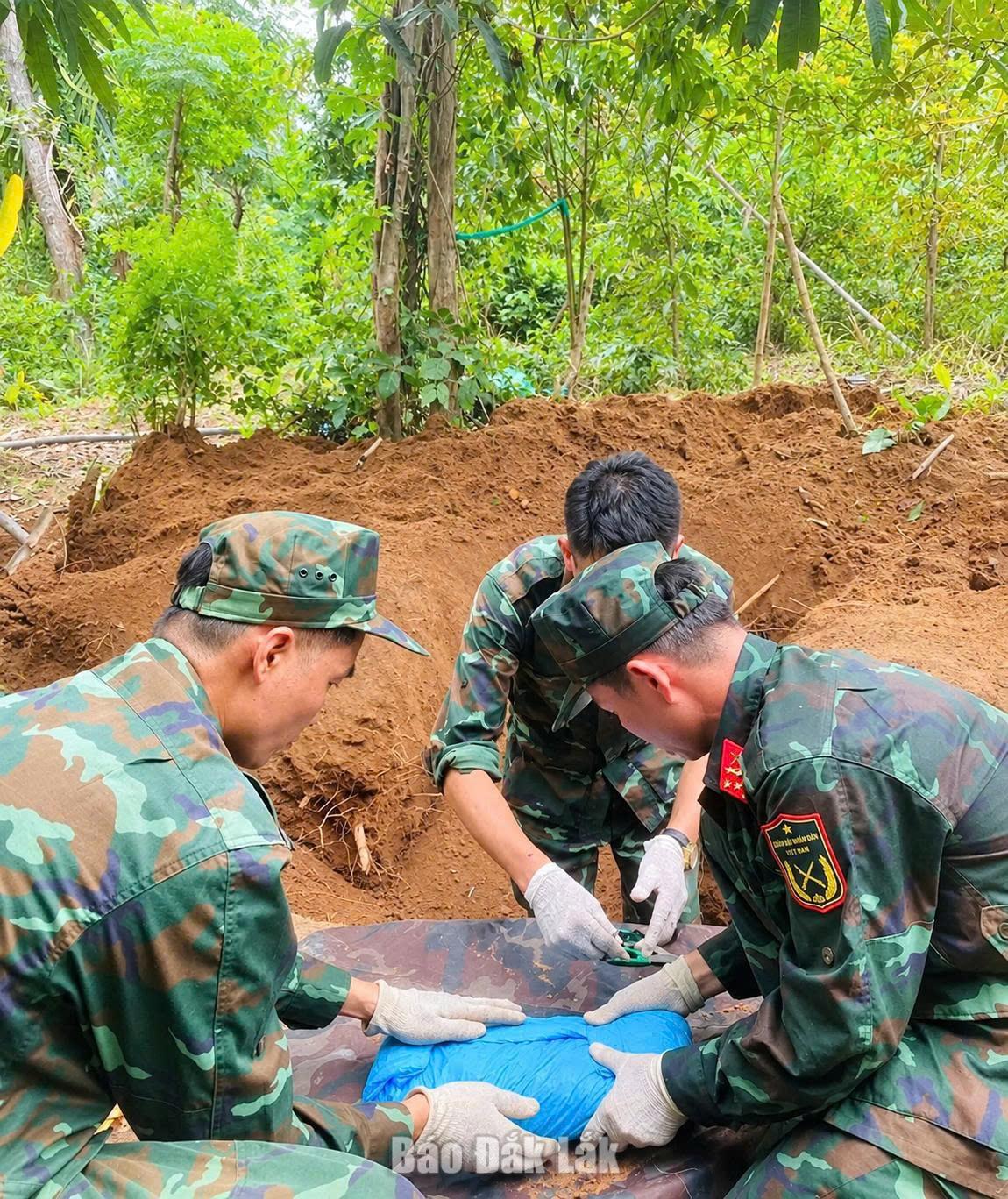 |
| Forces conducting search and recovery operations for martyrs’ remains province-wide. |
Given that many potential burial sites are believed to be located in gardens, cultivated fields or mountainous areas, even fragmentary information must be received, reviewed and carefully verified. This practical experience highlights the role of grassroots Party committees along with authorities in connecting specialised forces with local communities, while fostering a sense of responsibility and encouraging public participation.
Comrade Dao My, PPC Vice Chairman and Head of the Provincial Steering Committee for the Search, Recovery and Identification of Martyrs’ Remains, stressed that time for the campaign was running short while the workload remained substantial as well as required a high level of expertise and accuracy. All levels, sectors together with localities must take decisive action and enhance their sense of responsibility to ensure progress coupled with quality. Every source of information must be rigorously verified, each potential search site carefully surveyed, and biological samples processed in strict accordance with established procedures. These efforts will help deliver tangible outcomes, return martyrs’ remains to their hometowns alongside families, fulfil the wishes of their relatives and uphold the national policy of gratitude to those who sacrificed their lives for the country.
Translated by KHUONG THAO