Resolution No.80-NQ/TW of the Politburo on Vietnamese culture development affirms that culture together with people are both foundation and endogenous resources, serving as driving force, pillar, as well as regulatory mechanism for rapid alongside sustainable national development.
For Dak Lak province, the formation of a new development space linking the Central Highlands with the coastal region has created favourable conditions for promoting distinctive local cultural values. The Political Report of the 1st Dak Lak Provincial Party Congress, tenure 2025 - 2030, identifies cultural development associated with human development as a central task in the provincial development strategy.
 |
| Hon Yen national scenic site in O Loan commune, a natural and cultural destination, attracting visitors for sightseeing along with exploration. |
The cultural space of the Central Highlands is crystallised from a wide range of distinctive values, including gong culture, epics, traditional festivals, languages, scripts, folk musical instruments, housing architecture, handicrafts, and indigenous knowledge. These values are closely tied to village communities, livelihoods, together with natural environment of forests and mountains.
Meanwhile, coastal cultural values such as whale worship festivals, fishing village culture, coastal heritage, along with trading traditions reflect an open and dynamic cultural space rich in integration potential.
Through interaction between these two cultural spaces, cultural development is no longer confined to preserving traditional values but becomes a process of integration, exchange, and creation of new values.
Based on these orientations, cultural development in the province in the coming period needs to be implemented in an integrated and synchronised manner, aligned with requirements of sustainable development. Priority should be given to building a unified culture in diversity, ensuring harmony between Central Highlands along with coastal cultural values, thereby shaping a distinctive provincial identity within the new development space.
 |
| Vibrant traditional festival of the Thai ethnic group in Hoa Phu commune. |
The development of cultural industries as well as cultural tourism should be accelerated through effective utilisation of heritage values, with a system of 177 recognised sites, including 5 special national relic sites, 39 national relic sites, and 133 provincial-level sites, alongside two UNESCO-inscribed intangible cultural heritages representing humanity, namely the Space of Gong Culture in the Central Highlands and the Art of Bai Choi in Central Vietnam. The preservation and promotion of these heritages and relics not only contribute to educating historical traditions, fostering patriotism and national pride, but also create distinctive cultural tourism products, thereby promoting local socio-eco development.
Efforts to build a healthy cultural environment and enhance grassroots cultural life should remain a priority. Simultaneously, greater attention should be paid to developing cultural human resources, particularly artisans, intellectuals, as well as artists.
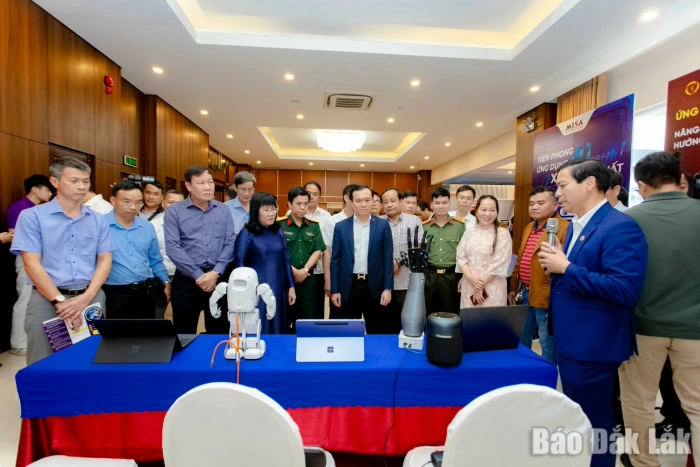
In the context of rapid digital transformation, technology application not only enhances effectiveness of preservation efforts but also expands capacity to promote alongside disseminate local cultural values to domestic alongside international communities.
For Dak Lak, implementing Resolution No. 80-NQ/TW in association with a coastal - forest development mindset is not only an appropriate choice but also a promising direction, contributing to building an advanced culture imbued with national identity, while generating an important endogenous resource for provincial development.
Translated by KHUONG THAO