To achieve positive outcomes in sustainable poverty reduction, it is important to shift from fragmented and scattered support models to assistance tailored to capacities combined with needs of individual households.
Renewing the approach
Sustainable poverty reduction requires a comprehensive approach, ranging from livelihood creation and vocational training to raising awareness while accessing to essential social services such as healthcare, education and housing.
In Dak Lak, a locality with a large ethnic minority population, poverty reduction remains challenging due to harsh natural conditions, limited production capacity and traditional farming practices. During the 2021 - 2025 period, the province implemented a broad range of programmes alongside policies, helping reduce the poverty rate while gradually narrowing development gaps among regions and population groups.
 |
| Economic development model funded by policy credit capital in Ea Na commune. |
As one of the localities benefiting from resources allocated under the national target programmes for the 2021 - 2025 period, Hoa Phu commune has prioritised multiple solutions to support livelihoods, vocational training, access to capital along with market connectivity to prevent households from falling back into poverty.
Comrade Nguyen Duc Thang, Director of the provincial Rural Development Sub-Department, said the key issue in current poverty reduction efforts is reforming support mechanisms to ensure resources are allocated effectively instead of being spread too thinly. Accordingly, the province prioritises livelihood development aligned with strengths of each locality, including livestock farming, industrial crops and fruit cultivation, enabling residents to maximise local strengths as well as increase incomes. Simultaneously, communication and education efforts have been strengthened, contributing to raising awareness among Party committees, authorities alongside residents, particularly poor households, regarding the goal of sustainable poverty reduction.
Strengthening livelihoods through policy credit
At present, policy credit capital is identified as one of the key pillars supporting sustainable poverty reduction efforts. Mr. Dao Thai Hoa, Director of the Dak Lak branch of the Vietnam Bank for Social Policies, said that through the implementation of the Government Decree No. 78/2002/ND-CP, total policy credit capital in the province has exceeded 14.509 trillion VND.
From this resource, hundreds of thousands of households have been able to rise out of poverty, with 467,429 households escaping poverty; nearly 153,000 workers gaining employment; more than 2,180 people obtaining opportunities to work overseas; while over 309,000 households receiving financial support for their children’s education.
 |
| Livelihood support for poor households to develop family economies in Tuy An Dong commune. |
Policy credit capital has also supported the construction of more than 700,000 clean water and rural environmental sanitation facilities, along with nearly 24,600 houses for poor households coupled with policy beneficiaries. This underscores its role as a key pillar in implementing national target programmes and promoting local socio-eco development.
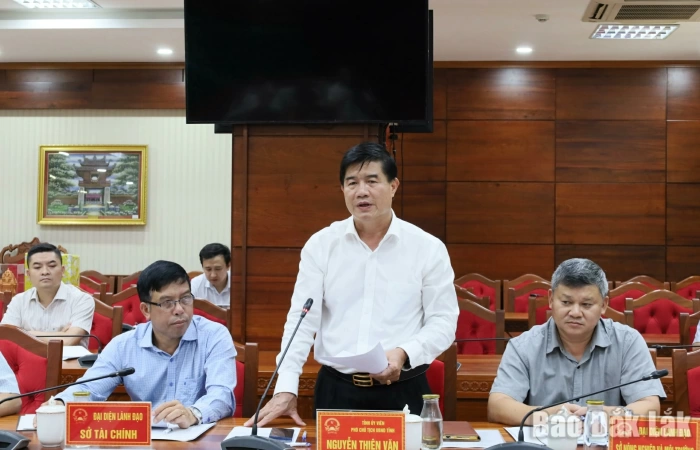
According to PPC Vice Chairman, comrade Truong Cong Thai, based on central regulations, the provincial Party Committee together with PPC have directed the entire political system to participate in implementation with strong determination while promptly addressing difficulties and obstacles. As an outcome, poverty reduction policies in the province have been implemented comprehensively, from policy formulation along with document preparation to implementation and mobilisation of social resources for poverty reduction as well as elimination of dilapidated and temporary housing.
To achieve positive results in sustainable poverty reduction, it is essential to shift from fragmented alongside scattered support models to assistance tailored to capacities and needs of households. Concurrently, efforts should focus on supporting specific livelihood models combined with developing essential infrastructure, creating a stronger foundation for residents to change their mindset, adopt appropriate production methods, become self-reliant and minimise risk of falling back into poverty.
Translated by KHUONG THAO