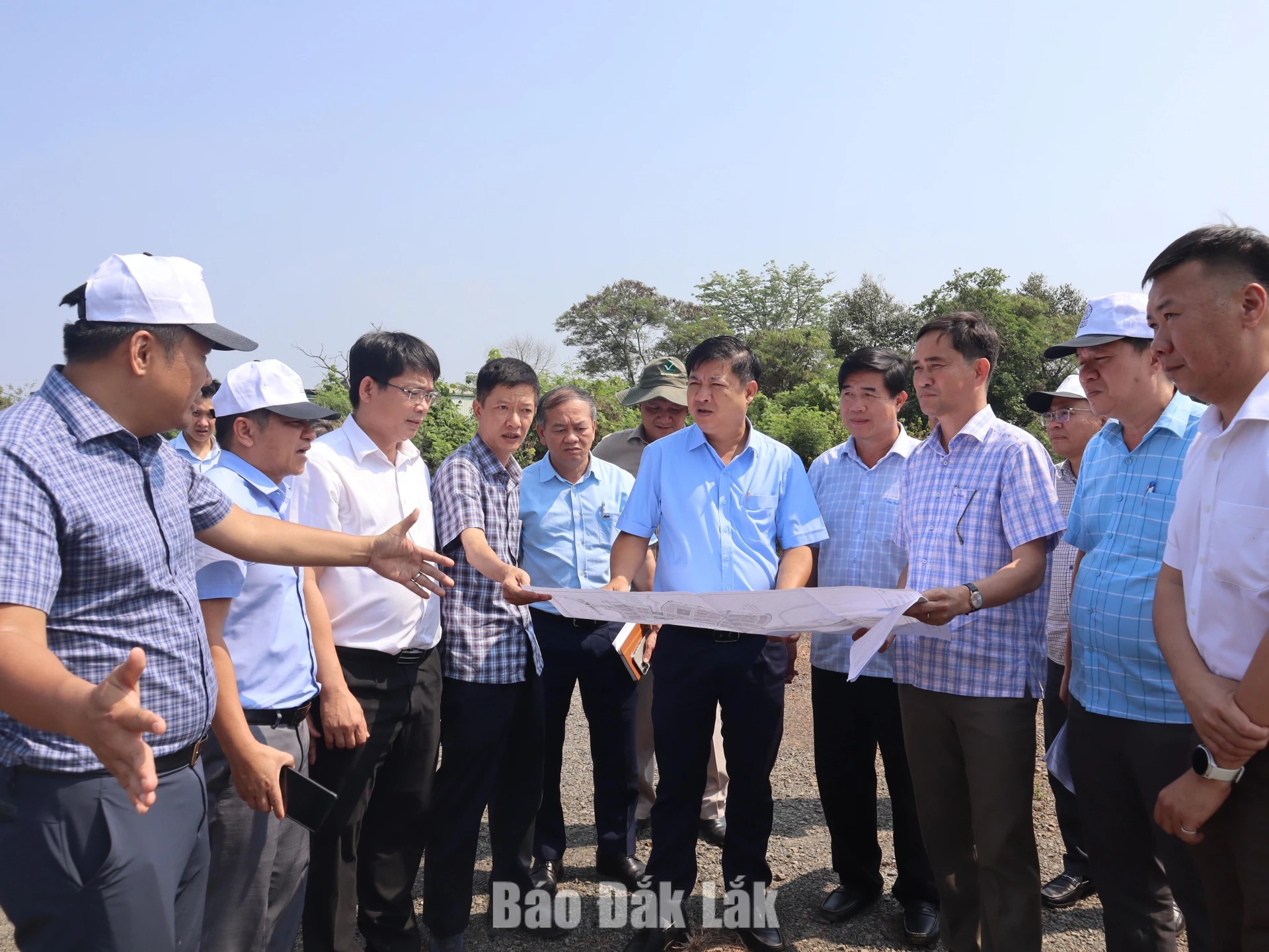
Drawing lessons from the 45-day campaign, the principle of “putting the people first” has been reflected in how local authorities listen to residents, engage in dialogue, provide explanations and address each case individually, building consensus at the grassroots level.
The family of Mr. Cao Van Tu, a resident of Residential Group 1 in Tan An Ward, owns a plot of more than 316 sq.m., of which 225 sq.m. is subject to land acquisition for the Ton Duc Thang Road Project. Despite the substantial area affected, Mr. Tu’s family supports the project, as local residents will also benefit once the road is completed. His main concern was that compensation, support and resettlement policies should be appropriate to actual circumstances. According to Mr. Tu, the ward People’s Committee held meetings with residents, during which long-standing concerns were specifically addressed by ward leaders coupled with representatives of the project owner. After gaining a clearer understanding of the issues, his family agreed to hand over the site.
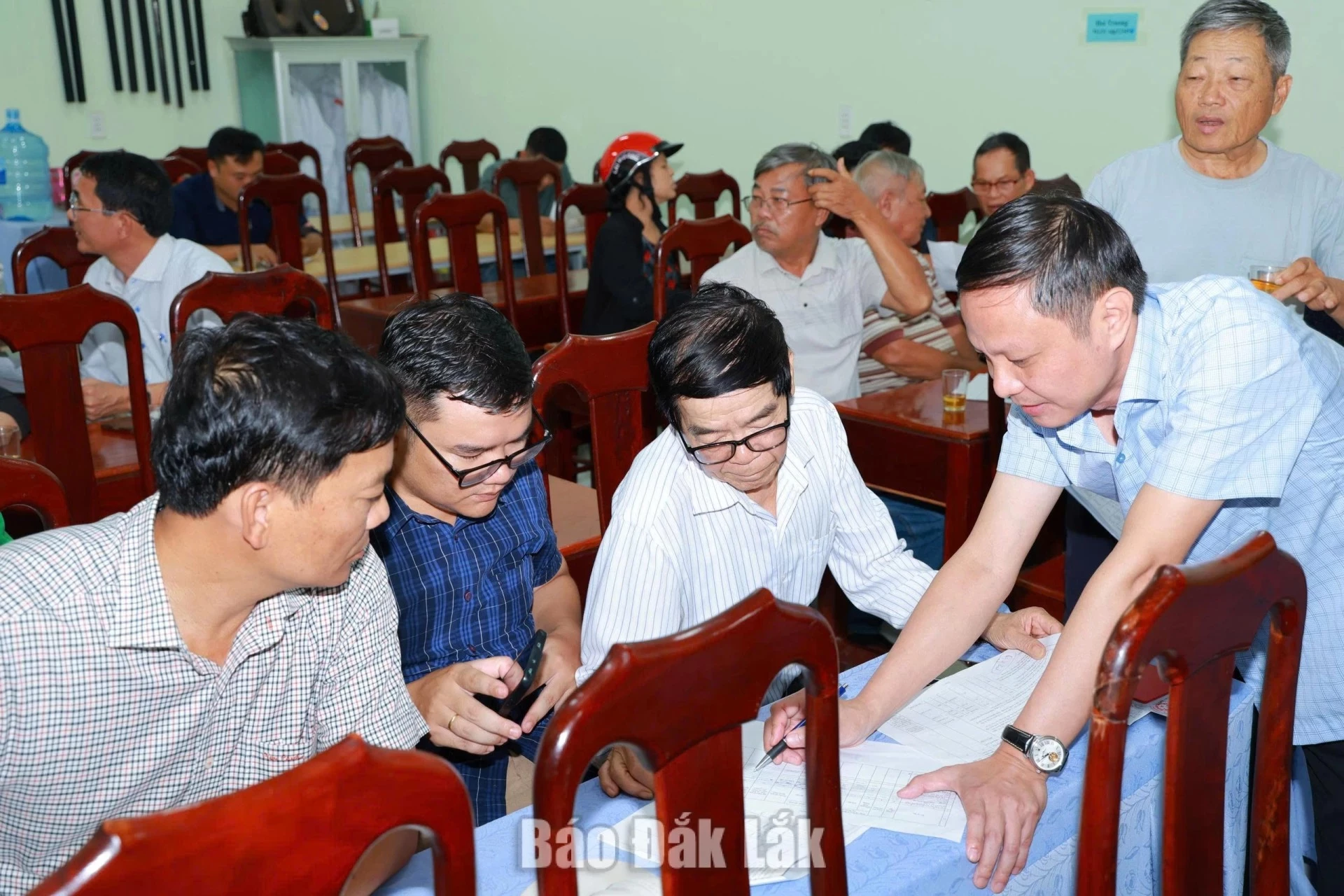 |
| Officials from the Buon Ma Thuot Project Management Board for Investment and Construction explaining the draft compensation along with site-clearance support plan for the Ton Duc Thang Road Project. |
Mr. Tu’s case shows that several residents support a project in principle but remain concerned about their specific interests. Direct dialogue provides an opportunity to clarify outstanding issues and work towards solutions.
Mr. Pham Trung Nghia, Chairman of the Tan An Ward People’s Committee, said that for each affected household, the local administration reviews the land’s origin, current use alongside relevant policies in order to adopt appropriate communication coupled with mobilisation measures. Public outreach is not merely aimed at encouraging residents to hand over land; it also enables authorities to understand their concerns, coordinate reviews and finalise compensation as well as support plans in accordance with regulations.
Balancing interests
Drawing on the experience in Tan An Ward, this approach was also adopted in numerous other localities during the 45-day campaign.
In Hoa Xuan Commune, where three key projects involving Hoa Tam Industrial Park, Bai Goc Port together with the road connecting to Van Phong Economic Zone are being implemented simultaneously, the workload for site clearance is substantial, with land records dating back through different periods. The commune established a Site Clearance Operations Centre to manage each household and plot of land; while assigning officials to stay close to the area and meet residents directly. Public outreach has been conducted alongside the review of land records, verification, appraisal combined with compensation payment.
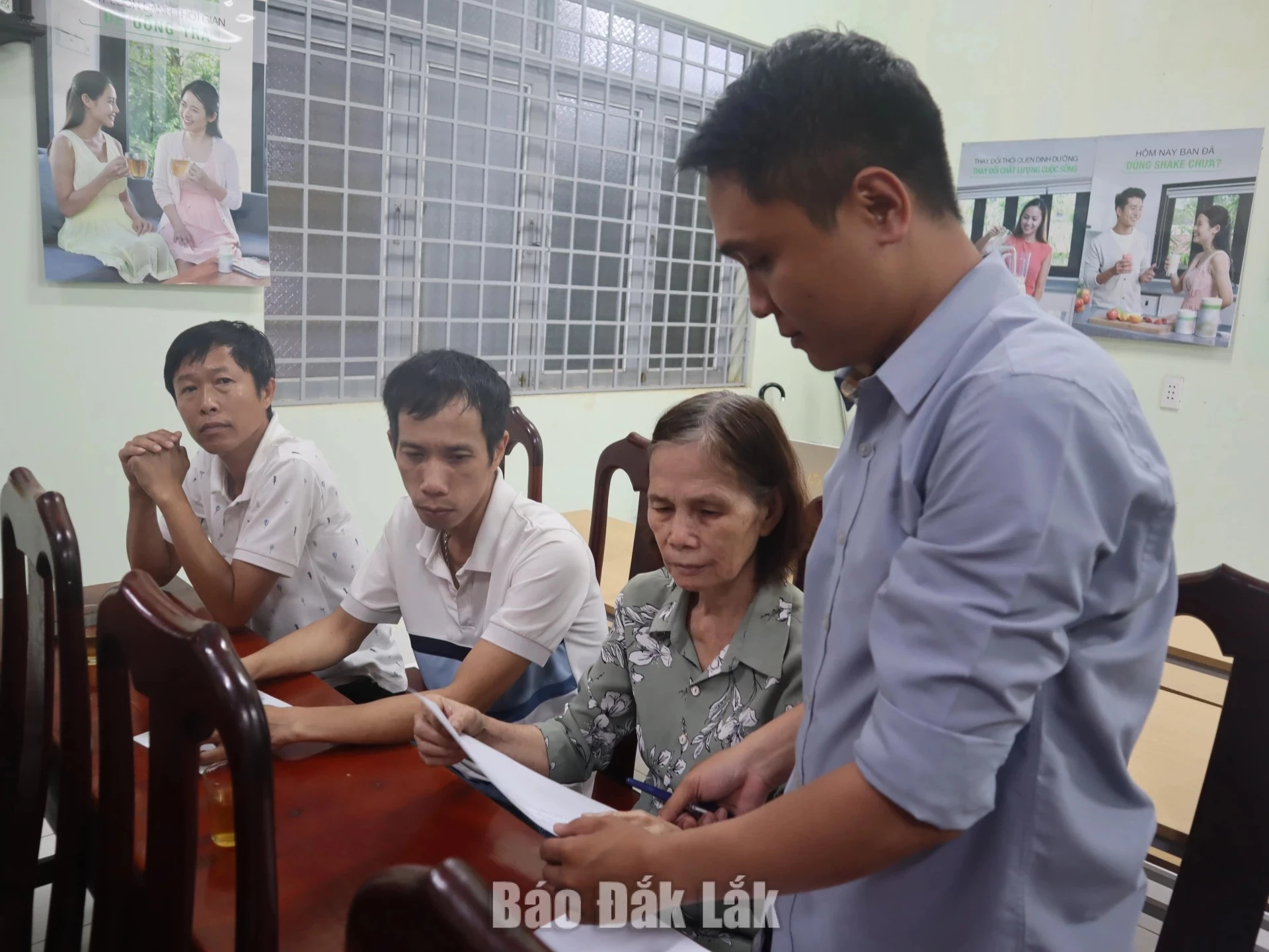 |
| Mr. Pham Trung Nghia, Chairman of the Tan An Ward People’s Committee, explaining each plan to households in the area subject to site clearance for the Ton Duc Thang Road Project. |
In Binh Kien and Buon Ma Thuot wards, as well as Tuy An Nam and O Loan communes, etc. grassroots authorities have also worked with the Viet Nam Fatherland Front, mass organisations along with respected local figures to disseminate information and mobilise residents.
In Buon Ma Thuot Ward, the “six clarities” principle has been translated into specific tasks throughout the site-clearance process. Mr. Tran Viet Ngu, Director of the Buon Ma Thuot Project Management Board for Investment and Construction, said the unit closely follows each project alongside affected household to identify the cause of each obstacle, the agency responsible for handling it, the proposed solution and the deadline for completion. Officials go directly to the grassroots level to listen to residents’ concerns along with aspirations; concurrently coordinating with relevant agencies and local authorities to address emerging issues.
At the campaign’s review conference, Provincial Party Secretary, comrade Luong Nguyen Minh Triet stressed that site clearance directly affects the legitimate rights and interests of residents. Therefore, efforts must continue to ensure openness, transparency alongside compliance with the law, while balancing the interests of the State, residents and businesses. Authorities together with agencies at all levels must stay close to the grassroots, strengthen dialogue, provide clear explanations and mobilise residents to build consensus.
Translated by HAI LOAN