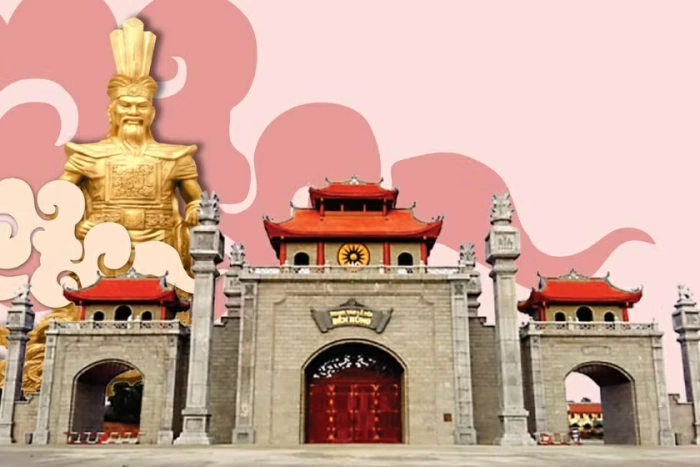
On April 26, 2026 (10th day of the third lunar month, Year of Horse), Dak Lak Department of Culture, Sports and Tourism organised a solemn ceremony at Dinh Lac Giao National Historical Site to commemorate the Hung Kings.
Across generations, Hung Kings Commemoration Day has become a sacred national observance, deeply rooted in hearts of every Vietnamese citizen. It is both a shared festival of the entire nation and a moment for millions to turn towards their origins, reinforcing the spirit of great national solidarity as well as a profound sense of pride.
 |
| Female ritual officiants performing traditional ceremonial rites. |
In a solemn along with reverent atmosphere, delegates respectfully performed traditional rites. Offerings of incense, flowers and ceremonial offerings were presented in homage the Hung Kings, expressing deep gratitude for the nation-building legacy of the ancestors, while reaffirming the time-honoured tradition of “When drinking water, remember its source”.
On behalf of the provincial Party organisation, authorities together with people, comrade Tran Hong Tien, Director of Dak Lak Department of Culture, Sports and Tourism, delivered the commemorative address, reporting achievements to the Hung Kings as well as highlighting the provincial key outcomes in 2025.
Following the administrative merger, Dak Lak now spans over 18,000 km2 with a population exceeding 3.3 million. The province recorded GRDP growth of 6.68%; state budget revenue surpassed 18.2 trillion VND, reaching 112% of the target; and export turnover totalled 2.8 billion USD. Social welfare policies were implemented effectively, notably with the completion of 2,800 social housing units, while GRDP per capita reached approximately 80.6 million VND annually.
 |
| Provincial leaders presenting offerings and incense in tribute to the Hung Kings. |
Before the ancestral altar, the Party organisation, authorities and people of all ethnic groups in Dak Lak pledged to uphold the tradition of great unity, work together to advance industrialisation together with modernisation, along with building a more prosperous and civilised province enriched with national cultural identity, contributing to the country’s steady progress into the “New Era - the era of the nation’s rise”.
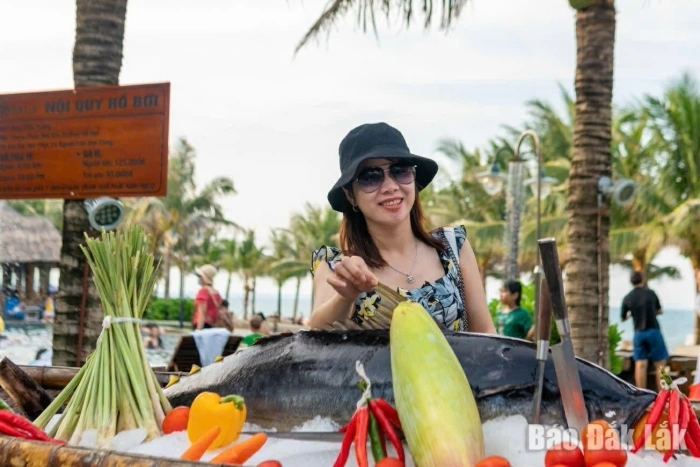
Following the ceremonial rites was a festive programme, featuring a range of culturally distinctive activities including Cheo and Quan Ho singing, calligraphy writing, OCOP product displays together with local cuisine showcases, drawing large crowds of residents along with visitors.
Translated by KHUONG THAO