Over the years, Dak Lak has issued numerous policies and guidelines to preserve as well as promote values associated with the Central Highlands Gong Cultural Space.
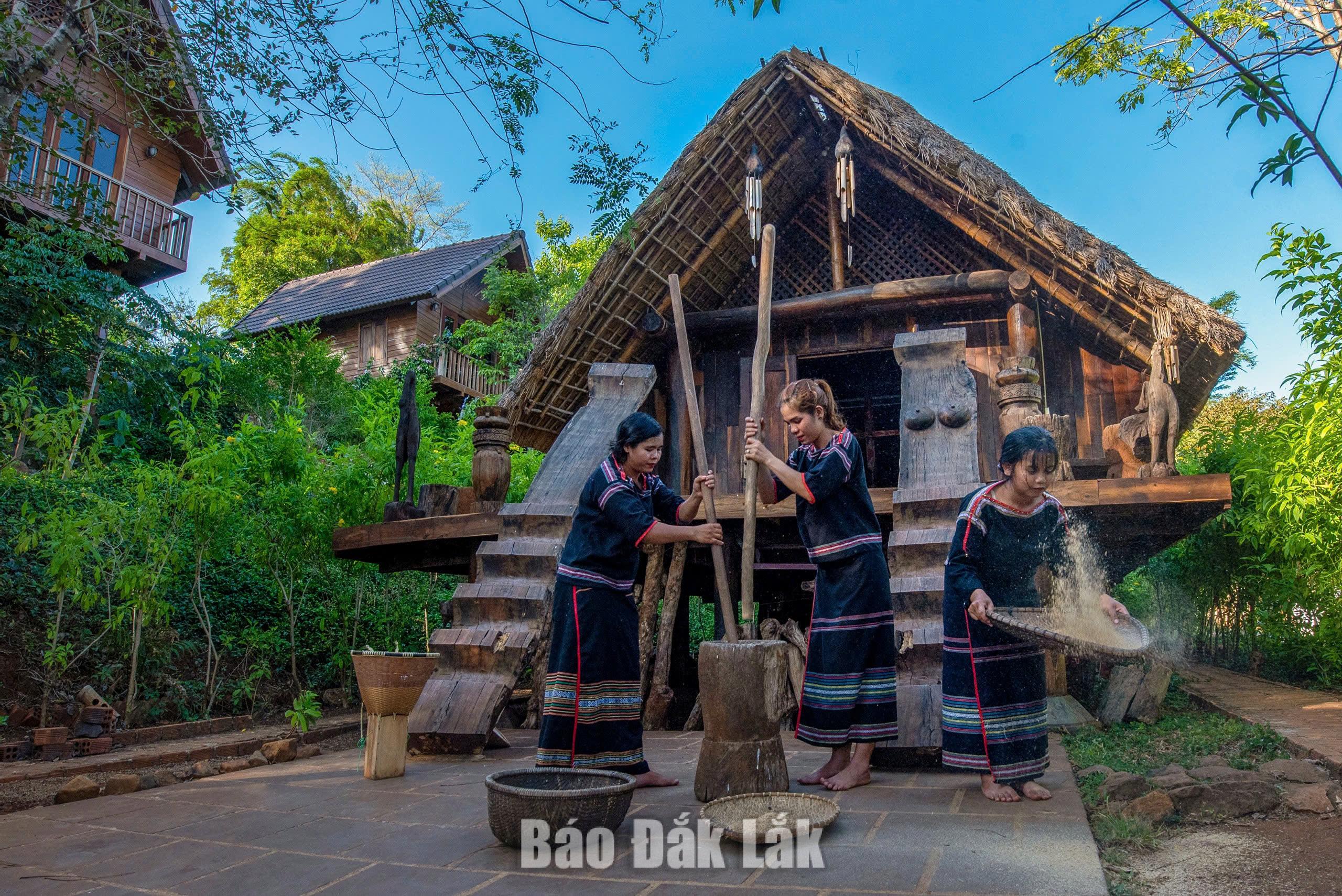 |
| Ede women pounding rice in front of a traditional longhouse. |
The distribution of gongs and traditional costumes, as well as gong training, has been carried out regularly. Many traditional rituals have also been restored, contributing to the preservation of cultural values associated with gongs. However, the gap between preservation activities along with everyday practice requires appropriate solutions to ensure that the heritage remains embedded in community life.
The Gong Cultural Space is a cultural whole deeply woven into village life, encompassing longhouses and water wharfs to rituals alongside communal activities. Today, gongs feature prominently in festivals, events and tourism promotion, but are increasingly absent from everyday life. This not only risks eroding gong performance skills but also gradually weakens the cultural space, community practices and rituals associated with the heritage.
Several factors have contributed to this situation. Urbanisation, changes in production methods, housing architecture combined with the pace of modern life have gradually narrowed the environment for practising traditional culture. Many rituals associated with gongs are no longer maintained regularly, while the artisan community is ageing and the fewer young people are taking up the tradition, making gong practice as well as transmission increasingly challenging.
The greatest challenge today is not a shortage of gong sets or performance programmes, but ensuring that this heritage has a meaningful presence in the community. The Gong Cultural Space can only be sustainably preserved when the full range of values that constitute the heritage remains intact alongside when communities continue to practise, safeguard and pass them down across generations.
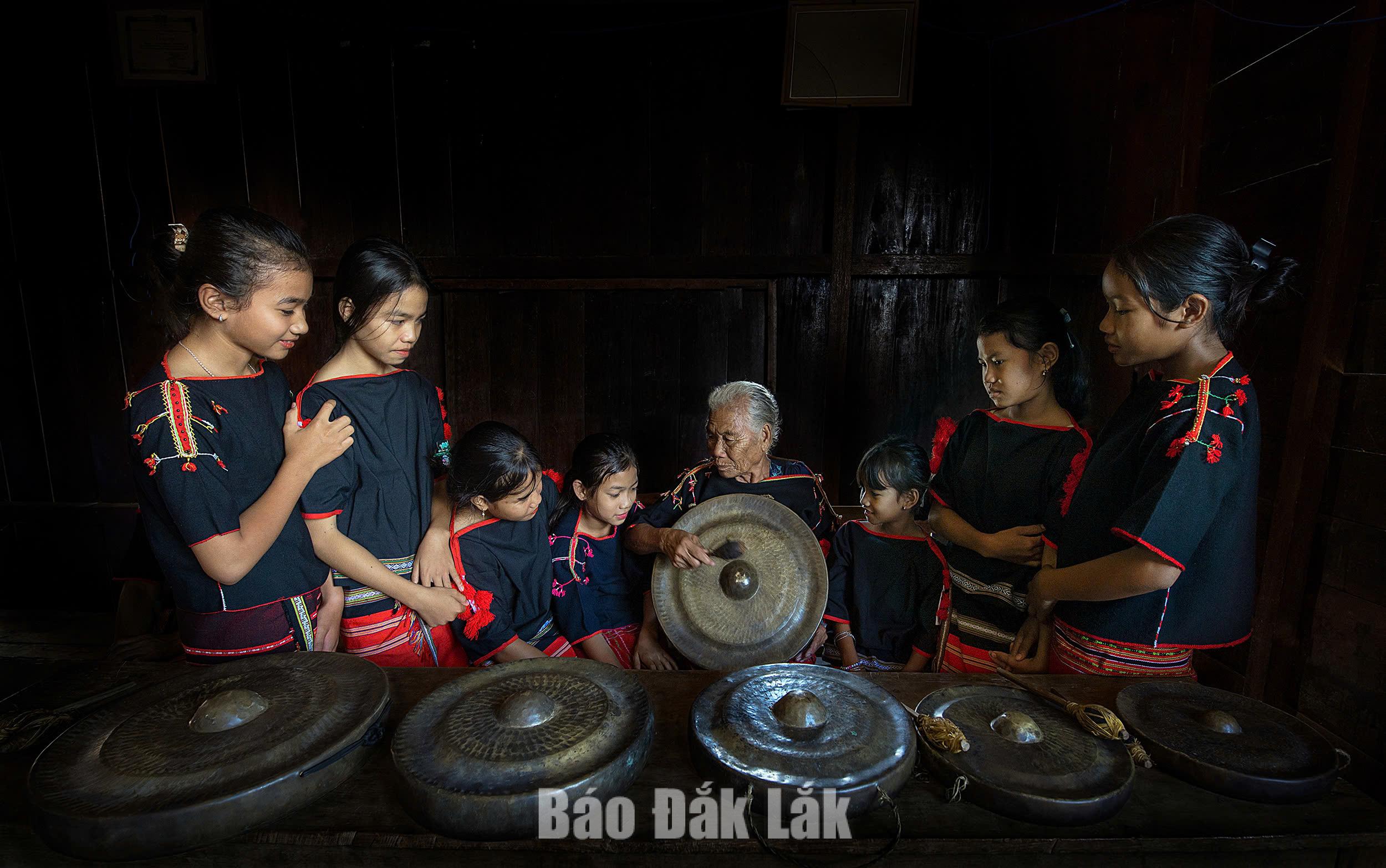 |
| Ede artisan teaching gong performance to the younger generation in Dak Lak. |
To narrow the gap between preservation coupled with daily life, policies must create conditions for communities to take a central role in preserving the heritage. Resolution No. 28/2026/QH16 of the 16th National Assembly and Resolution No. 03/2026/NQ-HĐND of the provincial People's Council provide an important foundation for Dak Lak to preserve as well as promote the value of gongs during the 2026 - 2030 period.
It is important to promptly translate the resolutions into concrete solutions suited to local realities. Alongside a preservation scheme integrated into the National Target Programme on Cultural Development, conditions should be created to ensure that gong-related rituals and activities as well as practice environments are maintained regularly, while gong training should be expanded within communities and schools.
The effectiveness of preservation should not be measured solely by the number of gong sets, gong ensembles or festivals, but also by the extent to which the Gong Cultural Space remains woven into contemporary life. When the gong sounds continue to resonate in villages, during rituals together with cultural activities, and is carried forward by younger generations, the heritage can truly retain its long-term vitality.
Translated by KHUONG THAO