Implementing one-stop alongside inter-one-stop mechanisms, integrated with digital transformation, has brought about a significant shift in processing administrative procedures across Dak Lak province.
The two-tier local government model currently operates through a provincial-level public administrative service center in conjunction with 102 communal-level public administrative service centers.
At the provincial level, receiving application is implemented at the provincial public administrative service center. The center currently handles administrative procedures across 16 fields covering 16 departments, boards, agencies, together with vertically-integrated government bodies, sparing citizens the need to travel to multiple locations to submit their paperwork.
Furthermore, the provincial approval that administrative procedures are completely independent of administrative boundaries marks a breakthrough in administrative reform. Citizens have the flexibility to submit applications either in person or online, track their progress, receive outcomes via the public postal service. From July 1st, 2025 to August 14th, 2026, over 1.45 million applications were received province-wide; of these, more than 1.21 million were submitted online (accounting for 83.36%), with over 97.3% of cases processed on time or ahead of schedule.
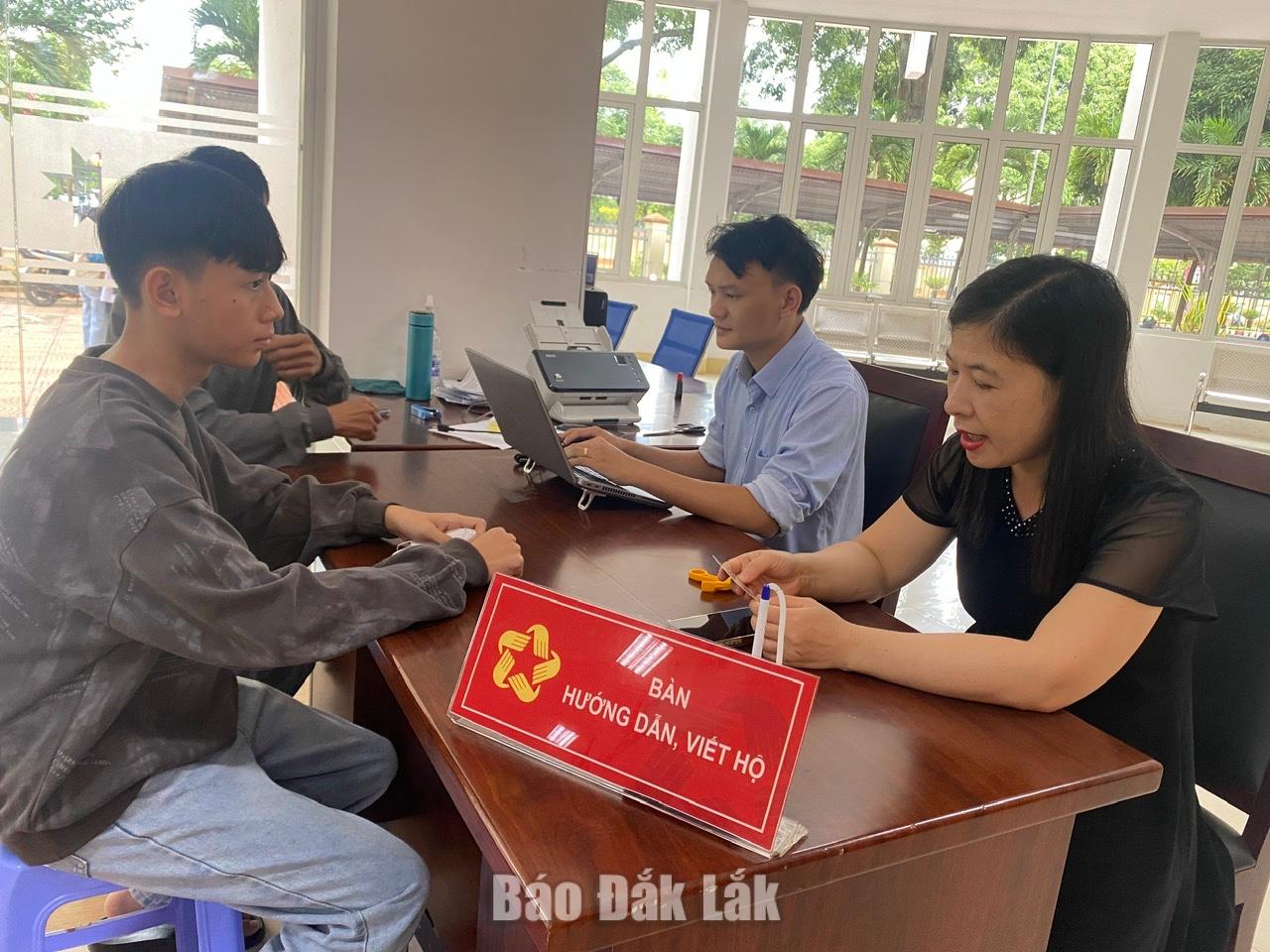 |
| Citizens receiving guidance on administrative procedures at the Provincial Public Administrative Service Center. |
Significant progress has also been made in the application digitization combined with the administrative procedure resolution outcomes. The province has rolled out 1,535 end-to-end online public services, serving as a core foundation for eliminating duplicate information submission. Mr. Nguyen Van Hung, a resident in Tan Lap ward, remarked: “Instead of having to visit various departments or agencies to handle different administrative procedures, I can now simply go to the Provincial Public Administrative Service Center, where I receive thorough guidance. Once I understand the process, I can submit applications online from home in the future, the results are delivered directly to me, no more long waits like before”.
Toward a service-oriented administration
Despite these positive outcomes, the operation of public administrative service centers province-wide still faces several challenges.
Dak Lak province covers a large geographical area, there are disparities in digital infrastructure combined with the technological proficiency among residents. At some commune-level centers, there is a shortage of IT personnel, while backup equipment along with network connectivity sometimes fall short of requirements. In remote and isolated areas, ethnic minority people alongside the elderly often still require direct, in-person assistance from officials. Furthermore, certain procedures, particularly those related to land, forestry, the environment, require on-site verification, the fulfillment of financial obligations or the specialized database integration remains inconsistent.
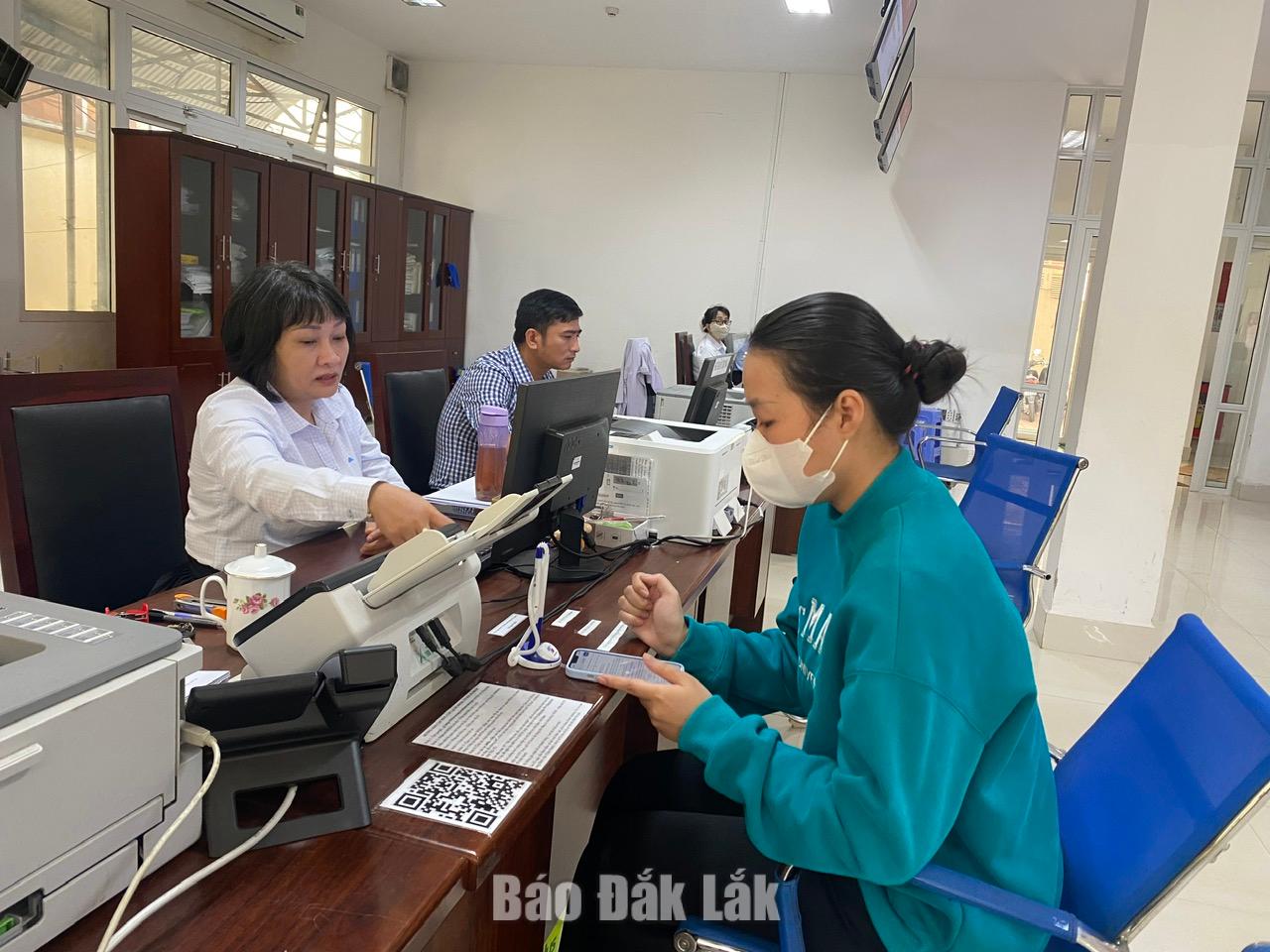 |
| Citizens receiving guidance on administrative procedures at the Provincial Public Administrative Service Center. |
For instance, in Ea M’droh commune, the IT infrastructure lacks full synchronization; specialized software occasionally experiences connectivity errors or a lack of data interoperability. Additionally, some residents, including ethnic minorities and the elderly, find it difficult to utilize smart devices. Thanks to the proactive support provided by local officials, youth volunteers, in coordination with community digital technology teams, Ea M’droh commune has achieved an online application submission rate of over 87% together with an online payment rate exceeding 82%.
To enhance administrative reform effectiveness, Dak Lak province has reviewed 904 administrative procedures across 9 key areas, subsequently approving the simplification of 224 of them. The province committed to further improving technical infrastructure, enhancing the digital skills among grassroots-level officials, refining the data system interoperability. The core objective of administrative reform lies not in mere statistics, but in ensuring convenience, saving time coupled with costs, achieving genuine satisfaction among citizens and businesses.
Translated by TRINH THUY