A recent thematic conference reviewing implementation of policies supporting community-based tourism development in ethnic minority areas, linked with preservation and promotion of ethnic cultural identity, demonstrated a flexible, proactive approach by the Provincial People’s Council Standing Committee.
With more than 1,100 delegates attending in person and online, the conference brought together experts, researchers, artisans, reputable individuals, businesses, cooperatives and households directly involved in community-based tourism.
It was the first time the Provincial People’s Council Standing Committee had organised a large-scale thematic conference to review a resolution through a more practical approach, reducing formalities while increasing interaction. The conference combined an assessment video with findings from field surveys, while connecting participants both in person and online to broaden discussions, share experience as well as reflect practical conditions across localities.
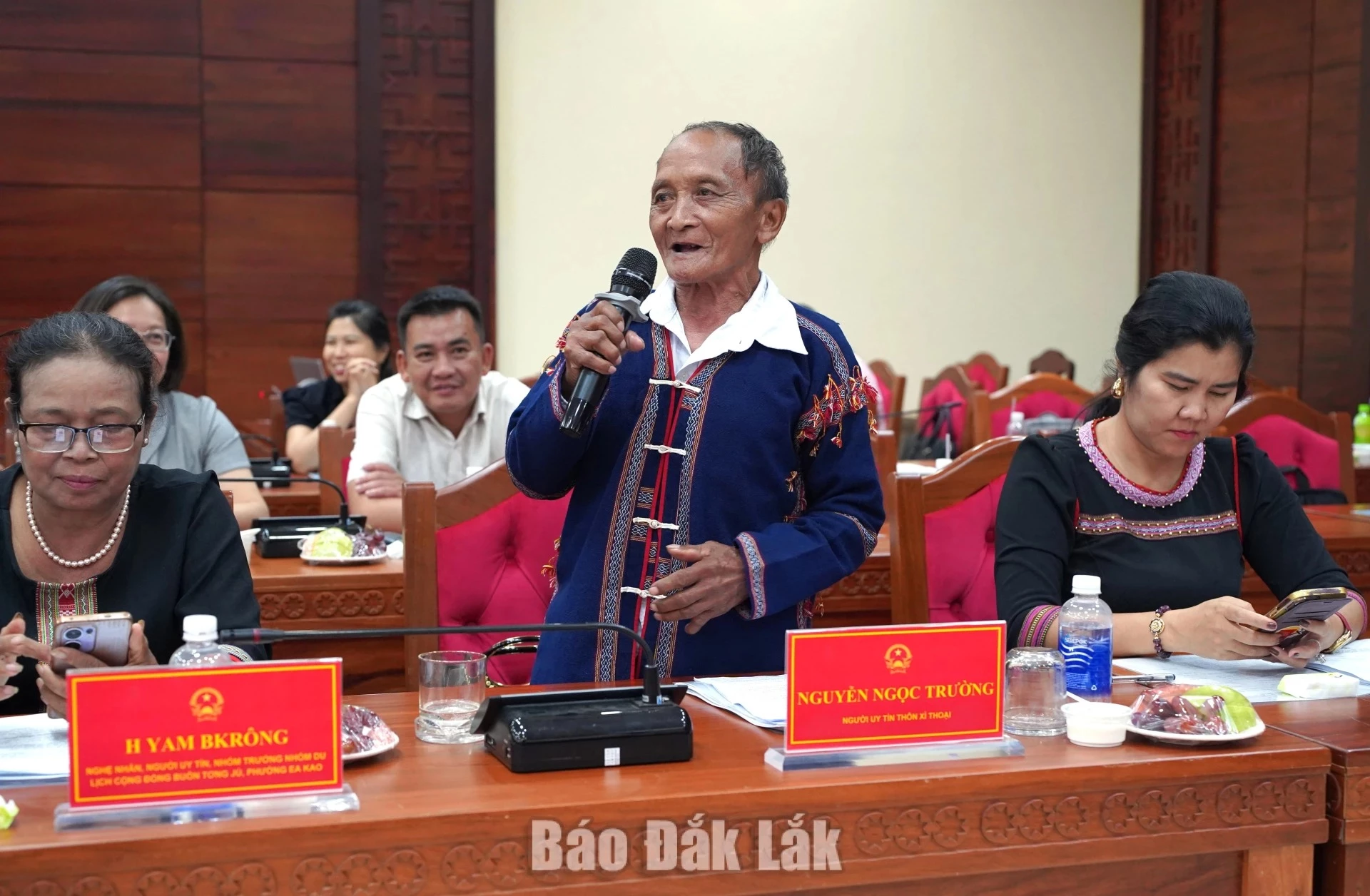 |
| Mr. Nguyen Ngoc Truong, a reputable individual from Xi Thoai Hamlet in Xuan Lanh Commune, sharing his views at the discussion. |
Discussions highlighted that, alongside achievements, implementation of Resolution No. 08/2021/NQ-HDND still faces obstacles related to support resources, implementation arrangements, the role of communities, management of facilities after investment, and preservation of traditional cultural values in tourism activities.
Drawing on experience from Ako Dhong Village in Buon Ma Thuot Ward, comrade H Zu Ni Nie, Secretary of the village Party cell, said support for community-based tourism development should be accompanied by clear mechanisms defining residents’ rights and responsibilities, as well as arrangements for managing and operating facilities after investment. Appropriate linkages are simultaneously needed to ensure communities genuinely serve as the key stakeholders.
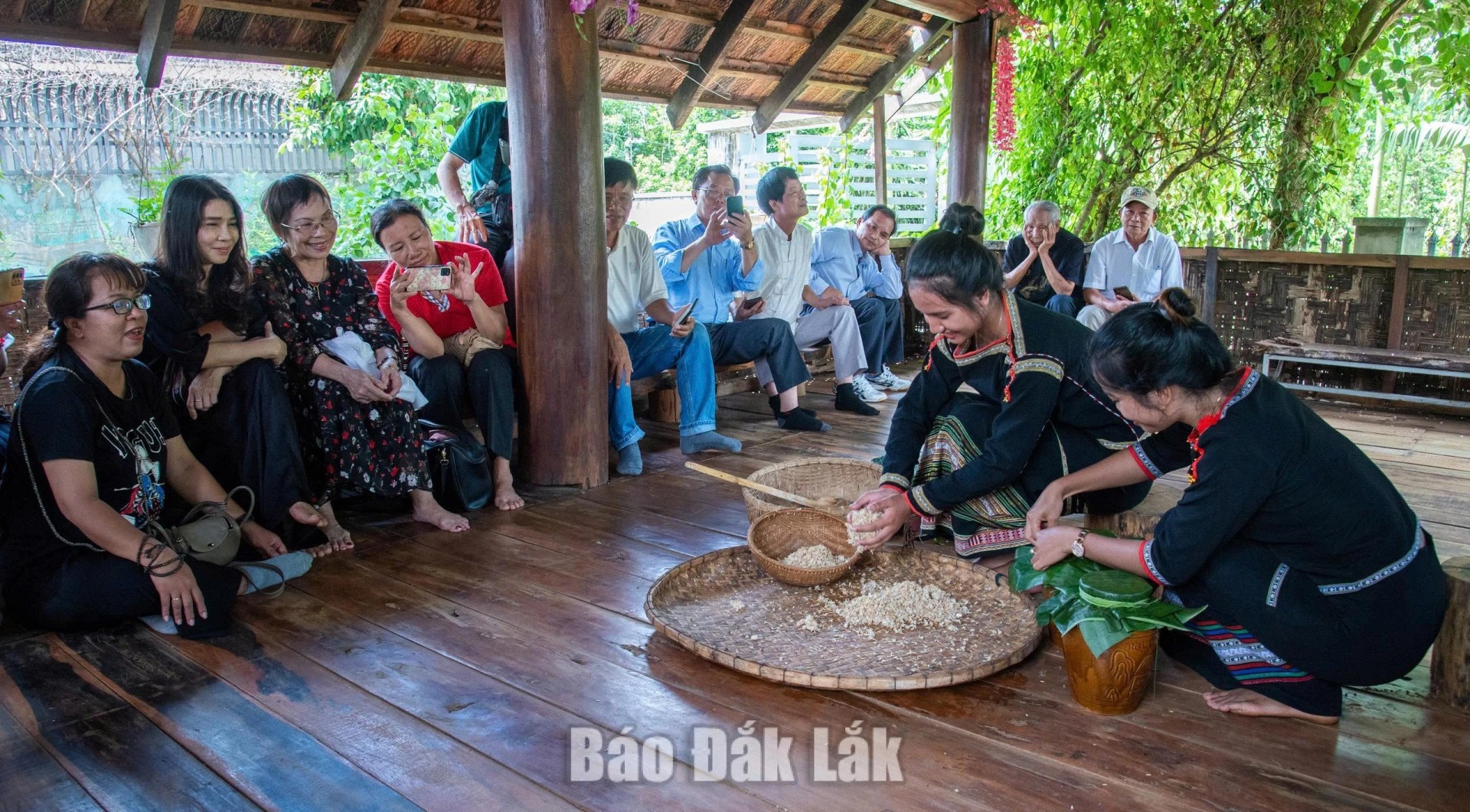
From a cultural along with artistic perspective, Ms. Nie Thanh Mai, Chairwoman of the provincial Literature and Arts Association, stressed the central role of communities coupled with artisans in welcoming visitors, introducing and passing on cultural traditions. She also called for approaches tailored to the distinctive characteristics of each village, avoiding a one-size-fits-all model.
Refining policies for the new development phase
Emphasising the need for an objective assessment of policy effectiveness, comrade Y Nhuan Bya, PPC Vice Chairman said the PPC would direct the Department of Culture, Sports and Tourism to urgently draft alongside advise on a new resolution for 2026-2030. The new policy would broaden its scope, focus on key priorities, align with national target programmes and socio-eco development plans, as well as integrate resources for infrastructure investment.
Reviewing achievements while highlighting the gap between potential and actual outcomes, comrade Cao Thi Hoa An, Member of the Party Central Committee, Permanent Deputy Secretary of the Provincial Party Committee and Chairwoman of the Provincial People’s Council, stressed the need to shift from “passive preservation” towards “proactive utilisation”, guided by the principle of preserving culture for development while pursuing development to sustain preservation. Cultural identity must not be sacrificed, nor should gong cultural spaces, longhouses or natural landscapes be disrupted for short-term gains.
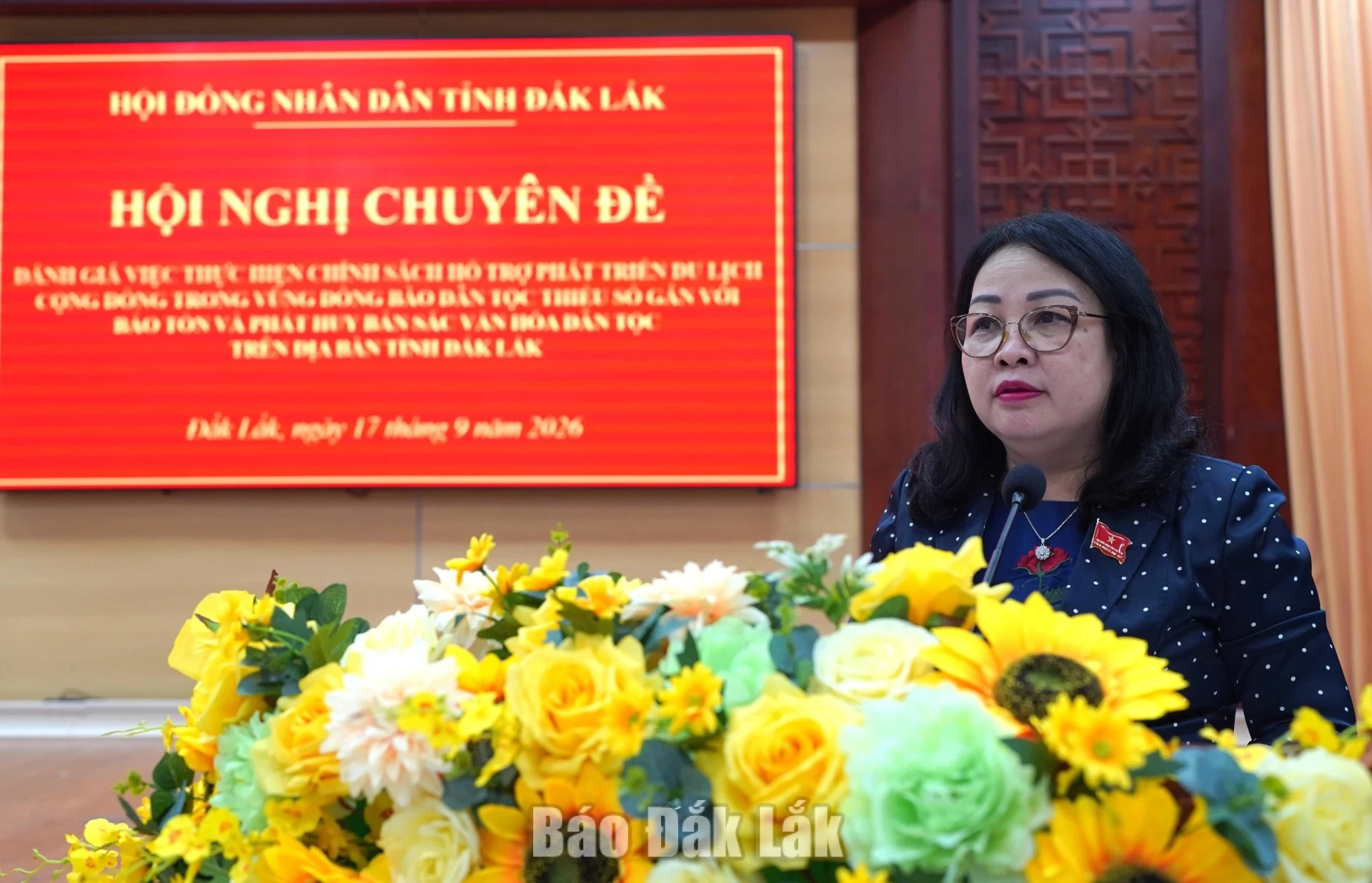 |
| Comrade Cao Thi Hoa An delivering a directive speech at the conference. |
Comrade called on the PPC to urgently advise the Provincial People’s Council on promulgating a new policy for 2026-2030 to replace the current resolution. The new policy should place residents and businesses at the centre, remove bottlenecks related to land, credit, infrastructure combined with post-investment operating mechanisms, strengthen linkages between community-based tourism cooperatives and travel businesses, as well as provide training in skills, foreign languages and culinary services so local residents can take ownership of the service supply chain.
People’s Councils at all levels should continue listening, monitoring and working alongside local communities to ensure every policy adopted is highly feasible, with people’s prosperity and happiness serving as the ultimate measure of effectiveness.
Translated by HAI LOAN