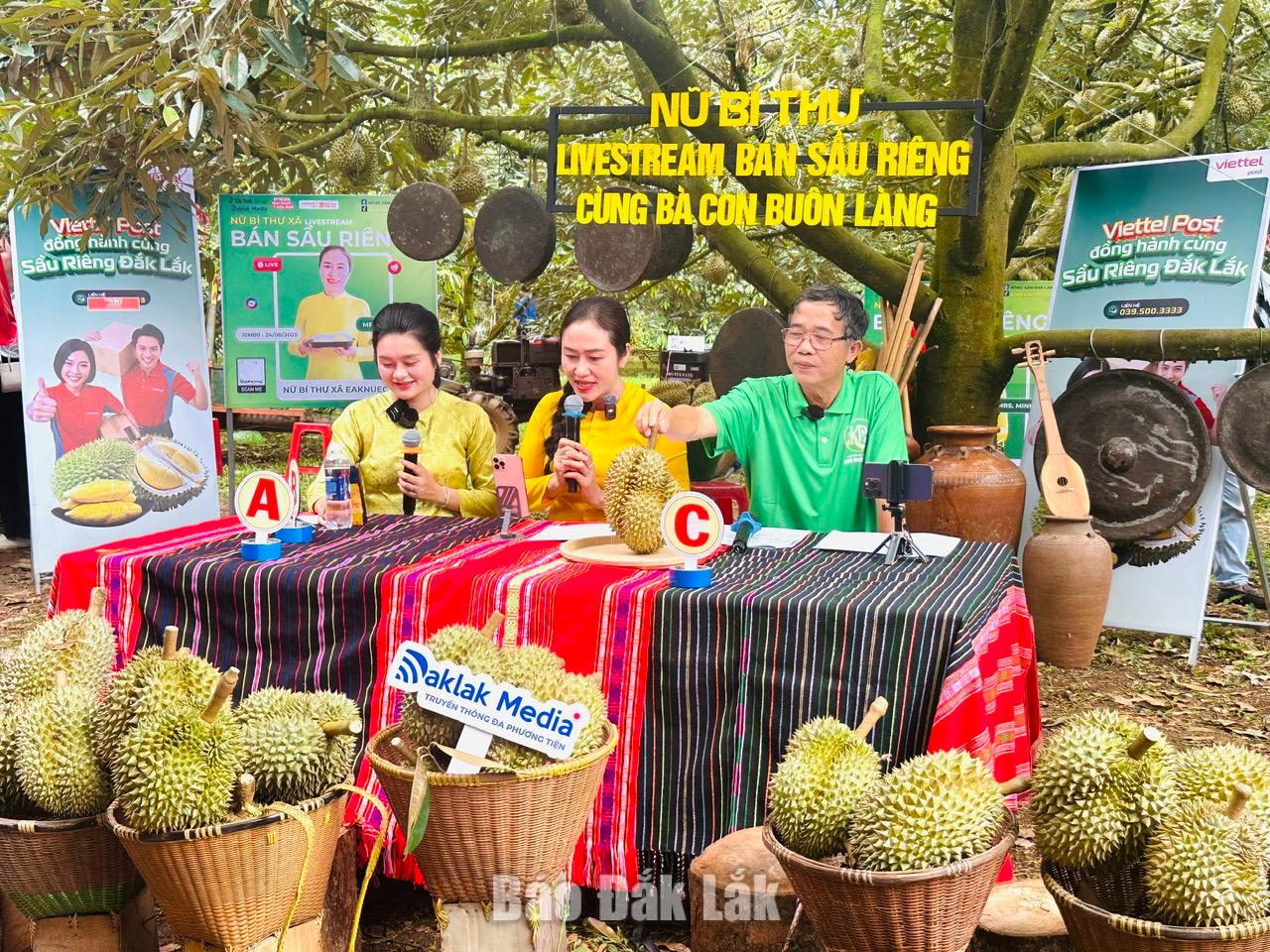
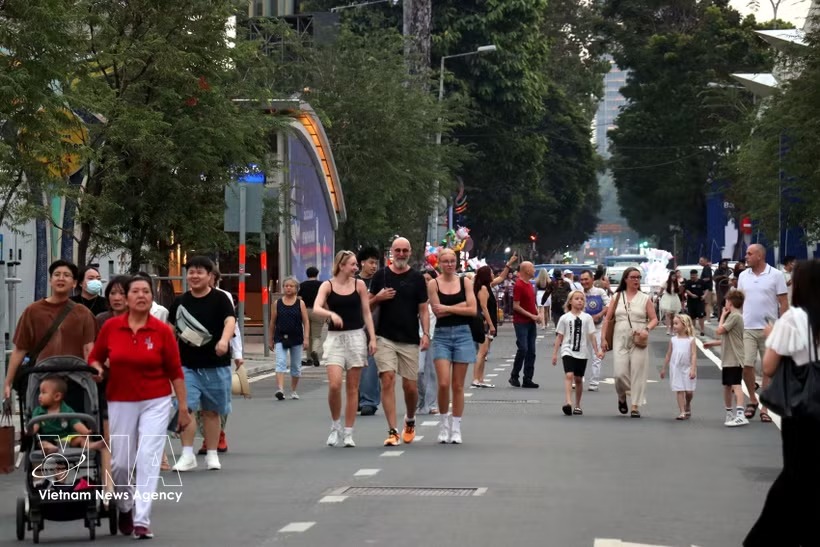
Resolution No. 26-NQ/TW, dated August 22, 2026, issued by the Politburo on developing Viet Nam’s tourism industry into a spearhead economic sector in the new era, calls for a strong shift from quantity-driven development towards greater emphasis on quality, efficiency and added value; with culture serving as the foundation, while identity and quality experiences become competitive advantages.
For Dak Lak, this orientation opens up a new approach to organising tourism space as well as developing tourism products.
Stretching from the highlands to the blue sea, Dak Lak boasts diverse resources and favourable conditions for developing journeys featuring multiple layers of experiences. This provides a foundation for destinations to move beyond standalone exploitation alongside gradually be developed into attractive tourism products offering longer, more varied experiences.
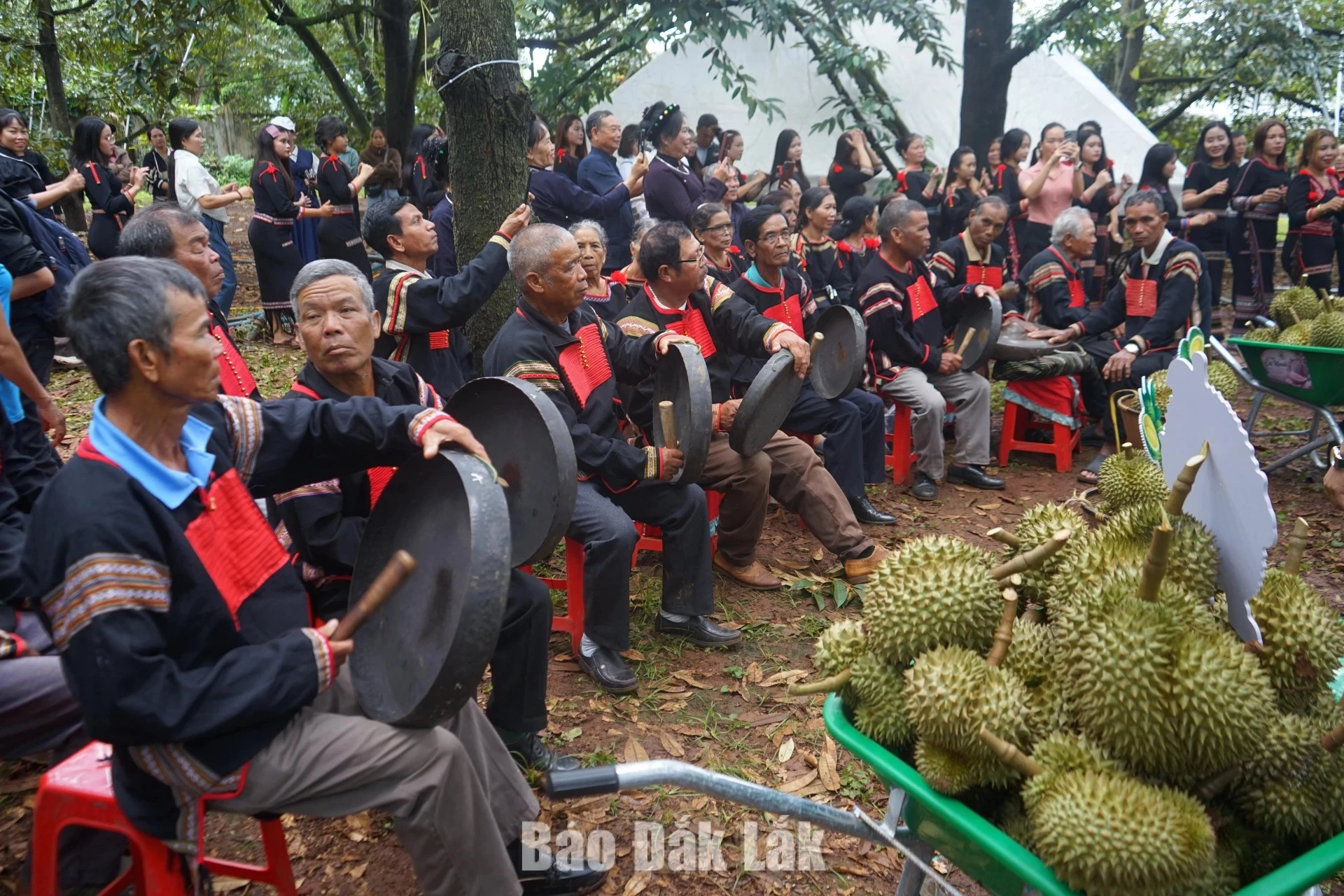 |
| Visitors experiencing durian orchard tourism and community culture in Ea Phe Commune during the 2026 Dak Lak Durian Festival. |
In the west, coffee is closely associated with the Buon Ma Thuot brand; elephants are intertwined with the cultural stories of Central Highlands ethnic communities; forests, lakes, waterfalls combined with biodiversity form a rich natural ecosystem; and, in particular, the Space of Gong Culture in the Central Highlands stands out as a distinctive cultural asset. In the east lie a system of coastal landscapes, lagoons together with bays, geological heritage, traditional craft villages and the cultural values of coastal communities. The completion of the nomination dossier for Lo Village in Hoa Hiep Ward to join the “Best Tourism Villages in the World” network shows the provincial focus on developing community-based tourism while promoting local people’s role in telling stories about the land, culture and way of life.
According to Le Hoang Phu, Deputy Director of the Department of Culture, Sports and Tourism, following the merger, the area stretching from the highlands to the sea provides favourable conditions for connecting ecosystems, landscapes along with cultural values, creating diverse tourism products centred on exploration, experiences, ecology, culture, education and research. This could help the province extend visitor stays as well as enhance destination competitiveness under the message: “One Journey, Two Experiences: Where the Great Highlands Meet the Blue Sea”.
From resources to lasting values
Discussing solutions to promote tourism development in Dak Lak, Mr. Nguyen Hong Hai, Vice Chairman of the Viet Nam Tourism Association, said the province is rich in tourism resources, but numerous have yet to be transformed into products with sufficient depth and competitiveness. The challenge is to turn existing resources into distinctive, high-value products that offer unique experiences as well as generate greater value. Greater attention should also be paid to identifying target market segments and building a unified image for the destination.
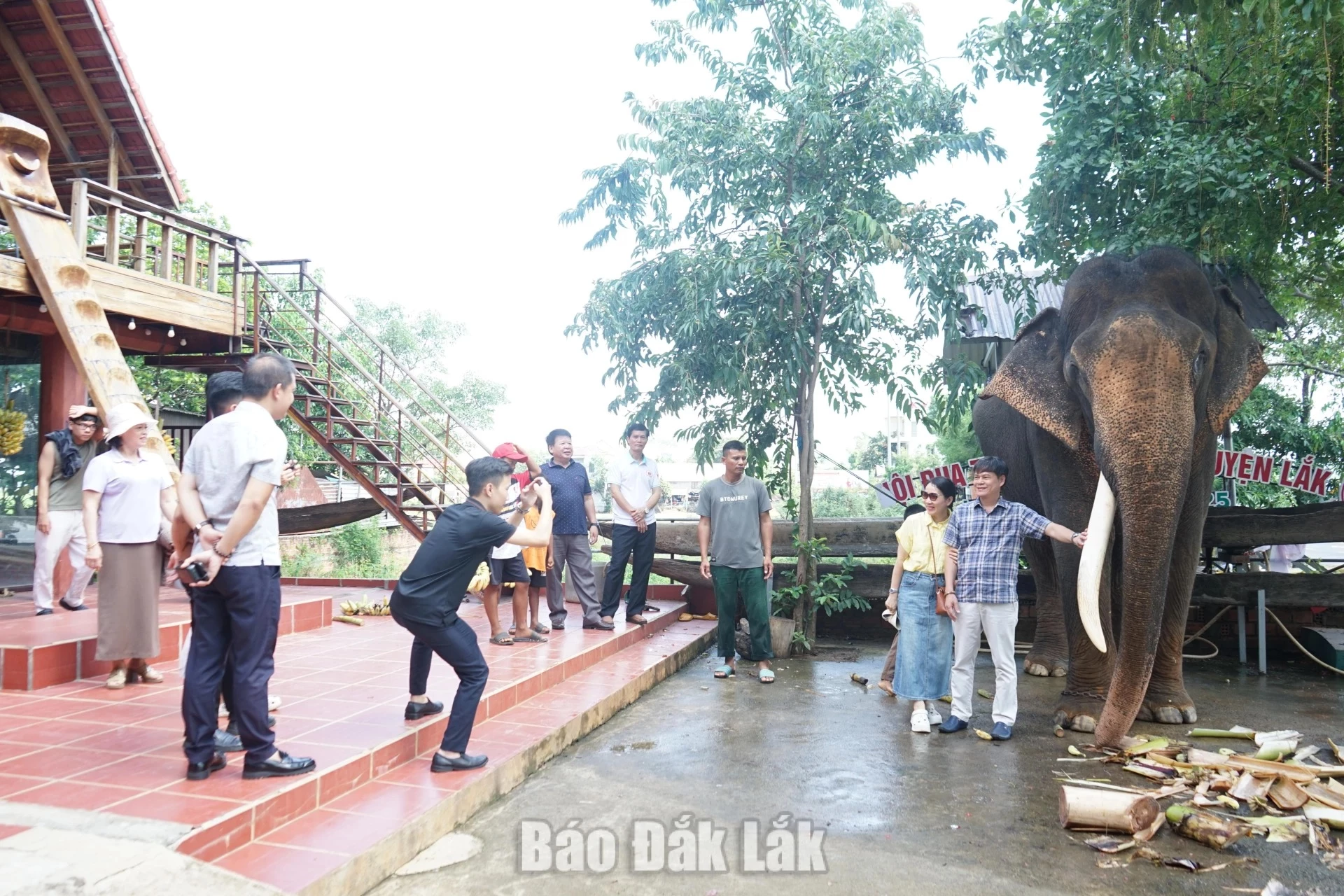 |
| Visitors enjoying taking photos with elephants, a distinctive cultural feature of tourism journeys through the Dak Lak highlands. |
This should go beyond simply staging gong performances. Visitors should be brought closer to longhouses, Kpan benches, cultural rituals, village life combined with the process of passing heritage down through generations. Similarly, Da Dia Reef should be developed around its geological story, environmental education, nature exploration and scientific research to add greater depth to the visitor experience.
This is also the spirit underpinning Resolution No. 26-NQ/TW, which calls for a strong shift from quantity-driven development towards quality, efficiency, sustainability and higher added value, with quality, cultural identity alongside distinctive experiences serving as the main basis for competition.
In the context of Dak Lak, this approach requires each tourism resource to be placed within a broader value chain. When resources are brought to life through distinctive stories, products are developed with greater depth, and communities are actively involved in the development process, new tourism spaces can be transformed into new sources of value. This is also the direction Dak Lak tourism is pursuing: enhancing the quality of visitor experiences while creating greater value for destinations coupled with local communities.
Translated by KHUONG THAO