Dak Lak is home to a rich and diverse cultural landscape stretching from the Central Highlands to the coast. Its cultural heritage is not only being preserved as well as safeguarded, but is also increasingly being transformed into engaging tourism experiences that can generate sustainable livelihoods for local communities.
Experiencing tourism through local ways of life
In developing community-based tourism, Mrs. Le Thi Tra My, Director of the Caroline Community-based Tourism and Education Cooperative in Hòa Hiệp Ward, has chosen to turn the simple cultural practices alongside everyday routines in her hometown into tourism products.
Activities including making traditional cakes, growing rice, milling grain, visiting local markets and preparing meals have been designed as hands-on experiences, allowing visitors to participate directly. By retaining the natural coupled with authentic character of local life, these activities have attracted both international travelers alongside young urban visitors.
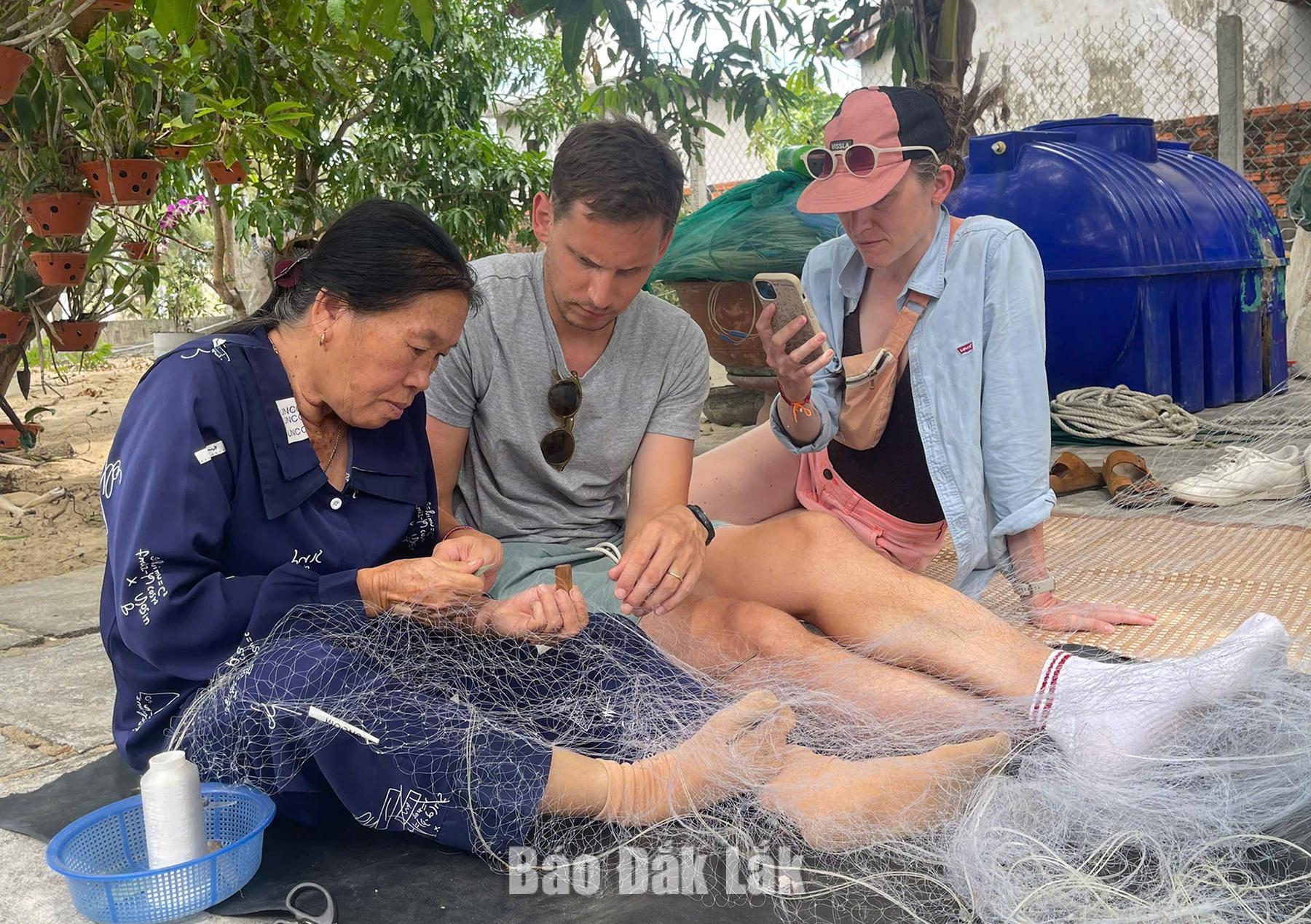 |
| Visitors observe as well as learn about fishing-net weaving at the Caroline Community-based Tourism and Education Cooperative. |
The cooperative is gradually engaging more local residents in tourism, particularly women and households involved in guiding visitors, farming combined with cultural activities. It is also developing 11 seaside homestays designed to preserve the rustic character of the fishing village, while creating additional jobs and income as well as helping residents improve their vocational and digital skills.
In a different setting, at Nieng 2 Village in Ea Nuol Commune, H Yip Nie has chosen cuisine as a way to tell the story of her homeland. Her eatery serves dishes imbued with the Central Highlands flavours, turning a meal into part of the visitor experience.
She also makes traditional can wine - jar wine fermented with a homemade starter culture using traditional methods - and is seeking ways to bring the product closer to tourists. The activity provides additional income for her family while creating jobs for several local workers.
These stories offer another perspective on tourism: compelling products can emerge directly from local culture, cuisine and everyday life. The key lies in recognizing their value while telling their stories in an accessible and engaging way that resonates with visitors.
From age-old crafts to new value
If cuisine, daily life and landscapes can become tourism experiences, traditional crafts tell stories of skilled hands, collective memory along with knowledge passed down through generations.
At An Cu sedge-mat craft village in O Loan Commune, sedge is processed, dried, dyed and woven into mats. Visitors can do more than simply purchase the finished products; they can watch artisans at work, try their hand at part of the weaving process, alongside learn about the materials, techniques and stories behind each item.
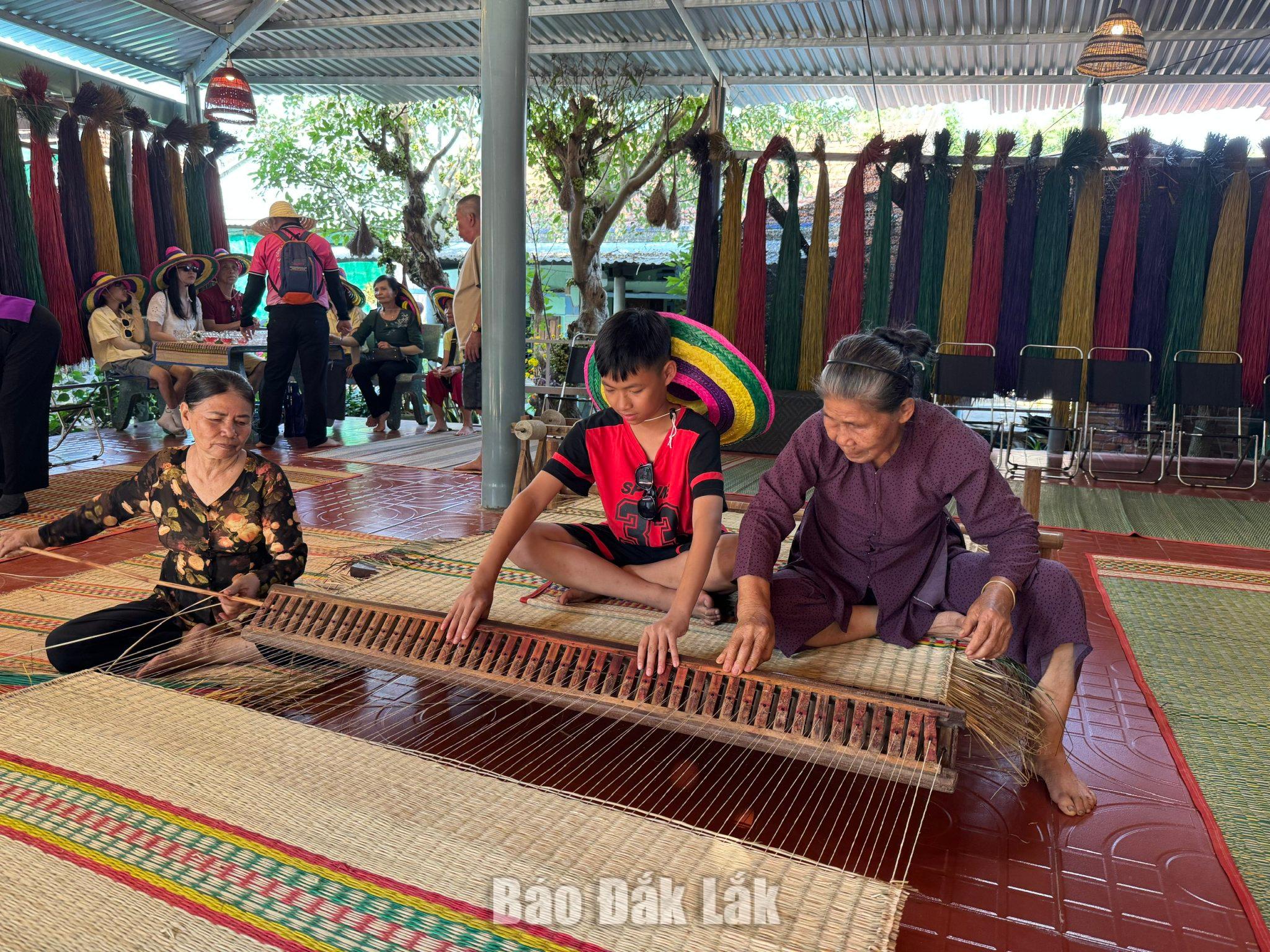 |
| Visitors try their hand at weaving sedge mats at An Cu craft village in O Loan Commune. |
According to Mr. Nguyen Anh Quan, Director of the An Cư Sedge Mat Production, Services and Tourism Cooperative, the traditional craft provides both livelihoods coupled with a distinctive tourism experience. While preserving traditional techniques, the cooperative is also improving designs, developing household goods and souvenir products, while expanding its sales channels.
“The way we practice the craft may change and the products may become more diverse, but the essence of the craft - the techniques and values handed down by our ancestors - must be preserved,” Mr. Quan said.
For culture to become a sustainable foundation for local livelihoods, communities must continue preserving their traditional crafts while taking an active role in tourism, from production alongside food preparation through welcoming visitors and sharing local stories.
Mrs. Nguyen Thuy Phuong Hieu, Deputy Director of the Department of Culture, Sports and Tourism, said local residents need greater support in tourism skills, product development, sales combined with promotion via digital platforms. Simultaneously, artisans and other holders of traditional cultural knowledge should be recognized as well as given opportunities to pass on their expertise, showcase their skills and help spread the value of local heritage.
Translated by THAO LINH