Developing industrial clusters (IC) has been identified by provincial authorities as one of the key solutions to expand production space, attract investment, accelerate economic restructuring and generate employment opportunities for local communities.
Infrastructure remains inadequate and inconsistent
According to Dak Lak Department of Industry and Trade, the province currently has 56 ICs under planning, covering a combined area of nearly 2,946 hectares. Among them, 21 ICs have officially been established as well as remain in operation, with total area reaching approximately 937 hectares, attracting 221 registered investment projects. Average occupancy rate currently stands at around 60.4%.
 |
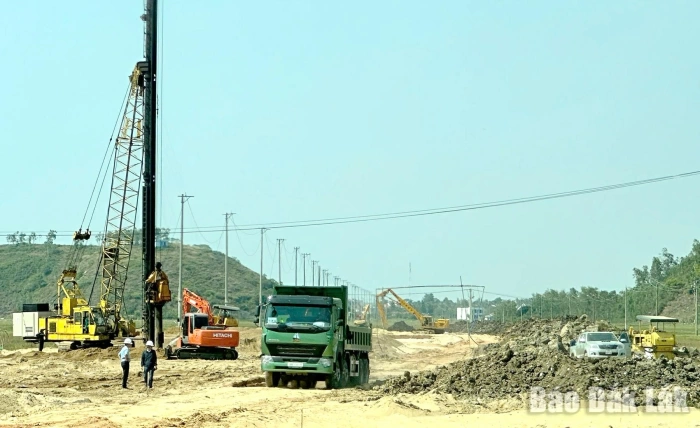
| Tan An 1 Industrial Cluster along with Tan An 2 Industrial Cluster largely completing infrastructure development but still facing obstacles in putting centralised wastewater treatment systems into operation. |
Despite relatively large number of ICs, technical infrastructure in many locations remains incomplete and poorly synchronised. Province has so far invested partial technical infrastructure in only 12 ICs, while just five have secured approved funding for centralised wastewater treatment systems. Many ICs have completed only portions of internal transport networks and still lack water supply alongside drainage systems, public lighting, administrative facilities, as well as centralised wastewater treatment infrastructure.
Moreover, several ICs continue facing difficulties related to site clearance, overlapping planning schemes and limited investment resources. Several clusters maintain low occupancy rates, reducing their attractiveness to investors. Numerous secondary projects have also experienced prolonged delays or suspended operations without comprehensive resolution, resulting in inefficient use of industrial land resources combined with negatively affecting provincial investment climate.
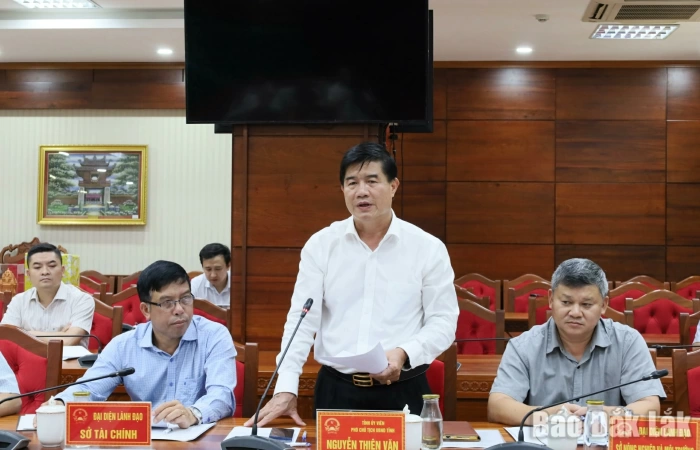
According to Mr. Nguyen Van Nhiem, Deputy Director of Dak Lak Department of Industry and Trade, recent reviews show that ICs managed by commune-level authorities are currently facing greatest challenges. Following administrative restructuring, many localities lack specialised personnel, maintenance funding along with professional management models. Concurrently, demand for investment in technical and environmental infrastructure remains extremely high. Several IC infrastructure developers are also encountering financial difficulties, particularly rising compensation coupled with site-clearance costs, which have affected implementation progress of multiple projects.
Mobilising resources to unlock development potential
As Dak Lak pursues a double-digit economic growth target, removing bottlenecks facing ICs has become strategically important to local industrial development.
During 2026 - 2027 period, provincial authorities will prioritise investment in centralised wastewater treatment systems and internal transport infrastructure for operating ICs. In 2026 alone, the province plans to allocate approximately 658 billion VND for 11 ICs. Simultaneously, authorities are studying support mechanisms for several enterprise-developed ICs in order to create “seed capital” capable of mobilising additional private-sector resources.
 |
| Manufacturing activities at Hoa An Industrial Cluster. |
This orientation reflects a shift away from fragmented investment towards prioritising ICs with high feasibility, favourable infrastructure connectivity and strong potential to attract businesses, thereby concentrating resources on synchronised infrastructure development.
In parallel, the province is restructuring management model for ICs by transferring operational responsibility from commune-level People’s Committees to enterprises or cooperatives tasked with managing and operating technical infrastructure. The move is expected to improve operational efficiency as well as strengthen investment attraction. ICs operating inefficiently, struggling to attract investors or no longer aligned with planning strategies will be adjusted or removed from provincial planning framework.
During 2026 - 2030 period, Dak Lak will prioritise investment attraction for ICs including Cu Bao, Krong Nang, Cu Elang, Ea O, Hoa Xuan 1, Hoa Xuan 2 and Ea Kpam. These locations are considered to possess advantages in land availability, infrastructure connectivity alongside potential to develop into future hubs for agricultural processing coupled with supporting industries.
Notably, the province is also orienting investment attraction towards deep agricultural processing industries, supporting industries, high-tech manufacturing and green industries with minimal environmental impact. This strategy is viewed as well suited to Dak Lak’s comparative advantages, given its extensive agricultural raw-material areas while deep-processing industry remains underdeveloped.
Translated by HAI LOAN