Four years after the issuance of Politburo Resolution No. 23-NQ/TW on socio-eco development and safeguarding of national defence alongside security in the Central Highlands through 2030, with a vision towards 2045, Dak Lak has witnessed significant progress across a broad range of sectors.
Unlocking drivers of development
For decades, infrastructure was regarded as one of the greatest constraints on the development of the Central Highlands in general and Dak Lak province in particular. Inadequate regional transport connectivity, high logistics costs combined with shortage of large-scale industrial zones restricted the provincial ability to fully realise its potential.
Against this backdrop, Resolution 23 was introduced not only as a development framework for the Central Highlands but also as a strategic orientation that identifies infrastructure, particularly transport and digital networks, as pivotal growth drivers.
 |
| The Khanh Hoa - Buon Ma Thuot Expressway being expected to shorten freight transport times and enhance connectivity between the Central Highlands together with the South Central Coast upon completion. |
For the first time, the Central Highlands was positioned within an integrated development framework linking it with the Southeast Region, the South Central Coast, alongside major economic centres nationwide and the Greater Mekong Subregion.
For Dak Lak, Resolution 23 has provided an important foundation for mobilising investment resources while implementing key projects, most notably the Khanh Hoa - Buon Ma Thuot Expressway. Stretching more than 117 km and carrying a total investment approaching 22 trillion VND, the project is expected to shorten freight transport times, reduce logistics expenses as well as enhance regional transport connectivity between the Central Highlands and the South Central Coast upon completion.
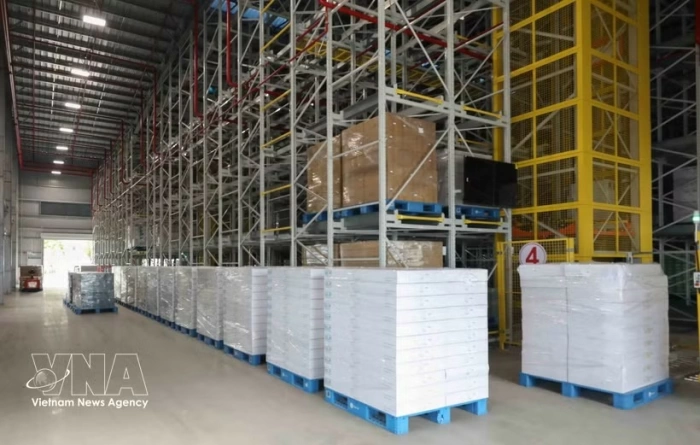
Alongside transport infrastructure, major industrial projects are also being accelerated, particularly Phu Xuan Industrial Park, covering more than 313 ha and has a total investment of nearly 2.5 trillion VND. The project is expected to become a new growth engine, attracting investment in agro-processing, energy along with logistics.
These tangible projects demonstrate that Resolution 23 has moved beyond strategic orientation and is being translated into planning frameworks, action programmes along with large-scale investment initiatives.
Opening up a new growth space
After nearly four years of implementation, the most visible impacts of Resolution 23 are reflected not only in infrastructure projects under construction but also in a shift in growth mindset. External transport networks are being progressively completed; urban infrastructure in Buon Ma Thuot continues to receive sustained investment; while logistics, industrial infrastructure, energy projects together with digital transformation are being steadily upgraded.
 |
| Phu Xuan Industrial Park project being accelerated to establish a modern industrial ecosystem centred on agro-processing, energy and logistics. |
These developments are laying an important foundation for Dak Lak to enter a new growth phase under the adjusted provincial master plan for the 2021 - 2030 period, with a vision towards 2050. The plan defines the provincial role as strategic gateway connecting highland and coastal areas, while linking inland regions with domestic as well as international trade corridors.
According to PPC Vice Chairman, comrade Truong Cong Thai, Resolution 23 has provided both momentum and strategic direction for the provincial socio-eco development. Infrastructure, particularly regional transport connectivity, has gradually improved, alongside a more favourable investment environment and stronger regional linkages, opening up new development space for the province in the years ahead.
Based on implementation experience, Dak Lak has proposed that the Government together with central ministries and agencies, further enhance the effectiveness of the Regional Coordination Council, reinforcing its role in promoting interprovincial coordination coupled with connectivity in order to better harness regional potential and advantages while removing growth constraints. The province has also proposed priority investment in strategic transport corridors connecting its eastern and western areas.
Translated by KHUONG THAO