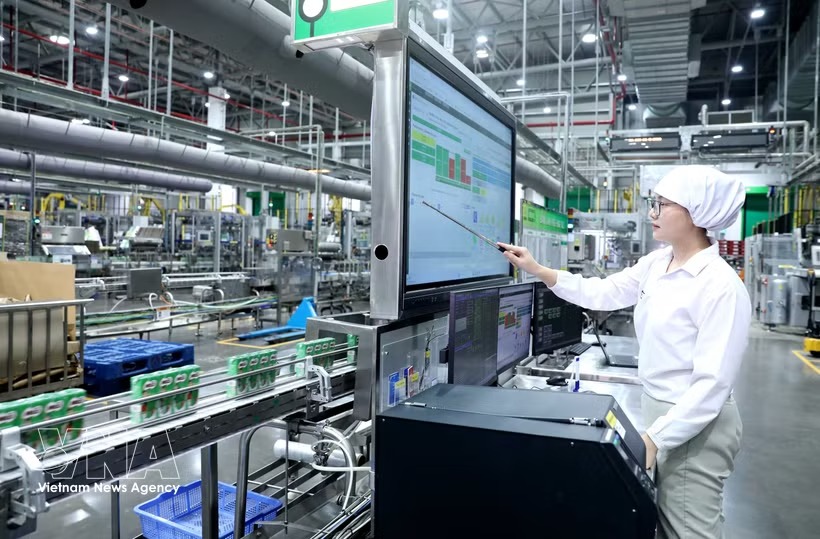
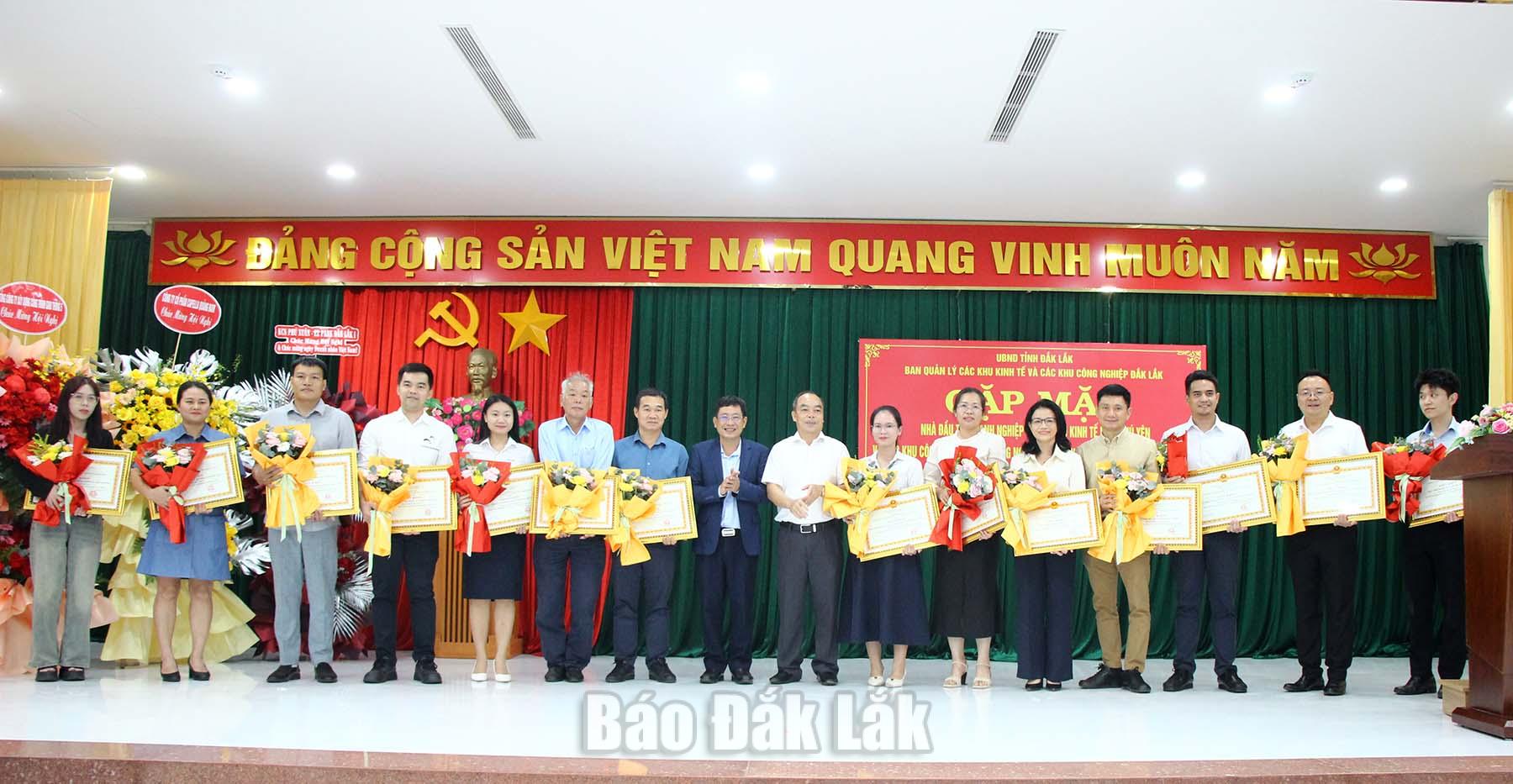
In the digital era, enhancing workers’ digital capabilities (DCs) not only helps businesses optimize operations but also serves as a key driver in increasing the value of Dak Lak’s agricultural products in the marketplace.
Recognizing that technology can only deliver its full potential when employees know how to utilize digital tools effectively, many businesses in Dak Lak have proactively transformed their workplaces into “digital classrooms.”
At Dak Lak September 2 Import-Export Company Limited (Simexco Dak Lak), workforce development is closely aligned with the company’s comprehensive digital transformation (DX) roadmap. The company conducts periodic assessments of employees’ information technology and foreign language proficiency against international standards.
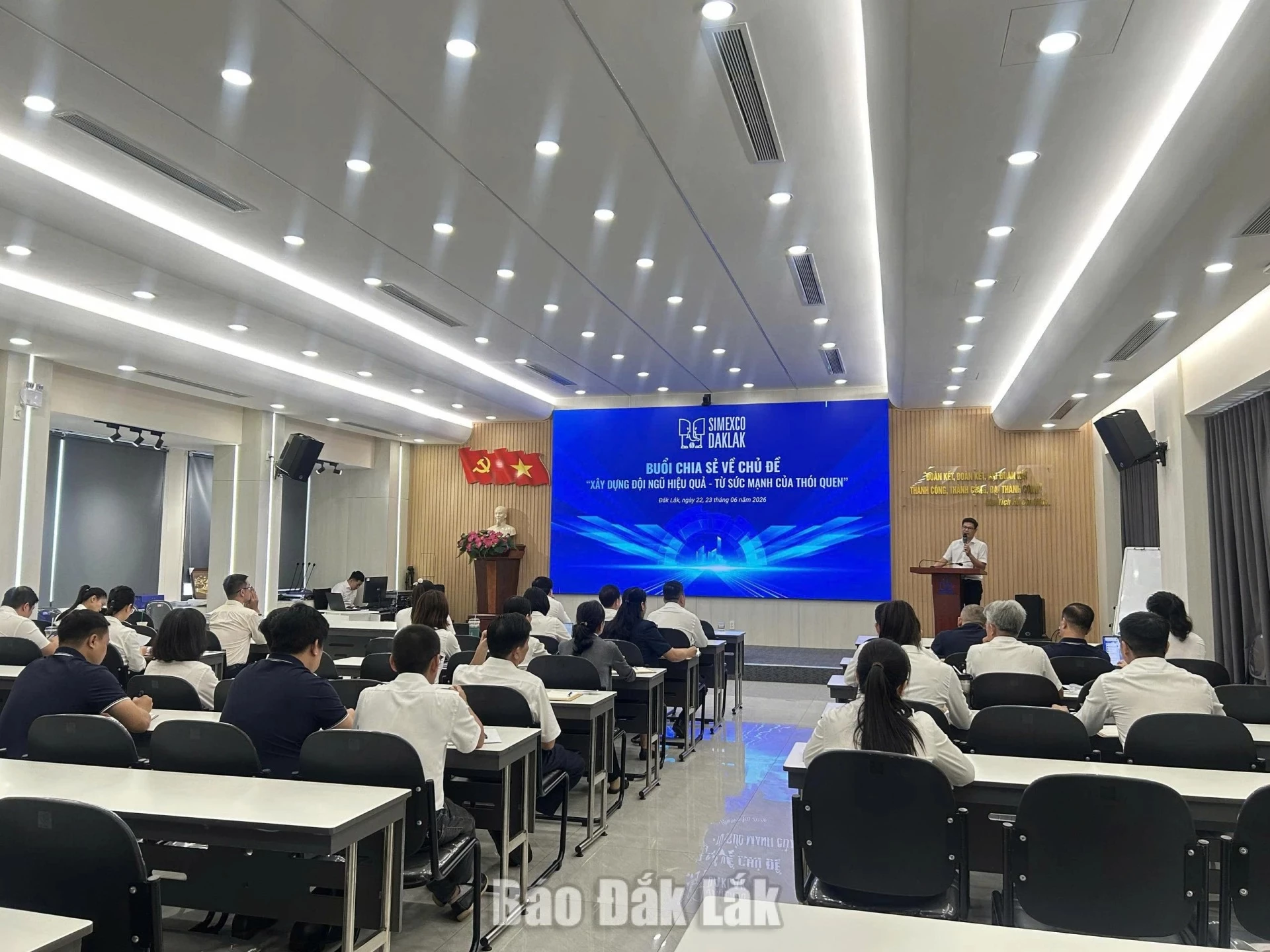 |
| Officials along with employees participating in training and self-directed learning activities at Simexco Dak Lak. |
Mr. Thai Anh Tuan, General Director of Simexco Dak Lak, emphasized: “In the digital age, mastering technology is no longer an advantage but a requirement. Only by continuously upgrading their skills, mastering digital tools and moderning professional competencies can a business effectively operate a closed-loop, transparent agricultural supply chain that meets the stringent international market standards”.
Sharing the same commitment, Vuong Thanh Cong Production and Trading Company Limited conducts regular training sessions for its employees on a quarterly basis. Taking into account the specific needs of each department, the company develops tailored training programs as well as invites experts to provide hands-on guidance.
In particular, the company is accelerating artificial intelligence (AI) application in digital communications, business planning and operational process optimization. According to Le Van Vuong, the company’s director, proactively keeping pace with technological advances while applying AI have helped reduce manual workloads, standardize processes, optimize costs and strengthen the competitiveness of its agricultural product brands.
Building momentum for the digital economy
Businesses’ own efforts are helping lay an important foundation for the development of Dak Lak’s digital economy (DE). Nevertheless, digital technology adoption remains below the provincial potential, due to uneven infrastructure alongside the predominance of small and medium-sized enterprises.
Numerous businesses, cooperatives and household enterprises have yet to make effective use of digital platforms for production management, product traceability, customer outreach and data-driven decision-making.
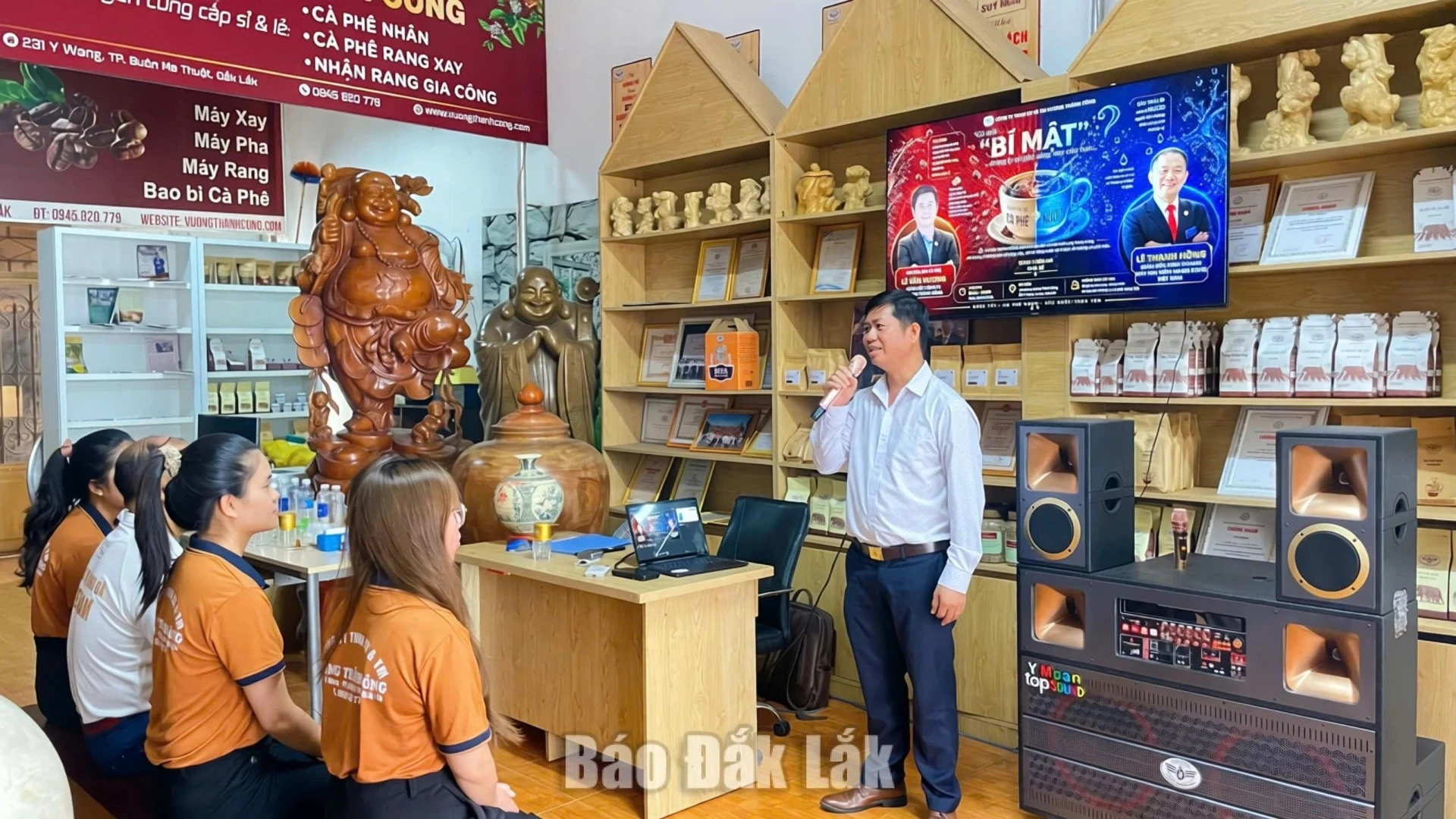 |
| Vuong Thanh Cong Production and Trading Company Limited organizing training sessions to update employees on the latest knowledge alongside developments. |
To drive a more substantial transformation, Dak Lak is focusing on refining its policy framework, placing digital data development at the center of its strategy while prioritizing the development of digital infrastructure. The province regards data as a primary factor of production and AI as a principal production tool for the 2026–2030 period.
Its DE development strategy is closely aligned with the goal of achieving double-digit growth in gross regional domestic product (GRDP). The strategy also aims to ensure inclusive development, extending DX to villages and hamlets, including ethnic minority areas, while integrating DX with green transition and strengthening cybersecurity.
Mr. Bui Thanh Toan, Member of the Provincial Party Standing Committee and Director of the Dak Lak Department of Science and Technology, affirmed: “Developing science, technology alongside innovation is an inevitable step toward enhancing competitiveness. The province is determined to change mindsets and raise DE awareness, encouraging the practical application of digital tools at the grassroots level to create tangible products coupled with results. In this process, businesses’ proactive efforts to strengthen their employees’ DCs are key to addressing the biggest bottleneck at present, driving up the value of local products and fostering sustainable DE development.”
Translated by THAO LINH