The Provincial Party Standing Board has held its 32nd meeting to discuss the Five-year Financial Plan for 2026 - 2030 and consider other important matters within its remit.
At the meeting, delegates focused on the draft Five-year State Budget and Financial Plan for 2026 - 2030. During this period, Dak Lak Province aims to generate total state budget revenue of 157.622 trillion VND, up 111.9% from actual revenue in 2021 - 2025. Total local budget expenditure is projected at 314.713 trillion VND.
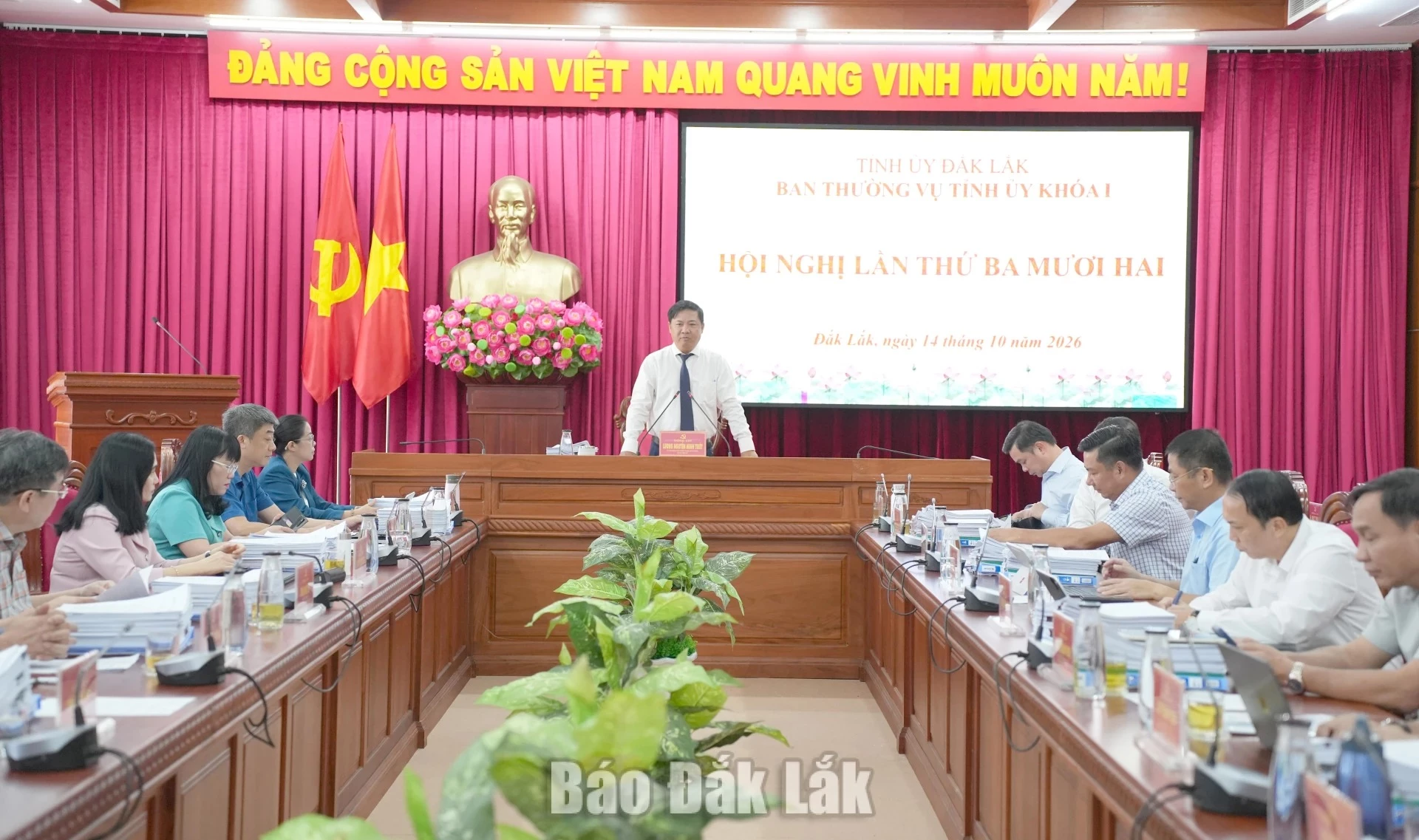 |
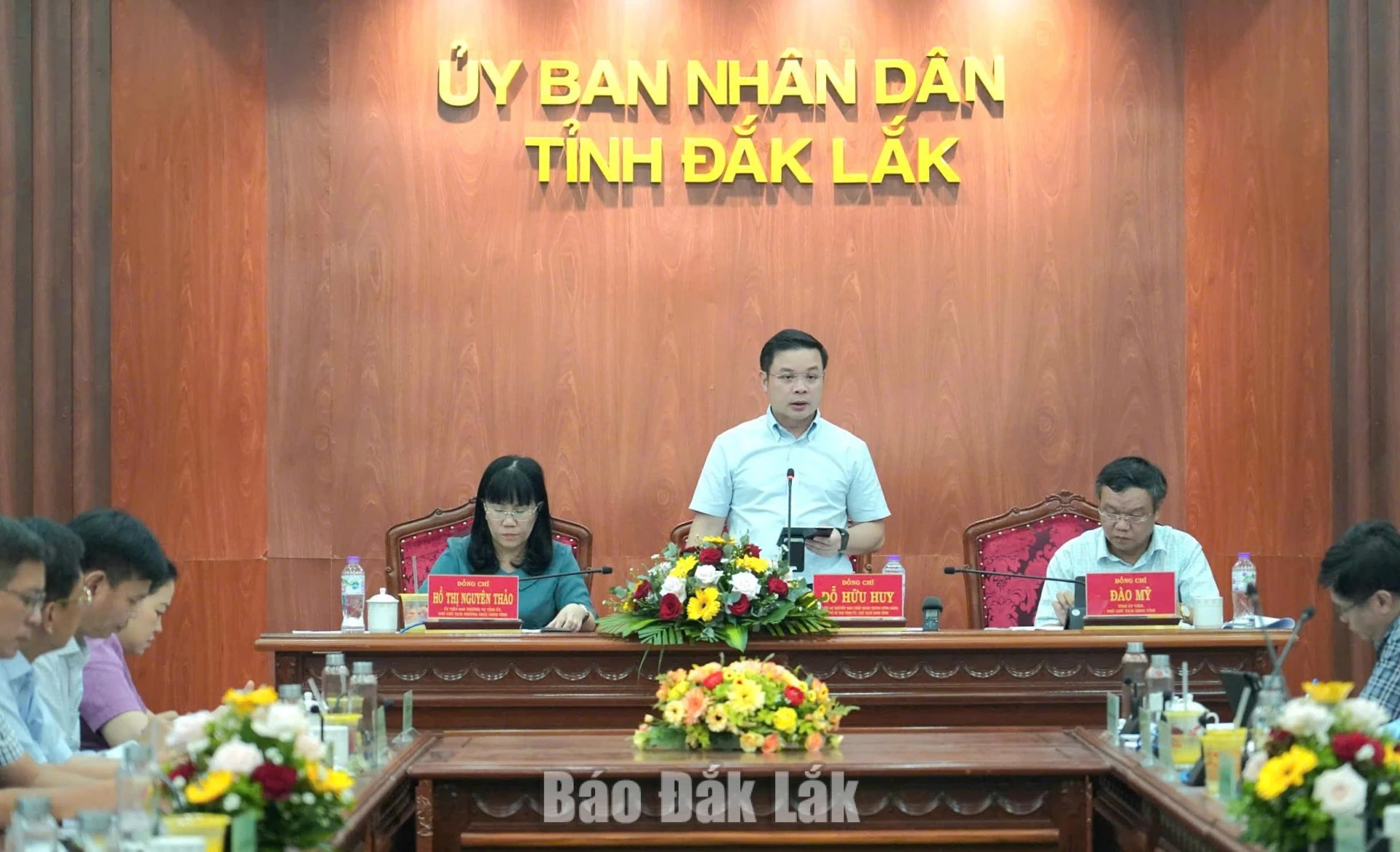
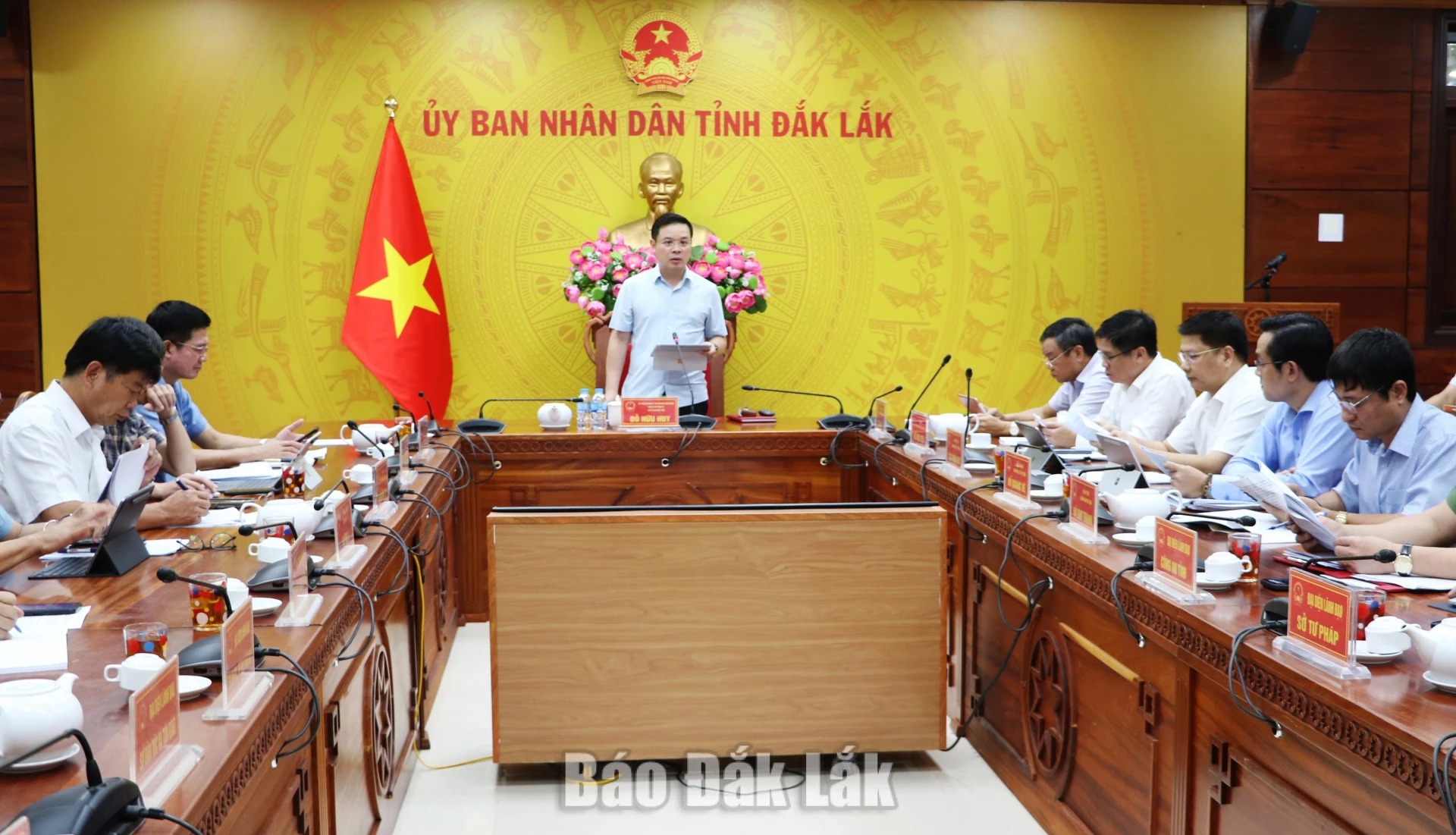
| An overview of the meeting. |
The meeting also discussed mechanisms, policies and resource allocation for provincial development. These included criteria coupled with norms for allocating public investment capital in 2026 - 2030, adjustments to the 2026 plan, as well as the allocation of medium-term public investment capital from the central and provincial budgets. Delegates also considered plans to implement national target programmes on new-style rural area development, sustainable poverty reduction, together with development in ethnic minority and mountainous areas.
Regarding investment, infrastructure and energy development, delegates discussed investment proposals for a road linking the eastern North - South Expressway with National Road 1 alongside Dak Lak Provincial coastal road; an access road connecting the North - South Expressway with the former National Road 1; the Ea Sin Wind Power Plant; Phase 1 of the Ea Sup Thuong Floating Solar Power Plant; and adjustments to the investment policy for the Xuan Thien Cu M’gar High-Tech Agricultural Park project, among other matters.
In his concluding remarks, Provincial Party Committee Secretary, comrade Luong Nguyen Minh Triet asked the agencies responsible for drafting the proposals to incorporate delegates’ feedback and promptly finalise the relevant dossiers, establishing a sound legal basis for implementing the provincial socio-eco development objectives.
For the mechanisms, policies and investment projects considered at the meeting, relevant agencies were instructed to carefully review their legal grounds, practical needs, resource availability combined with investment efficiency. They must also clearly define responsibilities for implementation, ensuring that adopted policies are effectively put into practice, contribute to socio-eco development and improve people’s living standards.
Translated by HAI LOAN