In recent years, the innovative start-up ecosystem in Dak Lak has attracted growing interest from start-ups and the business community.
Identifying existing barriers
The province currently has more than 20,000 operating enterprises. However, the level of science and technology (S&T) adoption among local enterprises remains relatively limited. To date, only around 16 enterprises province-wide have been recognised as S&T enterprises coupled with their actual operational capacity remains relatively modest.
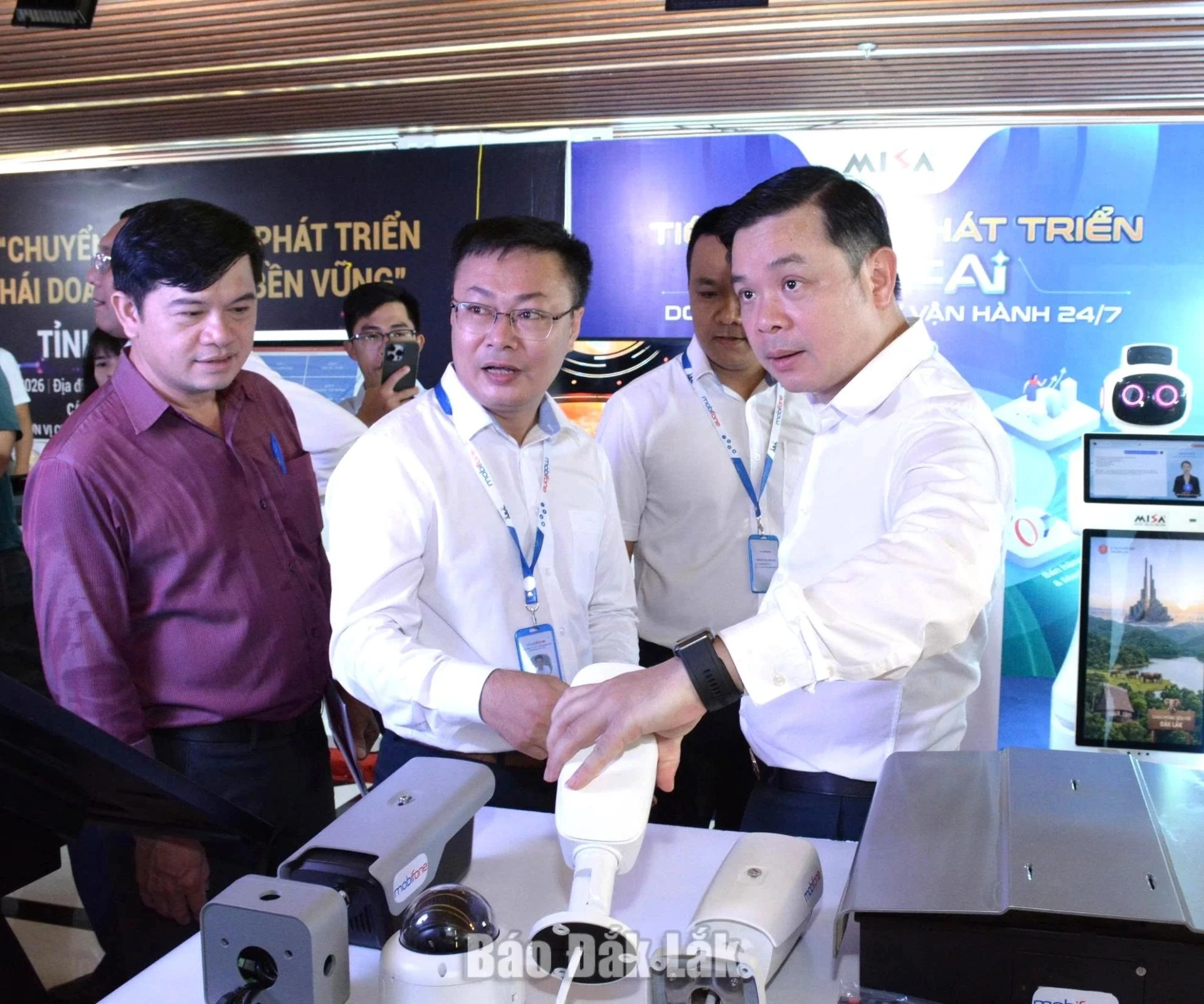 |
| Alternate Member of the Party Central Committee, Deputy Secretary of the Provincial Party Committee and PPC Chairman, comrade Do Huu Huy experiencing equipment developed by a technology enterprise. |
Technology enterprises in Dak Lak faces several structural bottlenecks. First, specialised technical infrastructure remains underdeveloped, while investment in hardware and security is costly along with profit margins remain narrow. There is also a shortage of standardised innovation spaces. Second, the province lacks highly skilled human resources, with workers tending to concentrate in major urban centres. In addition, access to credit remains difficult. Finally, the small local market leaves enterprises with few opportunities to test their products alongside generate revenue for reinvestment and further development.
According to Mr. Le Van Phuoc, Chairman of the Board of Directors and General Director of Novatus Global JSC, the technology ecosystem in Dak Lak faces two major bottlenecks. First, the province lacks the specialised infrastructure together with human resources needed to put AI, big data and automation into practical use. Consequently, technology adoption by many enterprises remains fragmented and largely driven by trends rather than practical needs. Second, data standardisation along with connectivity remain inadequate, while the capacity to commercialise technology products is limited. This makes it difficult for enterprises to participate more deeply in value chains involving smart agriculture and urban services.
Coordinated solutions needed
Addressing these bottlenecks requires coordinated efforts from multiple stakeholders. On the part of state management agencies, practical support policies should be further strengthened, particularly through administrative procedure reform, while creating a favourable legal framework for digital economy models and new technology testing.
Programmes connecting technology supply and demand, support for enterprises in accessing preferential credit packages tailored to intellectual property assets, as well as the promotion of digital transformation (DX) across the public sector will serve as important drivers of development, helping create markets for technology enterprises.
Universities and training institutions province-wide should strengthen their links with the actual requirements of enterprises through commissioned training programmes together with the incorporation of emerging technology trends into their curricula.
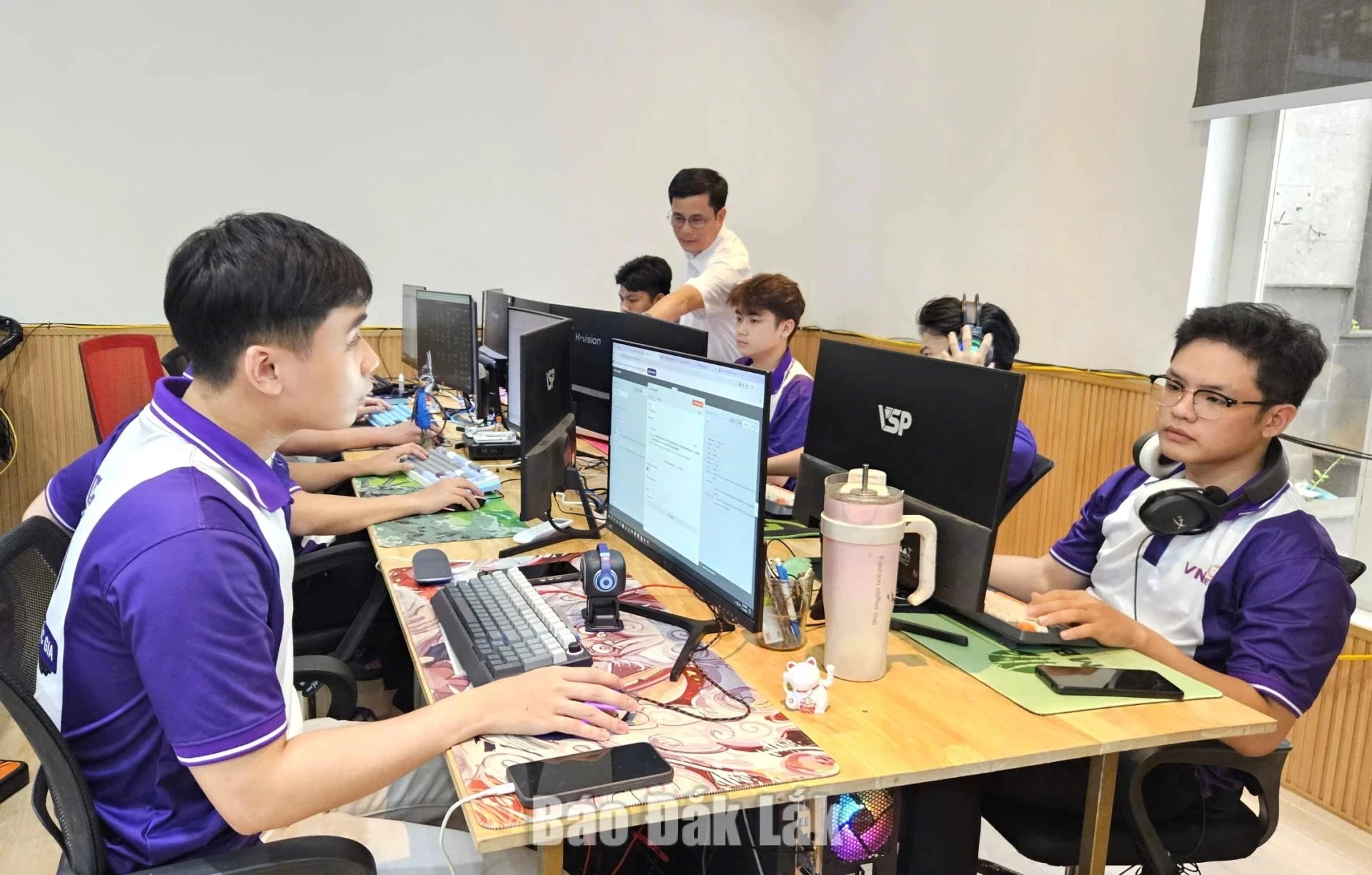 |
| A technology enterprise operating in the province. |
Only when bottlenecks in infrastructure, human resources and capital are addressed in a coordinated manner can Dak Lak's technology enterprise ecosystem achieve a major breakthrough as well as make a meaningful contribution to the provincial digital economy development strategy in the coming period.
Comrade Luong Nguyen Minh Triet, Member of the Party Central Committee, Secretary of the Provincial Party Committee and Head of the Provincial National Assembly Delegation, said that DX together with S&T adoption are inevitable trends in which the provincial business community must actively embrace and engage in more extensively. The province has substantial resources available to support this sector as well as stands ready to accompany alongside enterprises, from expert consultation and process optimisation to funding innovative product commercialisation along with commissioning
In the coming period, the Provincial Business Association should study and develop a comprehensive project to support DX among its members, focusing on practical issues such as applying AI alongside digital technology in management and operations, upgrading production equipment for enterprises engaged in in-depth research, and connecting the specific needs of different groups of enterprises with comprehensive provincial support packages.
Translated by KHUONG THAO