When properly organised and developed, traditional culture can contribute to economic growth and improve people's livelihoods.
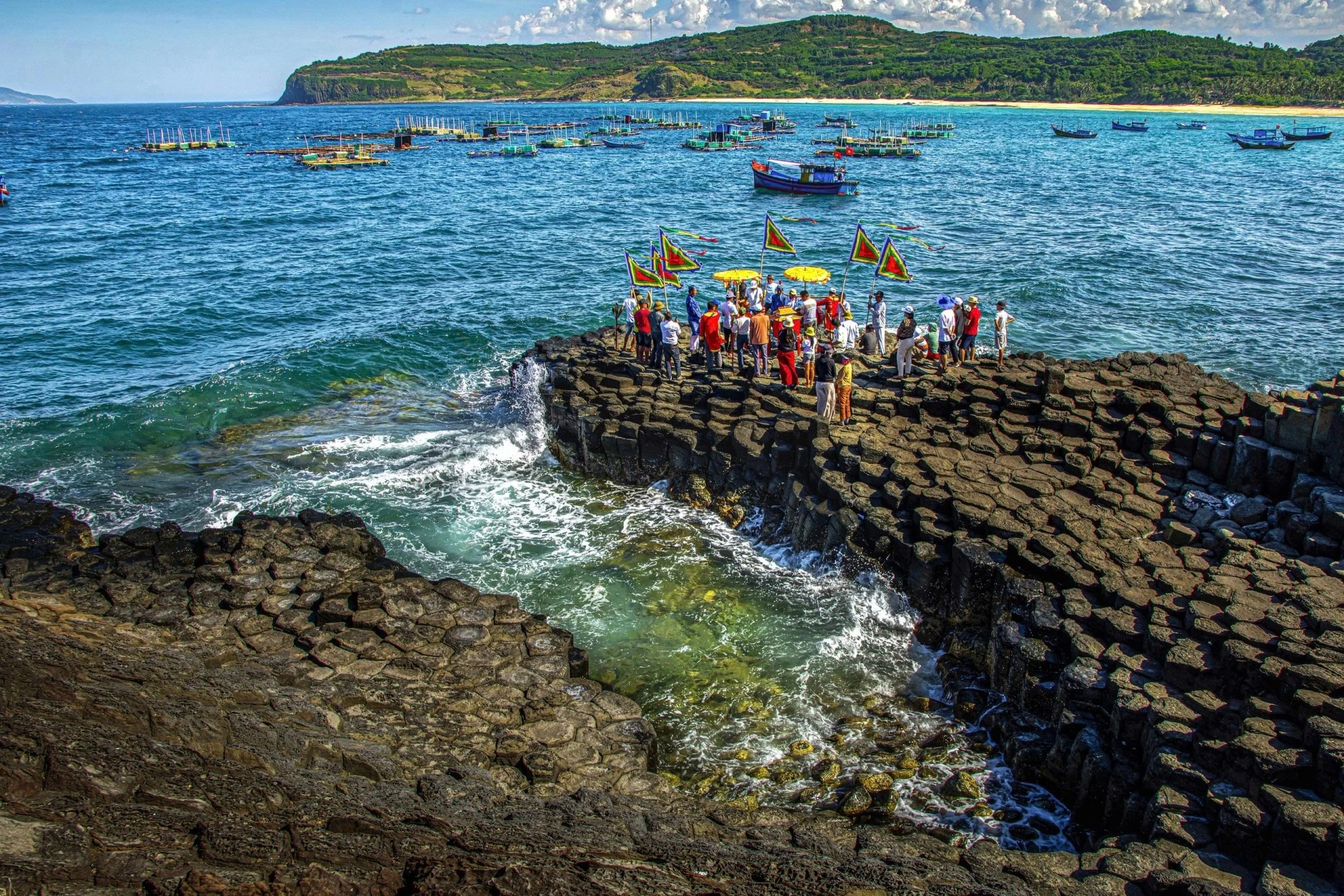 |
| Coastal residents performing a traditional folk ritual at Ganh Da Dia. |
Beyond traditional costumes, Tong Bong Brocade Weaving Cooperative in Ea Kao Ward has diversified its product range to include handbags, scarves, accessories, souvenirs and interior decorations. Ms. H’Yam Buon Krong, Director of Tong Bong Brocade Weaving Cooperative, said that the cooperative's products are marketed in Dak Lak, Lam Dong and Gia Lai. To reach wider markets, the cooperative partners with companies, enterprises and associations to produce modernised costumes, evening gowns and ao dai tailored to customer preferences. It also combines traditional weaving with community-based tourism and develops accommodation spaces to showcase its products and local culture.
With 45 members earning an average monthly income of approximately 5 - 6 million VND each, the cooperative is creating employment, preserving weaving skills and opening up new markets for brocade products.
In Lien Son Lak Commune, the traditional pottery craft of the M’nong Rlam people in Duong Bak Hamlet is also being revitalised through decorative items and souvenirs for visitors. Artisan H Huyen Bhok shared: “Visitors can knead clay as well as shape pottery themselves under the guidance of artisans. This hands-on experience gives them more reasons to extend their stay and makes them more willing to pay for the experience.”
Building a cultural ecosystem
At the provincial level, festivals celebrating coffee, durian and ocean tuna are creating new spaces linking cultural values with economic development.
After nine editions, the Buon Ma Thuot Coffee Festival has gradually strengthened the Dak Lak coffee brand while honouring coffee growers and their production knowledge. In 2025, “Knowledge of Coffee Cultivation and Processing in Dak Lak” was included in the National List of Intangible Cultural Heritage.
The Durian Festival and Tuna Festival likewise seek to honour the values associated with production. By showcasing local produce through exhibitions, experiential activities combined with promotional programmes, these products gain distinctive stories and identities, as well as greater opportunities to access markets. The 2026 Dak Lak Durian Festival, held from August 15 to September 2, attracted approximately 750,000 visitors, including 16,000 international arrivals. Tourism service revenue exceeded 1.295 trillion VND. During the event, approximately 600 tonnes of durian were sold, generating an estimated 44 billion VND in revenue.
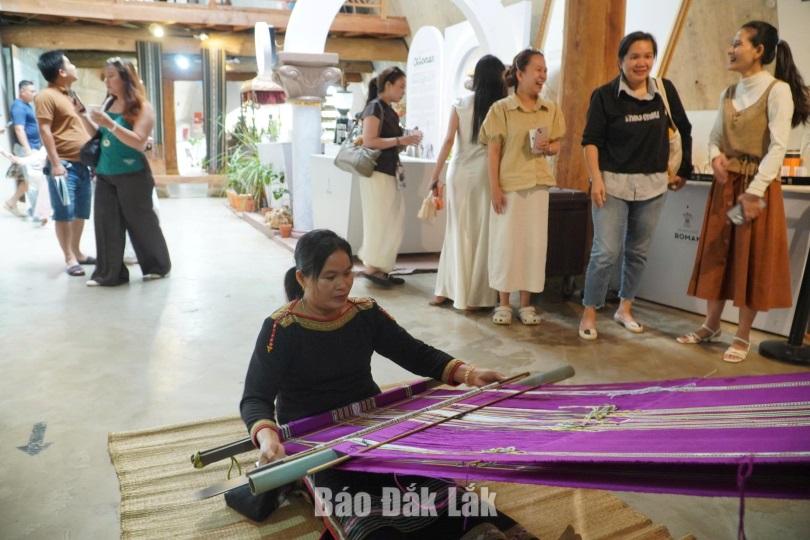 |
| Brocade weaving artisan at the World Coffee Museum. |
However, the value of these festivals lies not only in visitor numbers and revenue, but also in their ability to expand markets, attract investment as well as create opportunities for long-term cooperation among growers, cooperatives and enterprises. This is also the direction set by provincial leaders, who have called for stronger trade promotion, closer supply-demand linkages along with a focus on sustainable economic contracts, alongside the development of cultural and agricultural tours that can be operated on a regular basis.
According to Mr. Nguyen Duc Phuc, Director of Bazan Travel Trading and Services Co. Ltd, one of the constraints on tourism development in Dak Lak is that, despite their considerable potential and cultural resources, numerous localities continue to develop their offerings in isolation. As a result, they have yet to create sufficiently attractive travel itineraries to encourage visitors to extend their stays.
From a management perspective, Mr. Tran Hong Tien, Director of the Department of Culture, Sports and Tourism, said that cultural values should be incorporated into a broader development framework, with close coordination among tourism, agriculture, trade alongside services from the programme development stage. Enterprises should play a connecting role in accessing markets and developing services, while local residents, artisans, farmers, fishermen and cooperatives should participate directly in developing while delivering products and receive commensurate benefits.
Translated by KHUONG THAO