Through systematic organisation, coordinated mobilisation of resources and decisive implementation from provincial to grassroots levels, Dak Lak has completed 100% of assigned tasks in reviewing while exhuming fallen soldiers’ graves, as well as collecting biological samples from eligible remains, four months ahead of schedule.
Collecting biological samples from fallen soldiers’ remains is one of the key tasks under the 500-Day Campaign to intensify efforts to search for, recover and identify fallen soldiers’ remains. The work requires close coordination among multiple forces as well as strict compliance with technical procedures.
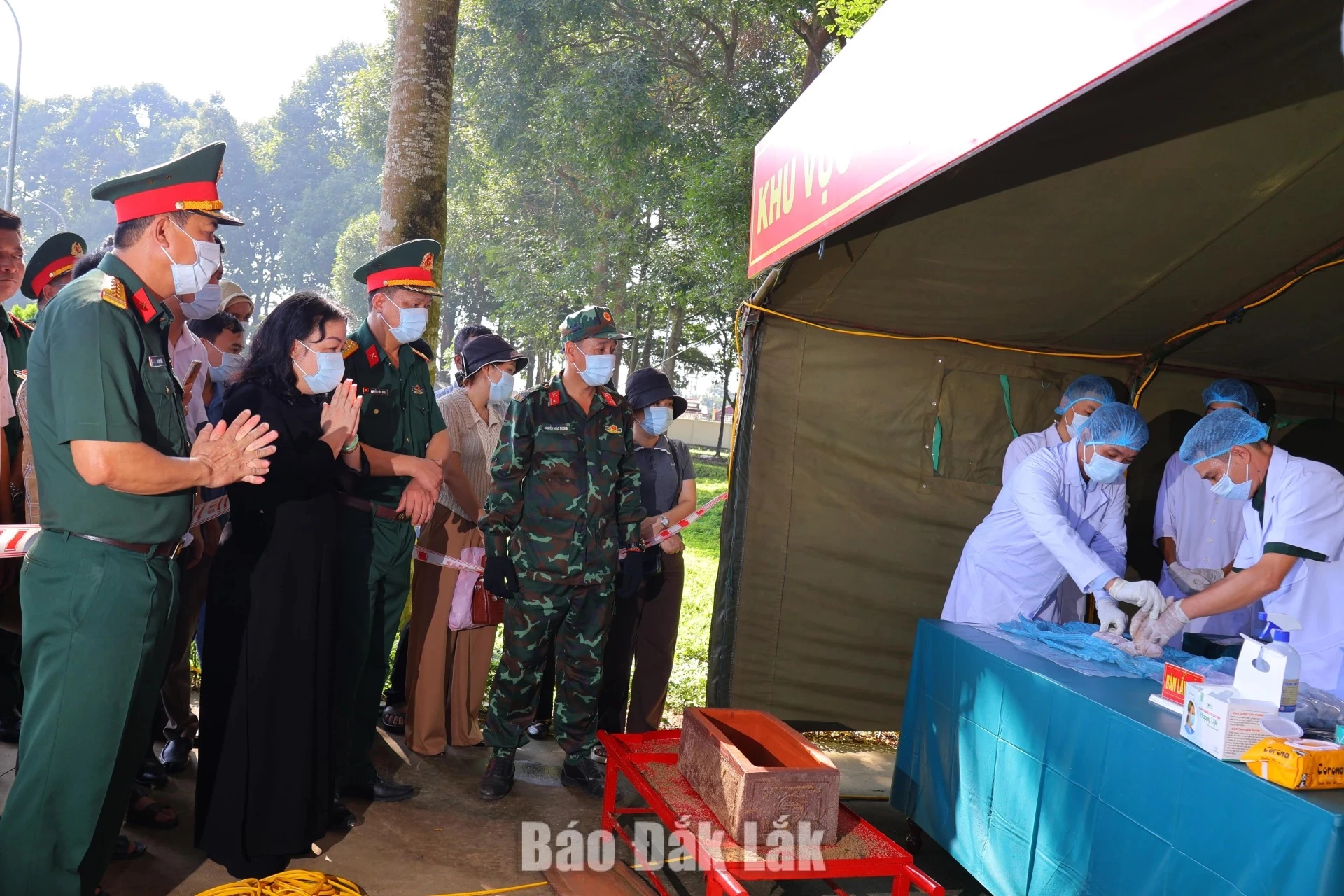 |
| Comrade Cao Thi Hoa An, Member of the Party Central Committee, Standing Deputy Secretary of the Provincial Party Committee, Chairwoman of the Provincial People’s Council and Head of the Steering Committee for the 500-Day Campaign, visiting while encouraging personnel tasked with collecting biological samples from fallen soldiers’ remains province-wide. |
In Dak Lak, the workload was substantial, with 4,019 graves across 33 of the provincial 34 martyrs’ cemeteries designated for DNA testing. Simultaneously, the provincial vast geographical area, coupled with variations in terrain and climatic conditions across different regions, placed considerable demands on organisation, coordination combined with personnel deployment. The province assigned 15 officers and soldiers from Team K51 to collect biological samples at martyrs’ cemeteries. It also established six sampling teams, mobilising 1,477 personnel from the armed forces, militia, medical sector, police along with other relevant forces to carry out the task.
Training together with professional guidance on sample collection, preservation and handover, as well as the information digitisation about fallen soldiers, were thoroughly organised before large-scale implementation. The province also established designated sample storage areas and arranged temporary storage alongside preservation facilities in Eastern region.
Determined efforts to honour fallen soldiers
At the local level, the tasks have been translated into specific plans tailored to the characteristics of each area.
In Son Hoa Commune, relevant forces reviewed and exhumed 339 graves, of which 149 were eligible for biological sampling. Concurrently, in Tan Lap Ward, home to the provincial Martyrs’ Cemetery, 252 unidentified graves required exhumation coupled with sampling. The ward’s Military Command mobilised 30 officers and soldiers to carry out the work, collecting 96 biological samples eligible for forensic testing. Outcomes achieved in Son Hoa, Tan Lap together with other localities demonstrate the effectiveness of a coordinated and consistent approach combined with flexibility in implementation.
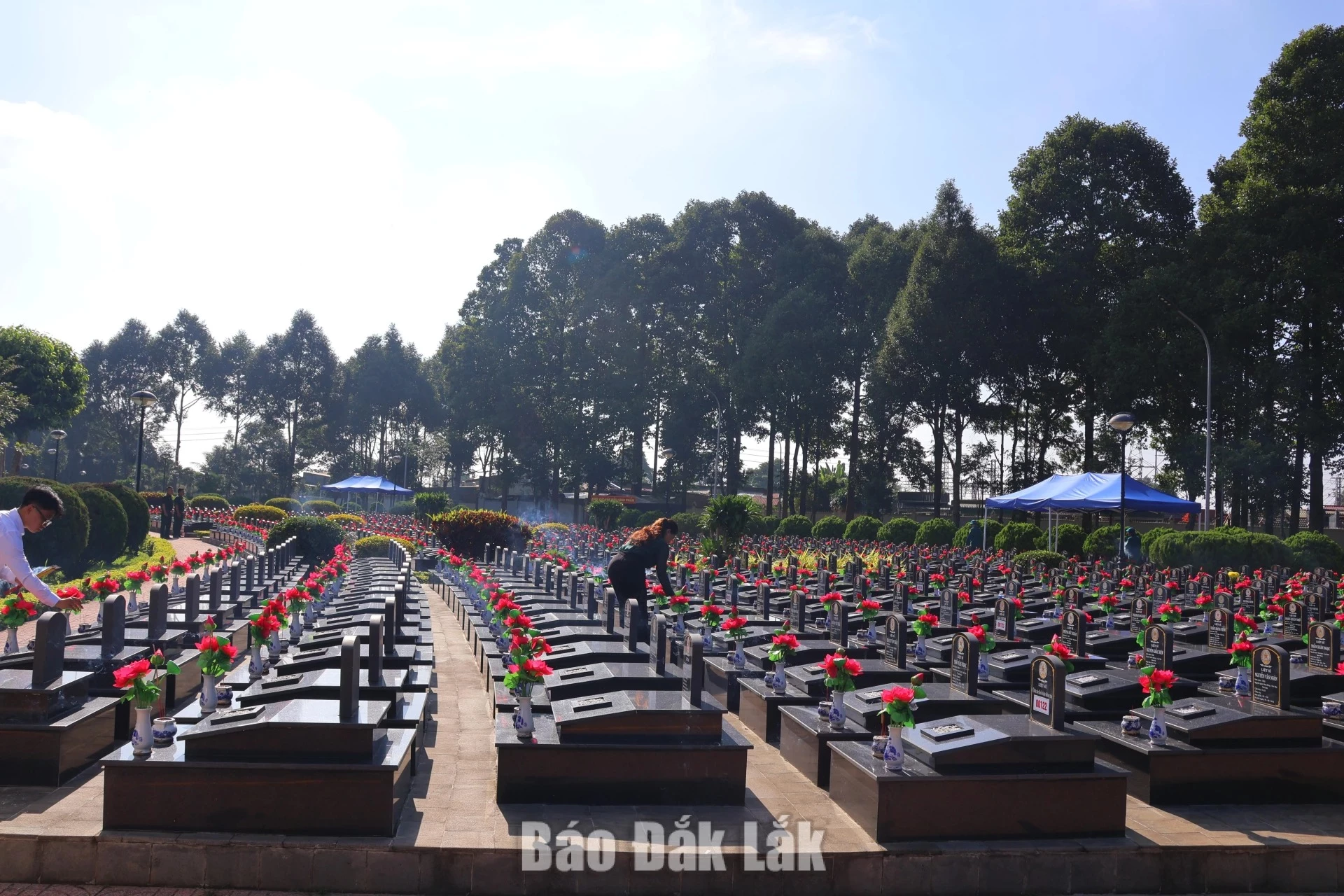 |
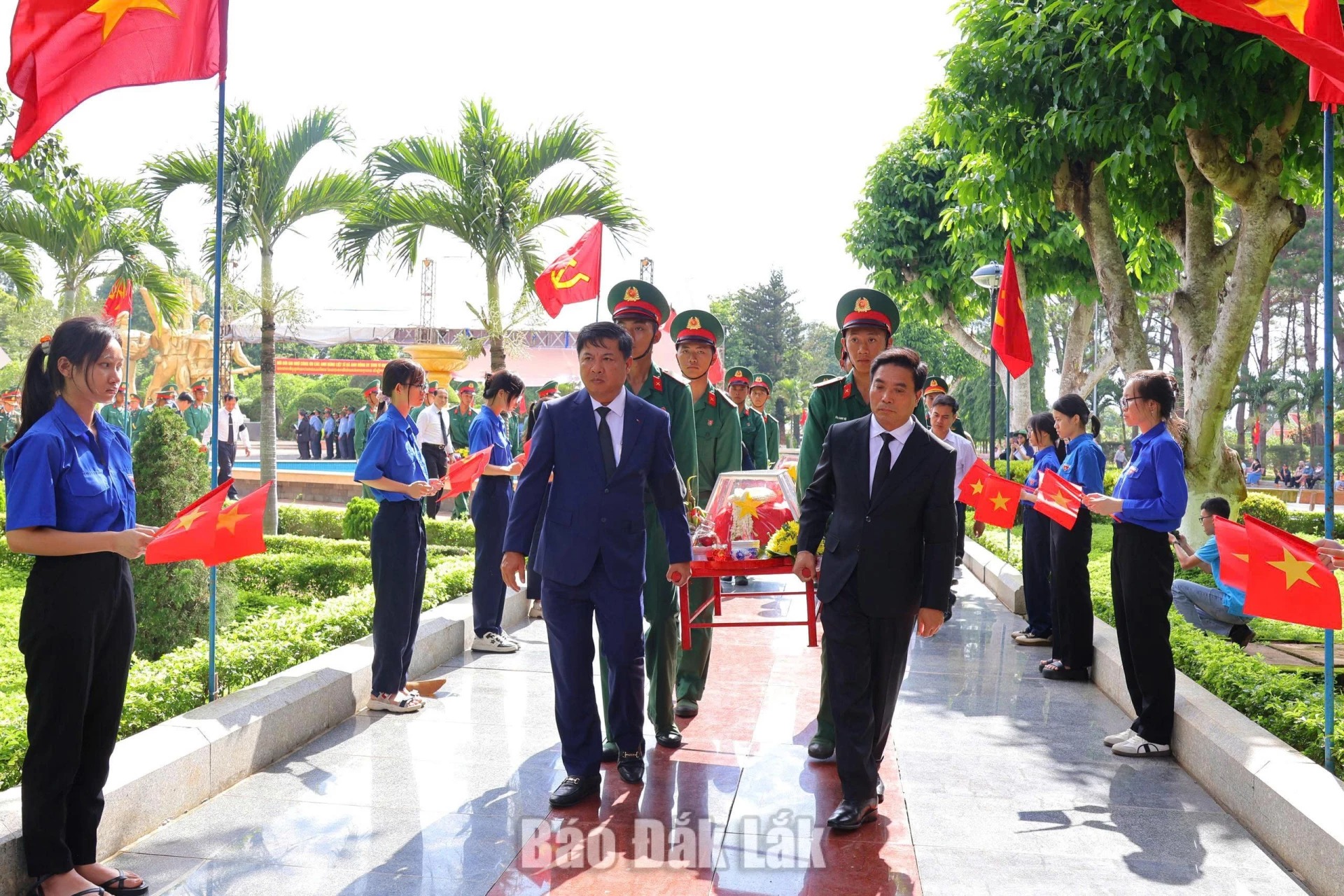
| The provincial Martyrs’ Cemetery - the final resting place of thousands of fallen soldiers, many of whom remaining unidentified. |
Dak Lak has completed the review alongside exhumation of all 4,019 graves across 33 martyrs’ cemeteries, fulfilling 100% of its target. Of these, 1,472 graves were eligible for biological sampling, while the remaining 2,547 were deemed unsuitable because the remains had completely decomposed. This achievement enabled the province to complete the assigned workload four months ahead of the deadline set by Military Region 5.
Senior Colonel Vo Van Tuan, Political Commissar of the Provincial Military Command and Deputy Head of the Steering Committee for the 500-Day Campaign, said the province would continue refining data on fallen soldiers along with their graves in the coming period. It would also arrange the handover of 1,472 biological samples to the Military Institute of Forensic Medicine for testing, while stepping up the information collection from relatives and cross-checking relevant data to support identification efforts. For graves from which samples could not be collected, competent agencies would continue reviewing records, cemetery maps combined with related information to determine appropriate measures.
Translated by HAI LOAN