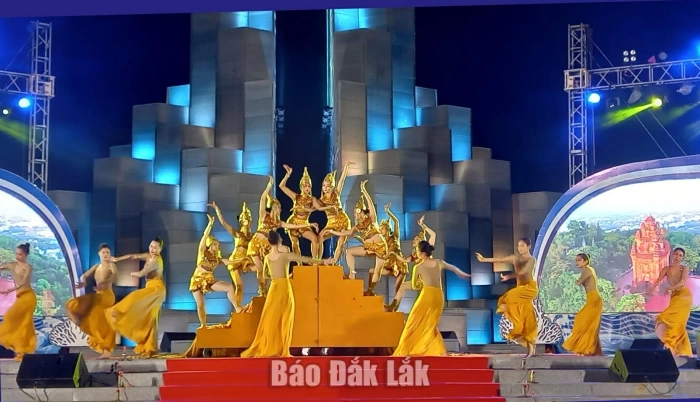
In Ede and Ba Na villages, besides being used as materials for clothing, brocade fabrics retains the ethnic group’s memories along with identity. Each pattern carries the rhythm of the mountains and forests, preserving the cultural identity together with the community soul through multiple generations.
From the simple loom by the longhouse, through women’s skillful hands, each thread is woven into richly symbolic patterns. The brocade patterns of the Ede and Ba Na peoples possess a robust beauty with symmetrical lines, reflecting a life closely connected to the mountains alongside forests.
Against a dark indigo background, vibrant shades of red, white, alongside yellow colors stand out like flames illuminating gong festival night. Lines, rhombuses, triangles, or zigzags evoke images of mountains, streams, fields, combined with aspirations for progress. Each color carries meaning: black symbolizes the fertile highlands; red symbolizes vitality coupled with the community flame; white symbolizes the harmony between humans and nature.
Each ethnic community has its own unique way of creating patterns. Ba Na brocade stands out with its large, sharp geometric patterns in conjunction with strong red hues. Meanwhile, Ede brocade leans towards simplicity alongside sophistication with delicate borders on a black background. Despite differences in lines and composition, the patterns all express love for nature, the village, as well as community bonds.
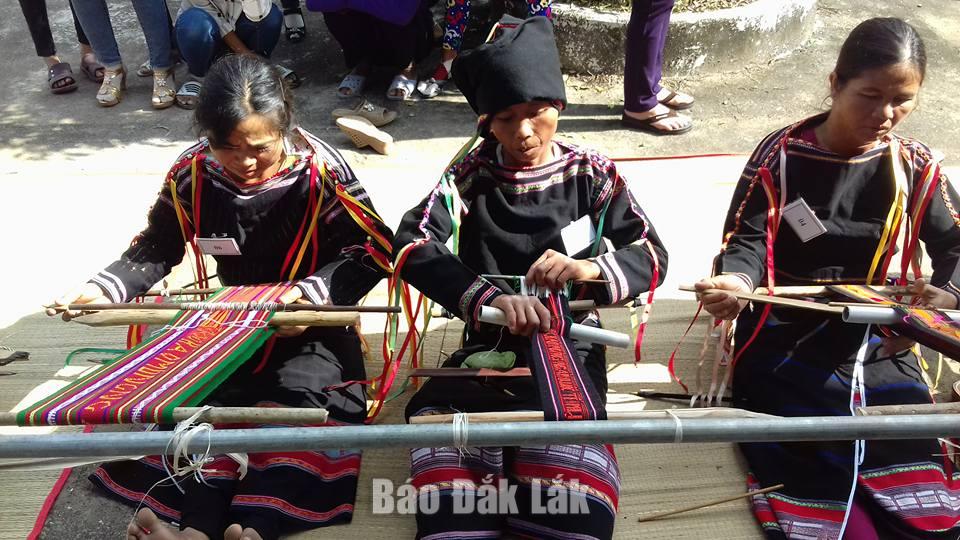 |
| Women competing at a brocade weaving competition in Suoi Trai commune. |
More than just clothing, brocade is also linked to the customs along with spiritual life of the people. To complete a piece of fabric, a woman must go through multiple stages, from spinning yarn then dyeing it with natural materials to weaving intricate motifs. In numerous villages, a skilled weaver is always considered diligent and skillful; wedding garments, shawls, or ceremonial robes are prepared early as a way of passing on tradition to future generations.
Today, brocade is no longer confined to traditional festivals or rituals. Numerous artisans have incorporated ethnic patterns into handbags, scarves, ao dai, accessories, combined with souvenirs, bringing traditional cultural values into contemporary life. Each handcrafted textile product is not only a souvenir but also carries the story of the people, villages, together with the Dak Lak highlands.
However, the brocade weaving craft still faces a wide range of difficulties as the younger generation is less attached to the loom, while modern clothing is gradually replacing traditional attire in daily life. Therefore, preserving the weaving craft is also preserving a part of the villages’ cultural memory. That is also the reason why artisan H’Lua (in Thong Nhat hamlet, Suoi Trai commune) along with multiple other Ede and Ba Na artisans still diligently work at their looms every day, preserving each weave as if preserving their village memory as well as hoping that the younger generation will continue the ancestors’ craft.
Folklorist Ka So Lieng (from Kien Thiet hamlet, Suoi Trai commune) expressed: “Amidst the modern pace of life, the brocade vibrant colors still quietly exist as a persistent stream of village culture. As long as looms echo still resonates in the longhouses, as long as women diligently weave patterns with love for their homeland, the cultural essence will remain present in every thread, every garment bearing the brocade colors.”
Translated by TRINH THUY