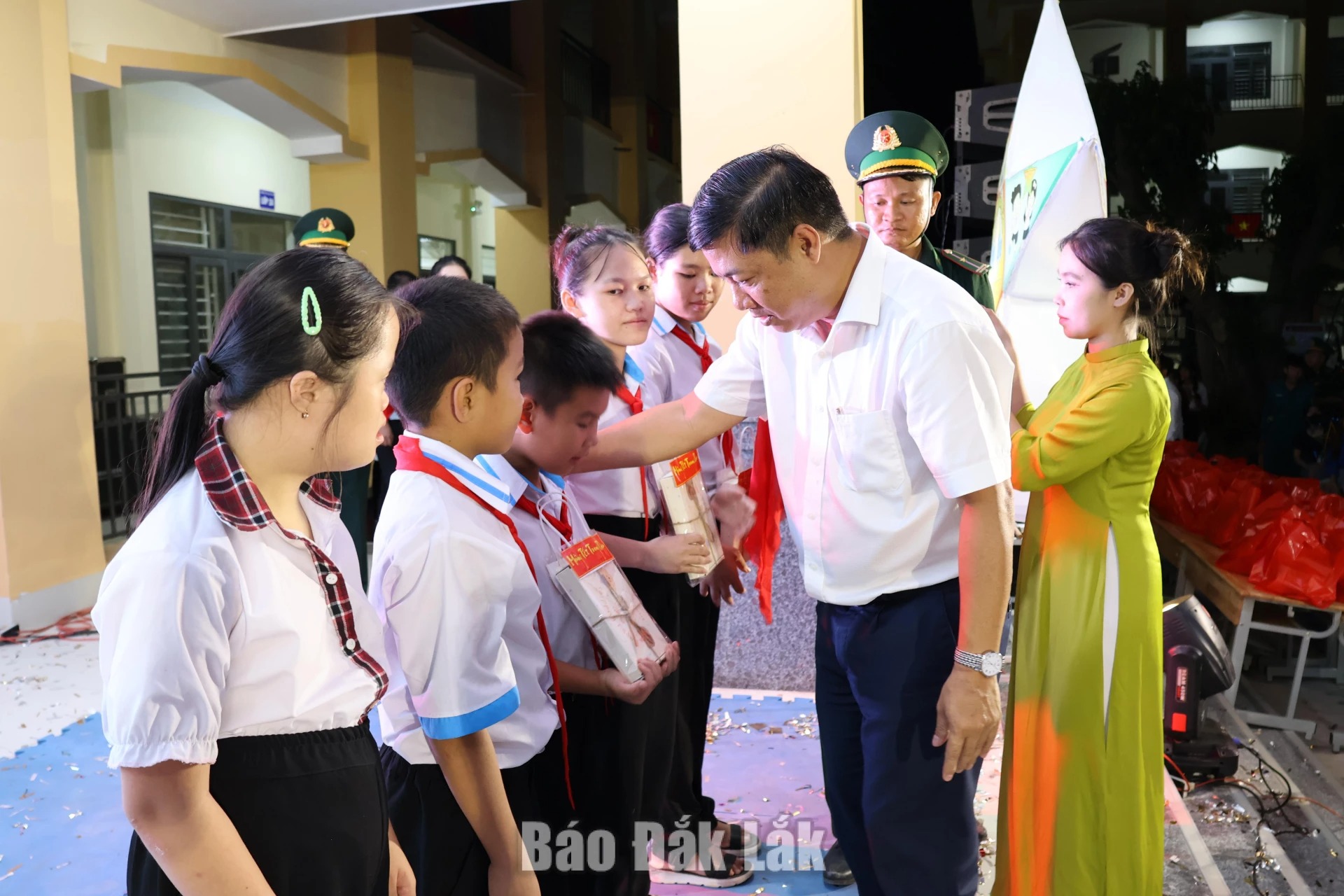
At boarding schools in Dak Lak provincial border regions, comprehensive infrastructure investment creates an environment where students can fully focus on their studies alongside daily life with peace of mind. Simultaneously, the schools are gradually fostering routines together with self-reliance skills among students, particularly those living away from their families for the first time.
With a 248-billion-VND investment, the Buon Don Primary and Secondary Boarding School (in Buon Don commune) boasts a comprehensive infrastructure system, including classrooms, boarding quarters, a cafeteria, combined with other essential amenities. In the 2026-2027 academic year, the school has 1,121 students.
Student Y Vinh Knul (Class 6D, living in Drang Phok village, located about 20km from the school) shared that previously, regardless of the weather, rain or shine, his parents had to take him to school early every day. Now, studying in the novel school, he is very happy and determined to do his best in his studies.
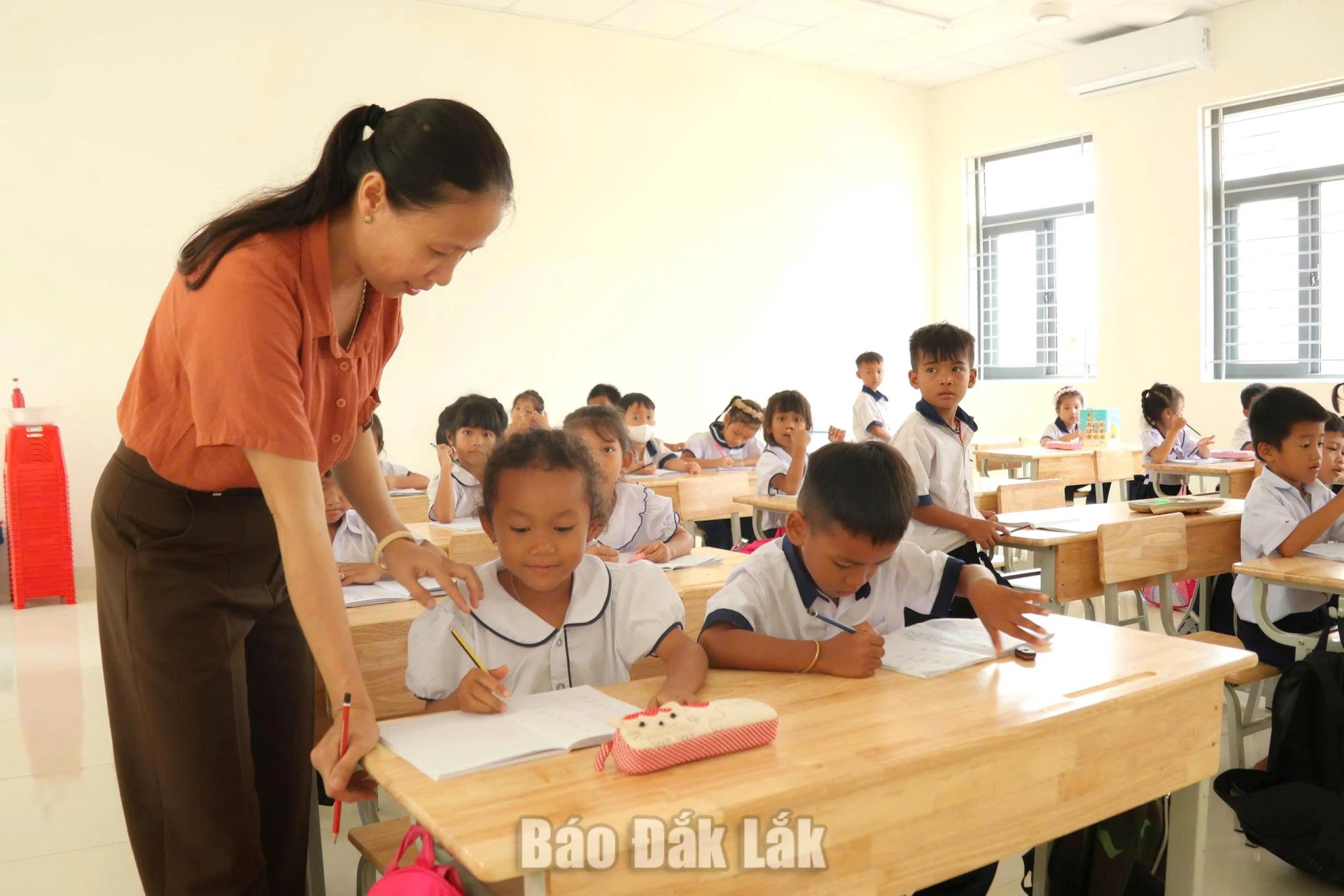 |
| A teacher at the Buon Don Primary and Secondary Boarding School guiding students with their studies. |
In the 2026–2027 academic year, the Ia Rve Primary and Secondary Boarding School (in Ia Rve commune) has 880 students, 220 boarders. For multiple students living away from home for the first time, the school identifies stabilizing their boarding life as a crucial task. Mr. Ho Sy Cat, the school principal, stated: “In the early days, teachers focus on helping students adjust to the current environment, alleviate homesickness, gradually establish communal living routines. Teachers are assigned to guide them in all aspects of life, from simple tasks like folding blankets, organizing personal belongings, alongside maintaining personal hygiene to queuing for meals.”
With new classrooms, boarding quarters, cafeterias to the teachers’ dedicated care, the border-area boarding schools are steadily creating a stable environment for students to learn coupled with live. Beyond being places of education, this place becomes a home where border-area students can live, study, and grow.
Creating a stable environment for learning and daily life
The multi-level boarding school model is strange to teachers, students, together with parents in border regions. Consequently, commune leaders coupled with officials in charge regularly monitor school operations; particularly, organizing boarding alongside semi-boarding meals, to coordinate efforts as well as promptly resolve any arising challenges.
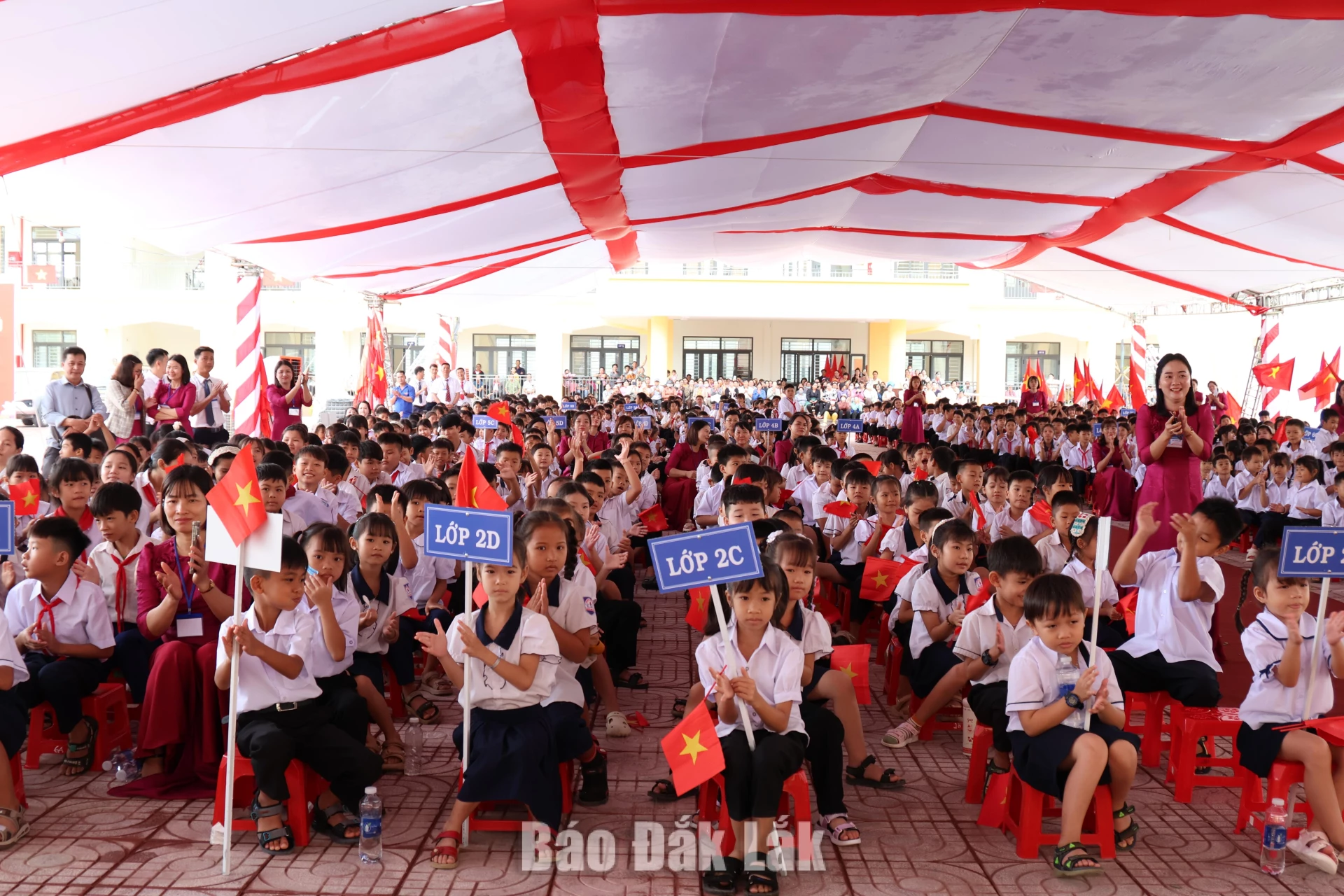 |
| Students at Ia R’ve Primary and Secondary Boarding School on the opening day of the 2026-2027 academic year. |
Comrade Nguyen Van Hieu, Chairman of the Ia Lop Communal People’s Committee, commended the school for its proactive approach in quickly stabilizing operations, ensuring the students’ well-being regarding their meals combined with rest. Inspections also highlighted the necessity of guaranteeing food safety for students. Therefore, the commune has directed specialized agencies to collaborate with the school in identifying difficulties, providing timely solutions, thereby ensuring a safe environment for the students’ education together with daily lives.
According to Ms. Le Thi Thanh Xuan, Director of the Dak Lak Department of Education and Training, the comprehensive investment in boarding alongside semi-boarding schools in border areas has met infrastructure requirements, supporting the long-term goal of improving the regional education quality in conjunction with developing human resources. Moving forward, the education sector will continue to review support policies for students and teachers while focusing on training educators in management skills combined with the boarding-student care. These crucial factors enable schools to provide adequate learning alongside living conditions while helping students develop disciplined habits, life skills, together with independence.
Translated by TRINH THUY