Localities have recently adopted a range of flexible and practical approaches, mobilising various forces to help residents access as well as apply digital technologies in their daily lives.
In Ea Tul Commune, efforts to improve digital skills among ethnic minority womenhave been implemented through the “Digital Women’s Union Branch - Accompanying Ethnic Minority Women” model in Sah Village, with the participation of 50 members. With the spirit of “learning for real, mastering real skills and putting them into practice”, members have guided local residents in using smartphones, installing the VNeID application, accessing the National Public Service Portal, scanning QR codes while performing other digital tasks. Ms. H Rit Mlo, a resident of Sah Village, said with enthusiasm: “After receiving detailed step-by-step guidance, from installing VNeID to using online public services, I can now perform these tasks proficiently and feel much more confident.”
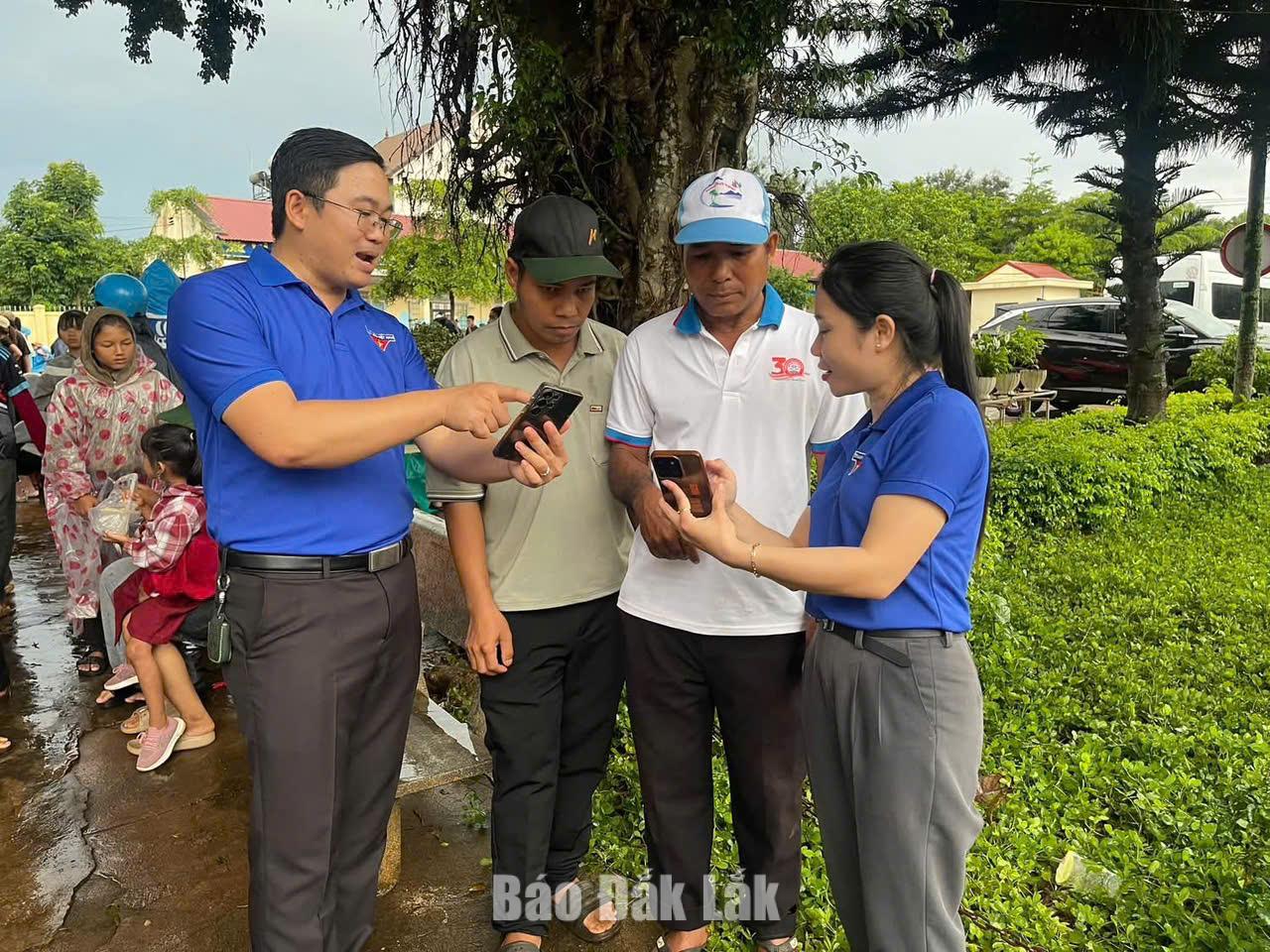 |
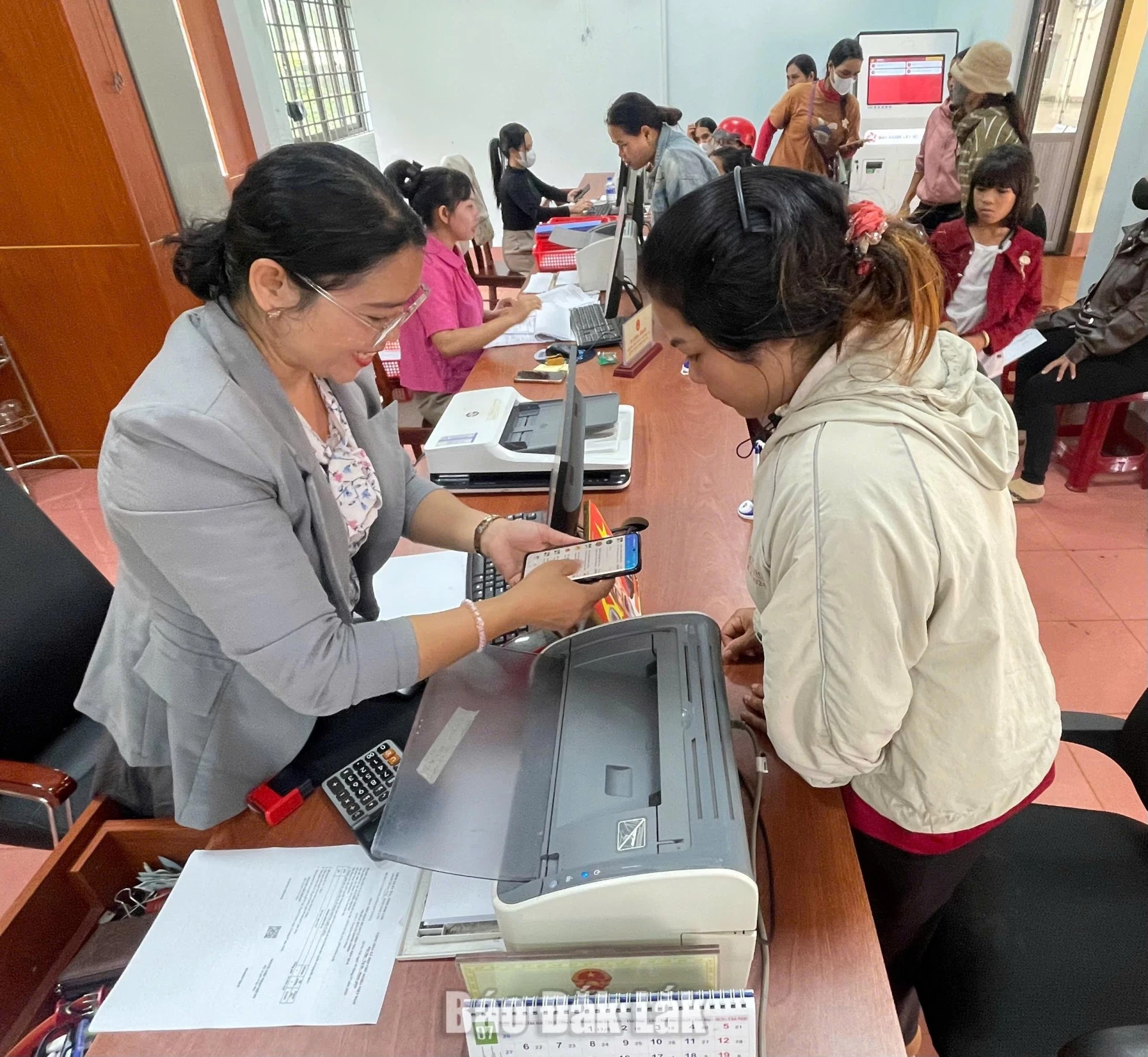
| Youth Union members in Quang Phu Commune guiding local residents in making cashless payments. |
Quang Phu Commune has also strongly promoted the pioneering role of young people in digital transformation. Trinh Ngoc Khanh, Secretary of the Quang Phu Commune Youth Union, said that Youth Union members not only assist at the reception and results-return section of the Public Administration Service Centre, but also travel to residential areas, traditional markets combined with business establishments to help small traders install e-wallets, open bank accounts and generate QR codes for cashless payments.
To bring technology coupled with digital skills closer to the public, particularly people in ethnic minority, remote and disadvantaged areas, Dak Lak Province is piloting four model initiatives under the “Digital Literacy for All” programme: Outstanding Digital Citizens; Outstanding Digital Villages, Hamlets and Residential Quarters; Digital Rural Areas – Creating Prosperity through Technology; alongside Digital Villages and Hamlets in Ethnic Minority Areas.
Each locality is required to assign one leader to directly oversee implementation and designate a focal point for regular coordination, while promoting the role of community digital technology teams together with grassroots forces.
According to Mr. Ra Lan Truong Thanh Ha, Deputy Director of the Department of Science and Technology, the pilot implementation of the model initiatives under the “Digital Literacy for All” programme focuses on clearly defining objectives, contents, tasks, implementation schedules alongside specific outputs.
The models are designed to suit the actual conditions of each locality and deliver tangible benefits to local people. The Department of Science and Technology is working closely with relevant departments, agencies, local authorities combined with participating businesses to monitor implementation, provide guidance and promptly address difficulties. These efforts are aimed at laying a solid foundation for the models to achieve strong outcomes as well as be widely replicated province-wide.
Translated by THAO LINH