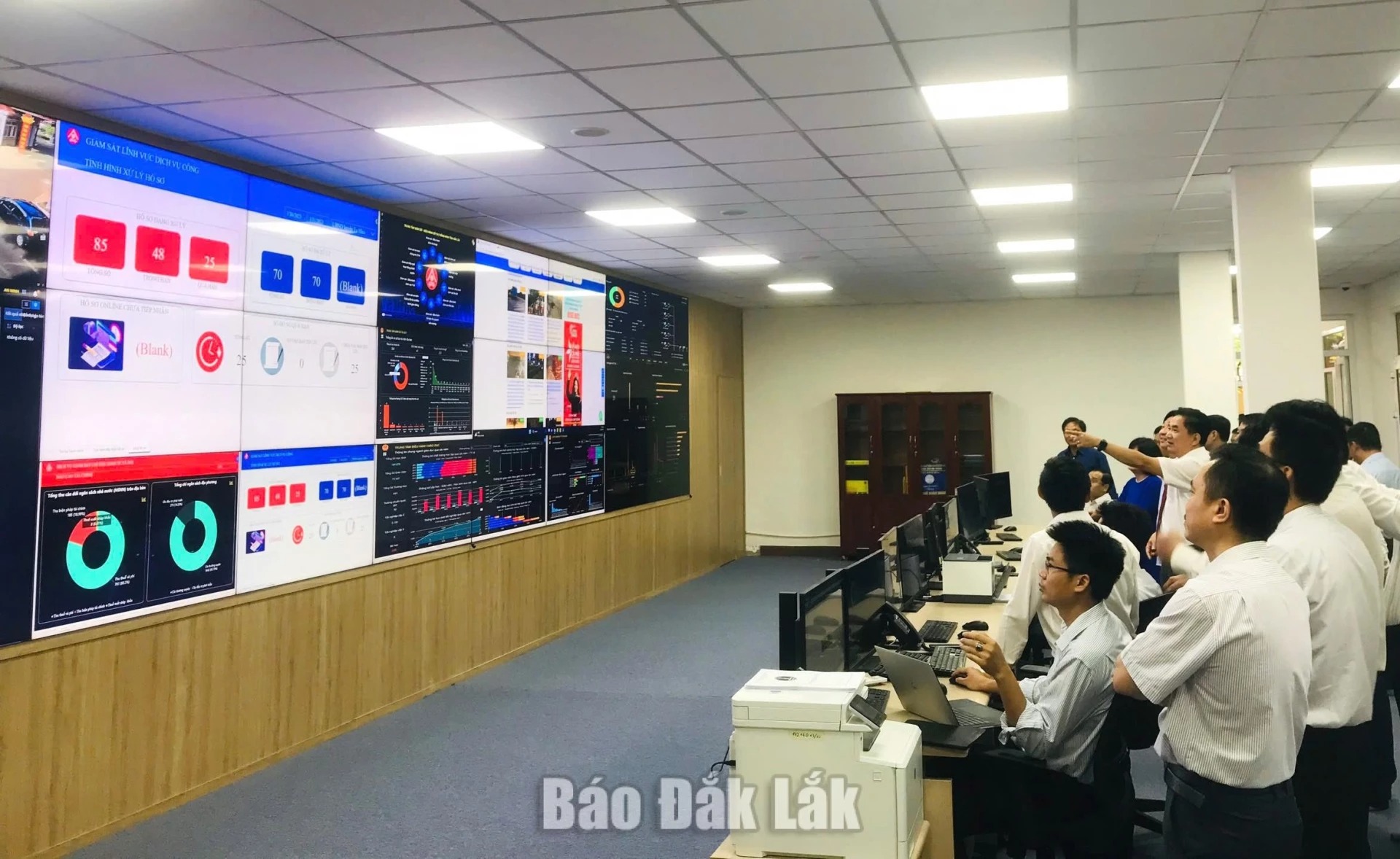
In Dak Lak province, digital transformation (DX) is delivering tangible outcomes. Rather than handling procedures on behalf of residents, officials and specialists patiently guide them through each step to help them develop skills coupled with habits needed to use online public services.
At the public assistance area of the Provincial Public Administration Service Centre, instead of receiving paper applications and inputting information into the system for residents, officials along with staff stay by applicants’ side, guiding them through each step using computers or smartphones.
This service-oriented approach is also being extended to public administration service centres at commune together with ward level. In Ea Tul commune, where more than 66% of the population are ethnic minorities, DX is being linked to efforts to change residents’ habits in handling administrative procedures (APs) in villages and hamlets.
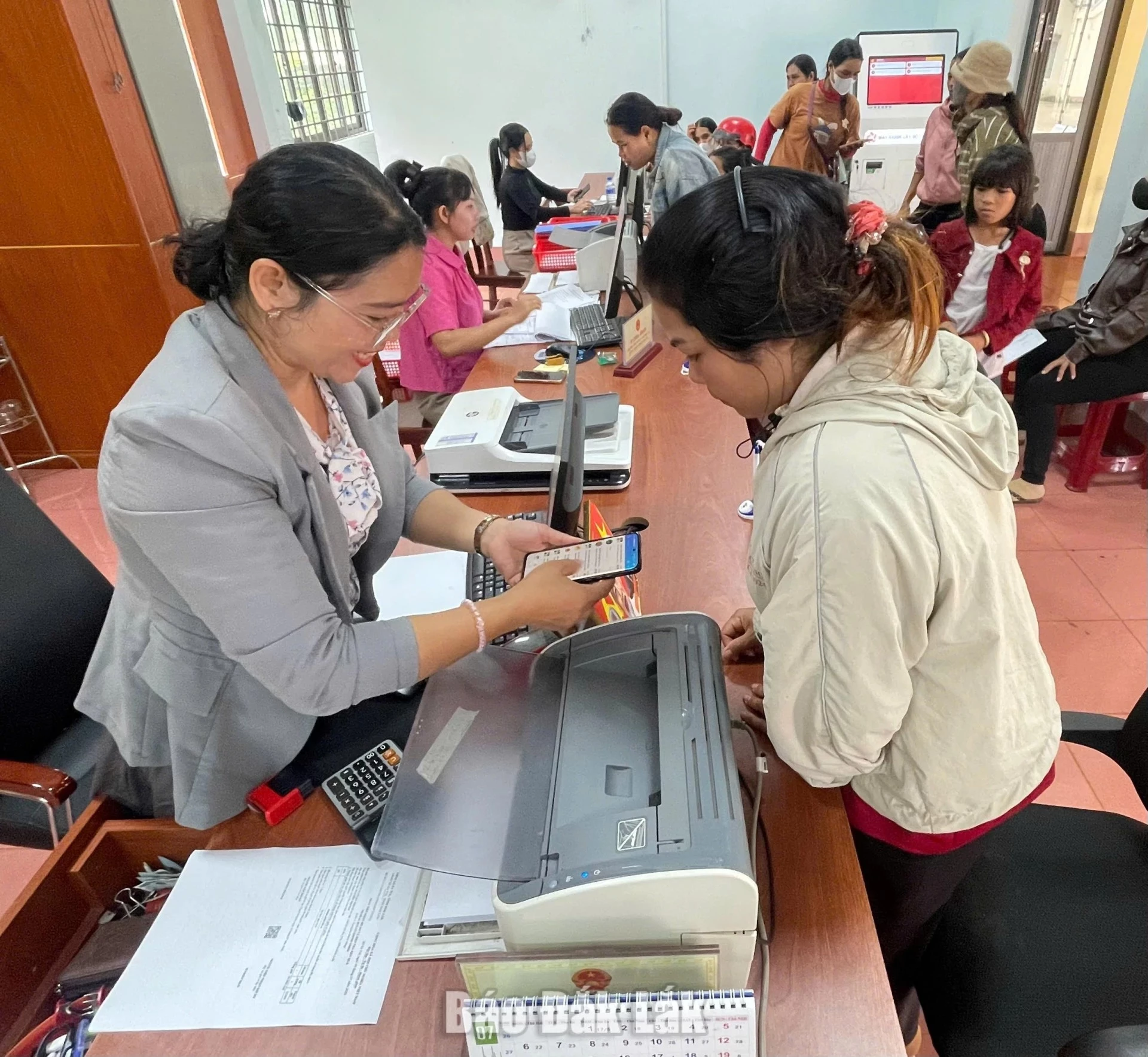 |
| Residents of Ea Tul Commune being guided through procedures in the digital environment. |
Ms. Phan Thi Ly, Chairwoman of the Ea Tul Commune People’s Committee, said that officials, specialists along with Youth Union members are actively supporting residents in accessing while using technology. As a result, local people are increasingly using smartphones to look up information, access online public services and make electronic payments. The rate of digitised AP dossiers in the commune has reached 100%, while more than 97% of dossiers are processed on time or ahead of schedule.
Narrowing the digital divide, modernising public administration
The new approach at public administration service centres reflects the direction of the Dak Lak PPC to improve the quality of administrative reform. PPC Standing Vice Chairwoman, comrade Ho Thi Nguyen Thao affirmed that the province will continue stepping up communication and guidance on the use of online public services alongside online payments; while studying support models suited to local conditions, particularly in remote and isolated coupled with ethnic minority areas. These efforts aim to build a service-oriented, open, transparent and modern administration that places people at the centre.
Dak Lak is also seriously implementing the Prime Minister’s direction, requiring agencies and units to receive as well as process dossiers through electronic systems, refrain from accepting dossiers outside these systems, and ensure data are updated alongside synchronised with the National Public Service Portal. The province has also maintained the principle of not requiring people or enterprises to resubmit information already available in databases, while limiting the practice of handling procedures on their behalf and providing more guidance so that people can carry out APs themselves in the digital environment.
Thanks to coordinated efforts and innovative grassroots approaches, AP processing has recorded positive results. From January 1 to September 30, 2026, the Provincial Administrative Procedure Information System recorded 550,059 dossiers. Of these, 472,145 were submitted online, accounting for 85.84%, while 77,914 were submitted directly at public administration service centres at all levels, accounting for 14.16%. Fully online dossiers accounted for 33.77% of all dossiers processed, with the rate reaching 38.31% among provincial departments and sectors combined with 28.78% among communes and wards.
These figures not only reflect improvement in the government apparatus, but also show that the gap between people and technology is gradually narrowing. This, in turn, is key to making online public services more deeply integrated into everyday life, helping residents gain greater confidence in using technology while putting it to practical use in life and production.
Translated by KHUONG THAO