Through implementing Sub-project 3 (Project 5) under the National Target Program for Socio-Eco Development in ethnic minority and mountainous areas in the 2021-2030 period, known as Program 1719, short-term vocational training courses, closely aligned with the labor market, are providing ethnic minority individuals with employment opportunities combined with higher incomes.
After graduating from college but failing to find work in her study field, Ms. H’Doai Bya (from E Rang village, Thanh Nhat ward) enrolled in an elementary-level culinary arts course organized locally. For her, this represents not just an additional skill, but a practical opportunity to build a career.
H’Doai is among 60 ethnic minority trainees participating in a vocational course organized by Thanh Nhat Ward People’s Committee in collaboration with Buon Ma Thuot College. According to comrade Nguyen Huu Luat, Permanent Vice Chairman of the Thanh Nhat Ward People’s Committee, this is the first vocational course implemented by the locality using funding allocated for 2026. The trade choice was carefully considered, based on the aspirations of the local residents together with the high practical application potential after graduation.
 |
| A basic-level vocational training course in food preparation being held in Thanh Nhat ward. |
To ensure that these short-term vocational courses are truly effective, the provincial vocational education institutions have significantly innovated their teaching methods. Mr. Tran Quoc Cuong, Vice Principal of Buon Ma Thuot College, stated that the institution consistently aligns its curriculum with social demands, prioritising sectors currently experiencing a labor shortage. Therefore, graduates are able to immediately adapt to the work requirements at businesses. Under the plan, by 2030, Dak Lak province aims to provide vocational training coupled with skills development for approximately 10,000 rural workers annually, with a target of over 85% of trainees securing employment post-training. Special priority is given to workers from ethnic minority communities alongside remote or isolated areas.
Mr. Nguyen Quang Thuan, Deputy Director of the Department of Home Affairs, stated that the workforce currently accounts for about 59% of total population (nearly 2 million people). This represents a significant resource for driving local economic development. However, despite this advantage, human resource development still faces numerous challenges. The province has struggled to attract and retain highly qualified personnel, partly due to salary levels in local enterprises being lower than those in other key economic regions. Furthermore, the investment along with working environment require further improvement to enhance competitiveness.
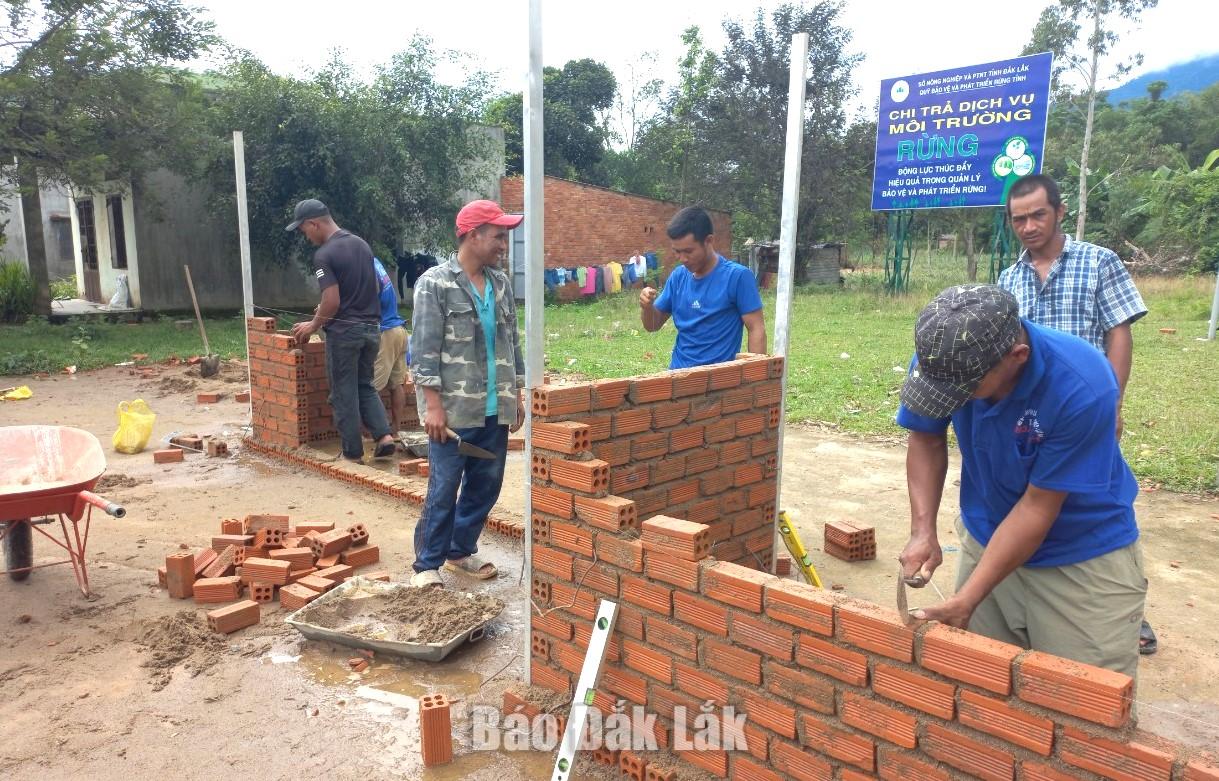 |
| Students in a civil construction course in Yang Mao commune in practical skills training. |
To resolve these issues, the Department of Home Affairs combined with other relevant authorities are actively conducting an action plan based on the Provincial Party Congress Resolution for the 2026-2030 term, with a vision toward 2045. Key initiatives include leveraging the role of the Employment Service Center as a bridge to the labor market, maintaining free-recruitment policies to businesses, facilitating employment for over 50,000 workers annually, promoting overseas employment. Additionally, there is a focus on strengthening inter-agency coordination, fostering the tripartite partnership, involving the State, educational institutions, businesses, to both secure livelihoods for the population and provide a high-quality workforce meeting enterprise-development requirements.
Translated by TRINH THUY