Traditional crafts continue to thrive in Dak Lak Province, where local communities have worked tirelessly to preserve skills passed down through generations. Beyond safeguarding ancestral knowledge, these crafts provide jobs, generate income and reinforce the region’s distinctive cultural identity.
In Ganh Do Craft Village, Xuan Dai Ward, fish sauce production has been passed down through generations. The secret behind its distinctive flavor lies in the combination of fresh anchovies caught in local waters and the renowned Tuyet Diem salt.
Duong Thi Chuyen, owner of the Ba Muoi Fish Sauce production facility, said her family business has maintained traditional production methods for more than 40 years to preserve its signature flavor. Its fish sauce has earned a three-star rating under Vietnam’s One Commune One Product (OCOP) program.
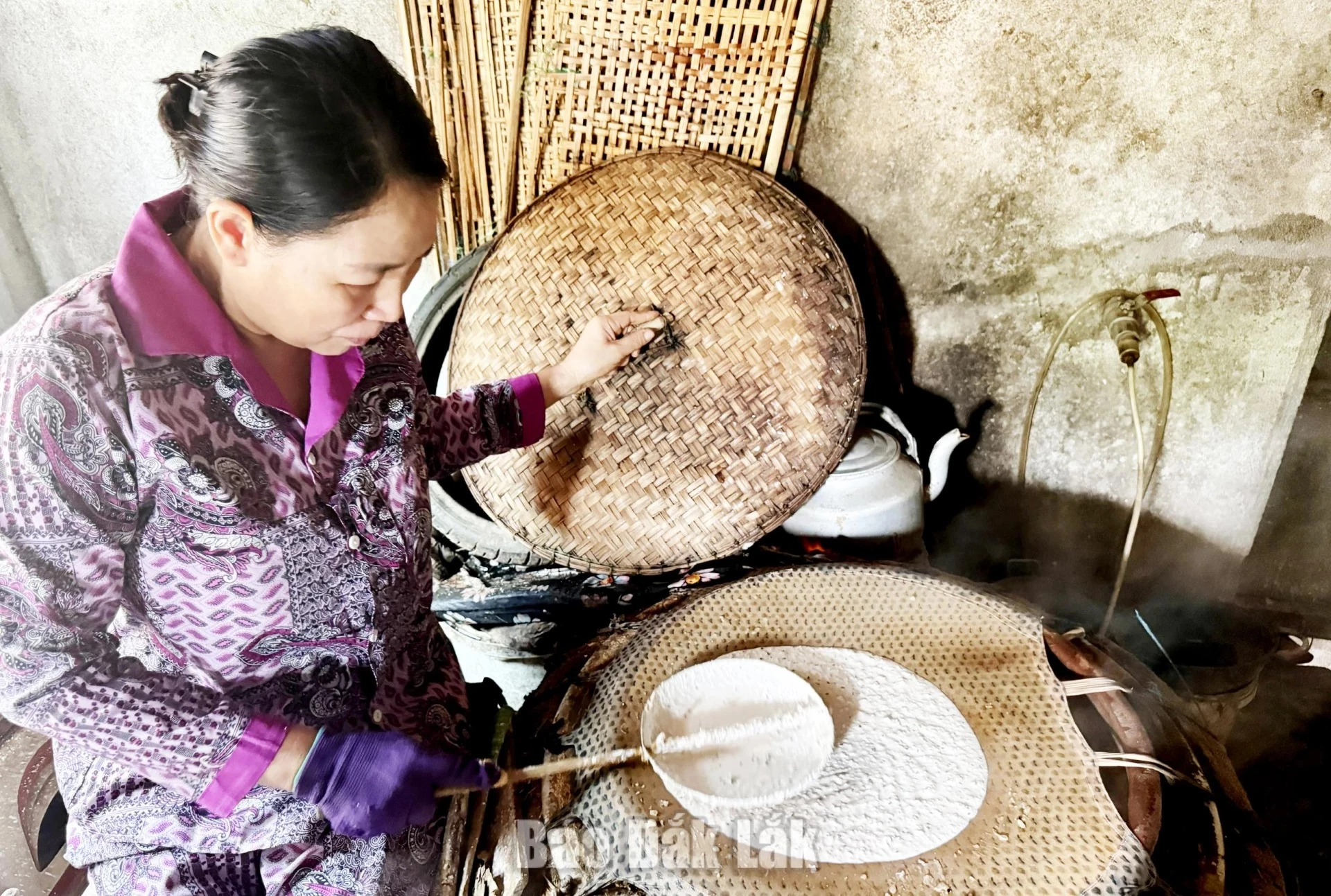 |
| Residents of Dong Binh Village in Tuy Hoa Ward preserve the traditional craft of handmade rice paper production. |
While retaining traditional techniques, the business has also invested in modern filling and bottling equipment, introduced barcodes combined with QR codes for product traceability, and expanded its presence on digital platforms to reach online customers. Welcoming visitors to explore the facility as well as learn about the production process has also helped promote local specialties.
Ganh Do Craft Village is currently home to 132 households, nine of which continue to produce traditional fish sauce, while 24 process and trade dried seafood. The remaining households are involved in fishing.
Nguyen Huu Luom, Vice Chairman of the Xuan Dai Ward People’s Committee, said local authorities are working to connect producers with markets at tourist attractions and destinations, while encouraging the development of traditional crafts alongside community-based tourism.
In Tuy Hoa Ward, Dong Binh Rice Paper Village, with a history spanning more than 400 years, has also preserved its craft through successive generations. Using locally grown rice and underground water, skilled artisans, most of them women, carefully produce rice paper known for its distinctive flavor and quality.
Tran Thi Thuy, whose family has been making rice paper for three generations in Dong Binh Neighborhood, said the village now has more than 100 production households, providing employment for approximately 500 workers. Numerous households have combined traditional handcrafting techniques with modern machinery to improve productivity.
Ho Quang Nam, Director of the Dong Hoa An Cooperative and Chairman of the Dong Binh Rice Paper Craft Association, said cooperation among producers has helped local families sustain their livelihoods, enhance product value and preserve the culinary heritage of the former Phu Yen region.
Creating new livelihood opportunities
While Ganh Do fish sauce and Dong Binh rice paper preserve the familiar local flavors, traditional brocade weaving in Tong Ju Village, Ea Kao Ward, plays an important role in safeguarding the cultural heritage of the Ede ethnic community.
H’Yam Bkrong, Director of the Tong Bong Brocade Weaving Cooperative, said the cooperative had expanded from its original 30 members to 42 members, spanning different age groups, helping ensure that weaving skills are passed on to younger generations. Each member earns an average monthly income of VND 5–6 million.
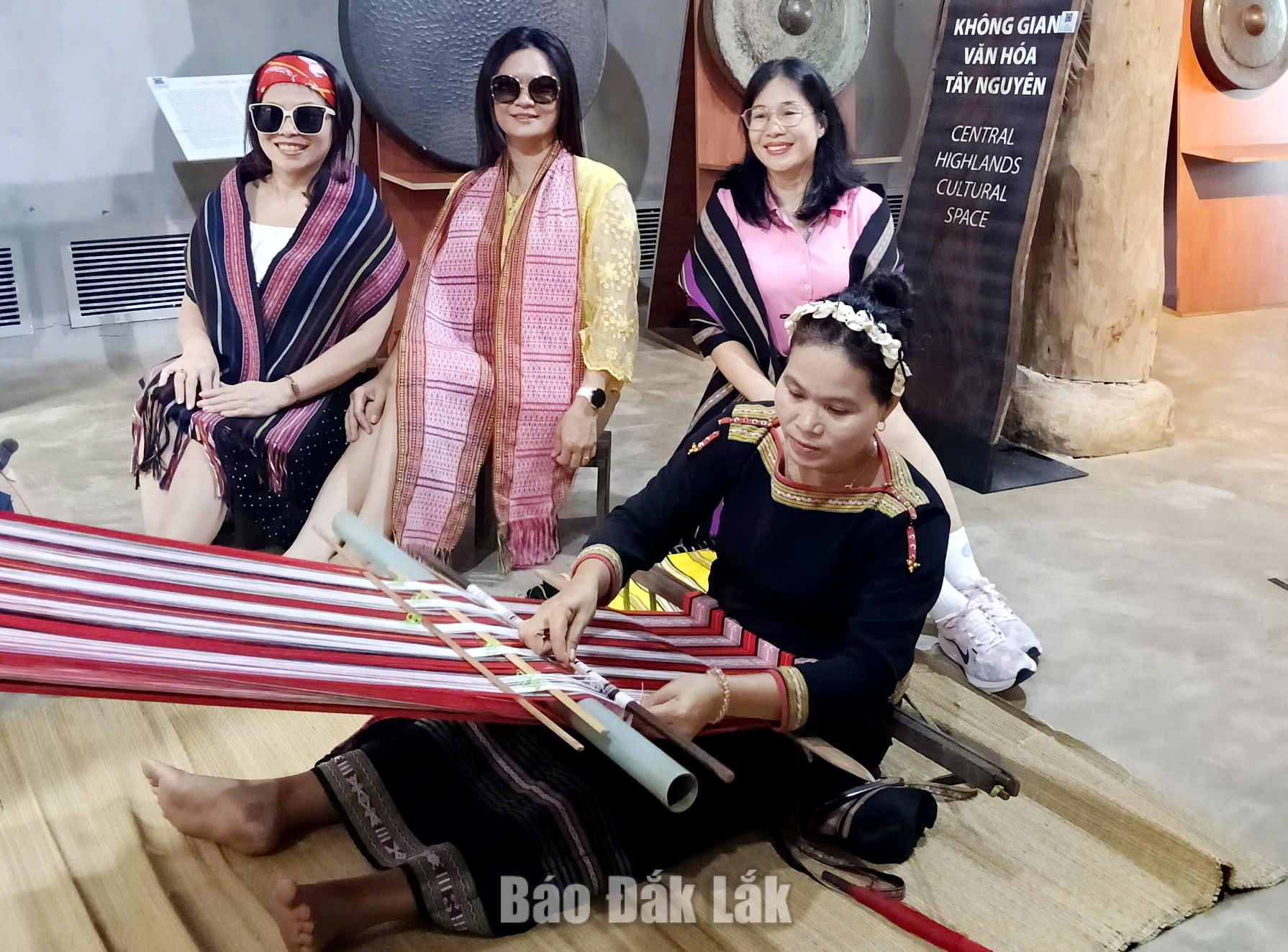 |
| Visitors watch local artisans weaving traditional brocade in Tong Ju Village, Ea Kao Ward. |
Beyond fulfilling customer orders, the cooperative offers free weaving and sewing courses to young people coupled with other local residents. Upon completing their training, participants can receive product designs, work from home and sell their finished products back to the cooperative.
Around 100 households in Tong Ju Village now possess the skills needed to weave as well as sew traditional clothing, either for sale or personal use.
Nguyen Xuan No, Vice Chairman of the Ea Kao Ward People’s Committee, said local authorities would continue to create favorable conditions for the Tong Bong Brocade Weaving Cooperative to expand its operations. The ward also plans to support vocational training, particularly for ethnic minority communities, to preserve and promote Ede cultural traditions while generating more jobs and income opportunities locally.
From coastal craft villages to communities in the Central Highlands, every traditional product reflects the dedication, experience and passion of the people who make it. With better access to vocational training, markets combined with distribution channels, traditional crafts can do more than survive: they can provide sustainable livelihoods while keeping cultural heritage alive for generations to come.
Translated by THAO LINH