Amid increasingly stringent standards from international markets, Dak Lak is accelerating efforts to digitalise and build a comprehensive traceability system for its durian sector.
Gaps in sector governance
Dak Lak leads the country in durian cultivation, with around 44,900 hectares, equivalent to 21.7% of the national total. Of this, 269 growing areas covering roughly 7,400 hectares and 40 packing facilities are officially coded. The province also has 16 frozen durian packing facilities approved for export codes by the General Administration of Customs of China.
 |
| The nationwide deployment of a unified durian traceability system being expected to make durian exports more transparent. |
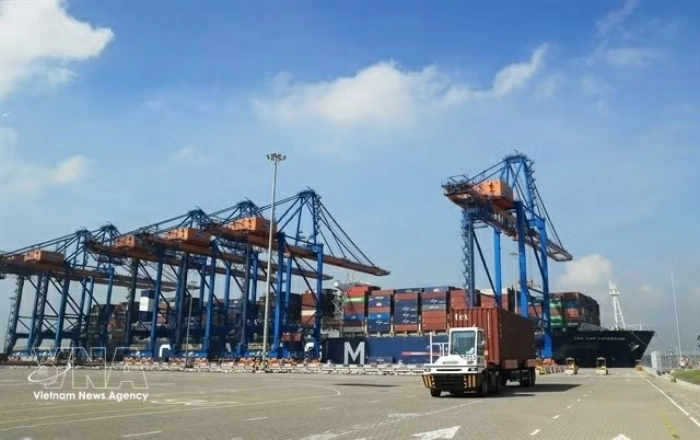
Provincial fresh durian is exported to a range of markets, including China, Thailand, Japan along with the United States, with export turnover in 2025 reaching approximately 1.1 billion USD. Dak Lak durian has established a strong reputation for both brand alongside quality, emerging as one of the provincial fastest-growing and most dynamic export sectors.
However, this rapid expansion has also revealed significant shortcomings in sector governance. Only about 17.5% of the total cultivation area has been granted export growing area codes. Traceability systems remain fragmented while most enterprises develop separate databases lacking interoperability and consistency.
According to Mr. Nguyen Van Long, Director General of the Department of Science and Technology under the Ministry of Agriculture and Environment, implementation of durian traceability is facing four key bottlenecks: absence of standardised procedures across production, packing as well as export; incomplete data integration between the agricultural sector and public security together with customs authorities; weak connectivity of production data among central agencies, local authorities together with enterprises. In addition, most farmers in durian-growing communes have limited digital skills, alongside relatively high initial investment in specialised software.
Building a transparent data ecosystem
To address these challenges, Dak Lak and relevant authorities have set out a clear roadmap to modernise the durian sector.
A key measure is the Ministry of Agriculture and Environment’s adoption of the CheckVn system (checkvn.mae.gov.vn) as a unified national platform for agricultural traceability, scheduled for operation on July 1, 2026. The system enables end-to-end recording of information, from growing areas and production processes to processing as well as distribution, allowing data to be “created once and used for multiple purposes”, with seamless integration into the national data platform.
 |
| Dak Lak farmers harvesting durian during the 2025 crop. |
However, for the system to function effectively, farmers must adopt electronic record-keeping and comply with standardised procedures; enterprises must invest in systems as well as ensure data transparency; alongside local authorities must provide guidance and oversight. The province is actively coordinating with relevant agencies to complete as well as standardise data for wide-scale, synchronised deployment.
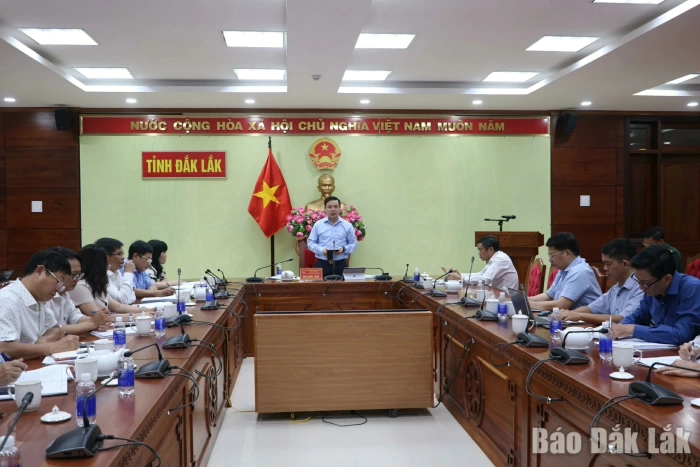
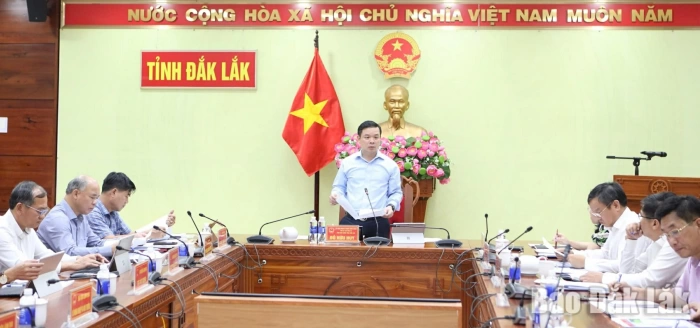
Comrade Le Anh Trung, Chairman of the Dak Lak Durian Association, said the association is working with enterprises to pilot the system, with a view to full implementation. Initially, one enterprise will be selected for an end-to-end pilot to refine technical requirements before scaling up.
According to the Department of Science and Technology, the national traceability system is currently being piloted in the durian sector ahead of nationwide rollout from July 1, 2026. This represents a shift from traditional production management to data-driven governance, providing a critical foundation for enhancing the competitiveness of Vietnamese agricultural products.
Translated by KHUONG THAO