
At the scientific conference themed “Dak Lak in a new era: Strategic positioning - Creating growth drivers - Accelerating development”, government leaders, experts, scientists together with business representatives proposed a range of recommendations aimed at unlocking the provincial potential as well as competitive advantages, positioning Dak Lak as a growth pole for the South Central Coast and Central Highlands.
* Associate Professor Dr Bui The Duy, Alternate Member of the Party Central Committee, Director of Vietnam National University, Hanoi: Connecting development advantages.
 |
| Associate Professor Dr Bui The Duy. |
Within the expanded development landscape, science, technology, innovation and digital transformation (DX) must become the core engines of Dak Lak's breakthrough development. Priority should be given to strengthening connectivity between the Central Highlands coupled with the coastal areas, linking agriculture, processing industries alongside markets, while embedding cultural values into flagship products to enhance value and ensure sustainable development.
DX should extend beyond database development to encompass innovation in governance processes, product traceability, brand protection coupled with improved public and business services. The province should also accelerate adoption of AI, big data combined with advanced processing technologies to enhance productivity, product quality as well as value addition.
Dak Lak should establish a regulatory sandbox enabling enterprises to pilot emerging technologies, expand UAV applications in agriculture, and foster collaborative models bringing together government, businesses, scientists alongside local communities to address practical challenges.
* Dr Can Van Luc, Chief Economist of Bank for Investment and Development of Vietnam, Member of the National Financial and Monetary Policy Advisory Council: Building an integrated highlands - coastal development corridor.
 |
| Dr Can Van Luc. |
Dak Lak possesses significant potential to evolve into an interregional logistics hub, a high-tech agricultural centre combined with processing industry, maritime economy and tourism. Nevertheless, it continues to face challenges, including growth pressures, limited infrastructure alongside human resources, the predominance of SMEs while deep processing industries, logistics and digital economy have yet to emerge as major growth drivers. The province must also strengthen natural resource governance, improve climate resilience as well as ensure the effective operation of novel administrative system.
The province should establish an integrated highlands - coastal development landscape, with deep processing industries, logistics, maritime economy, tourism together with clean energy serving as principal growth drivers. It should also pursue three strategic breakthroughs by 2030: developing the Buon Ma Thuot - Tuy Hoa - East Sea economic corridor; building an export-oriented agro-forestry-fisheries processing cluster; along with substantially improving investment climate through a "one project - one focal point, green lane" model supported by digital governance and modern data systems.
* Dr Pham Huy Hieu, Deputy Director for Research Management and Innovation, Head of the Research Operations and Governance Office, VinUniversity: Evidence-based data governance - the key to creating fresh development momentum.
 |
| Dr Pham Huy Hieu. |
To strategically position Dak Lak as well as create novel growth drivers, the province should shift from experience-based economic management towards governance grounded in science and empirical data. According to Dr Pham Huy Hieu, an AI-integrated Digital Twin represents a breakthrough solution capable of modelling infrastructure, transport, healthcare, education together with energy systems using real-time data, thereby supporting forecasting, policy evaluation and resource optimisation.
Dak Lak should establish an integrated, interoperable data platform incorporating real-time information along with AI-powered analytics to strengthen decision-making. Concurrently, it should prioritise attracting and developing digital talent in AI, data analytics combined with cybersecurity to ensure DX delivers tangible outcomes.
* Mr Phung Quoc Kim Long, Chief Executive Officer of Sumo Solutions Vietnam (Sumo Lab): The low-altitude economy - a novel growth engine for Dak Lak.
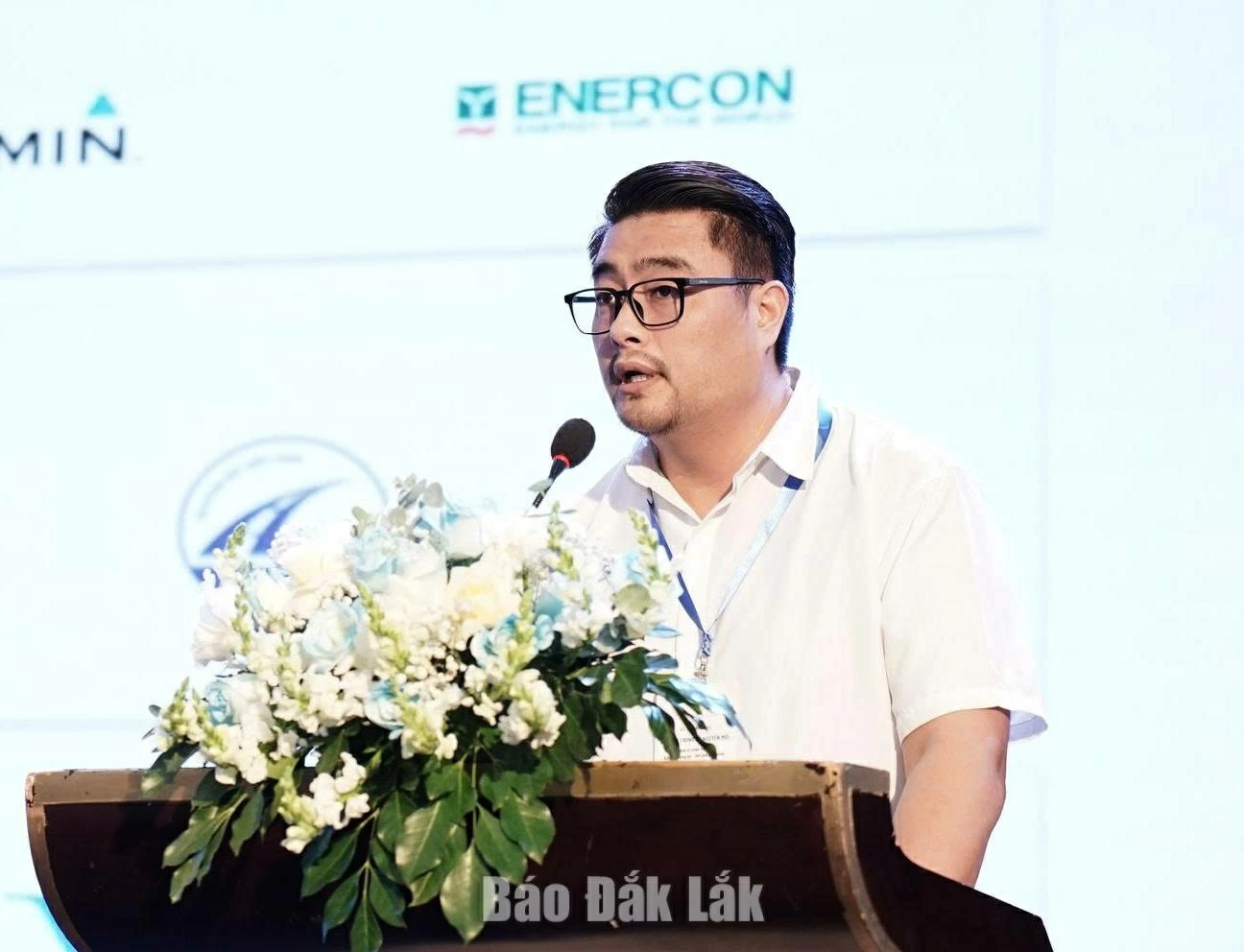 |
| Chief Executive Officer Phung Quoc Kim Long, Sumo Lab. |
The low-altitude economy (LAE), built on a UAV ecosystem integrated with AI, big data and digital platforms, represents an emerging development trend capable of becoming a novel growth engine for Dak Lak. Given its strengths in agriculture, abundant development space alongside the East - West economic corridor, the province should prioritise UAV-based services in urban management, logistics, high-tech agriculture and natural resource management.
UAVs can also support the digitalisation of cultivation areas, emissions monitoring, agricultural product traceability together with compliance with export standards, while improving productivity, reducing costs and creating novel service industries. Dak Lak should promptly introduce a regulatory sandbox, develop a UAV ecosystem aligned with local advantages, and generate fresh momentum for achieving double-digit GRDP growth.
Translated by KHUONG THAO


