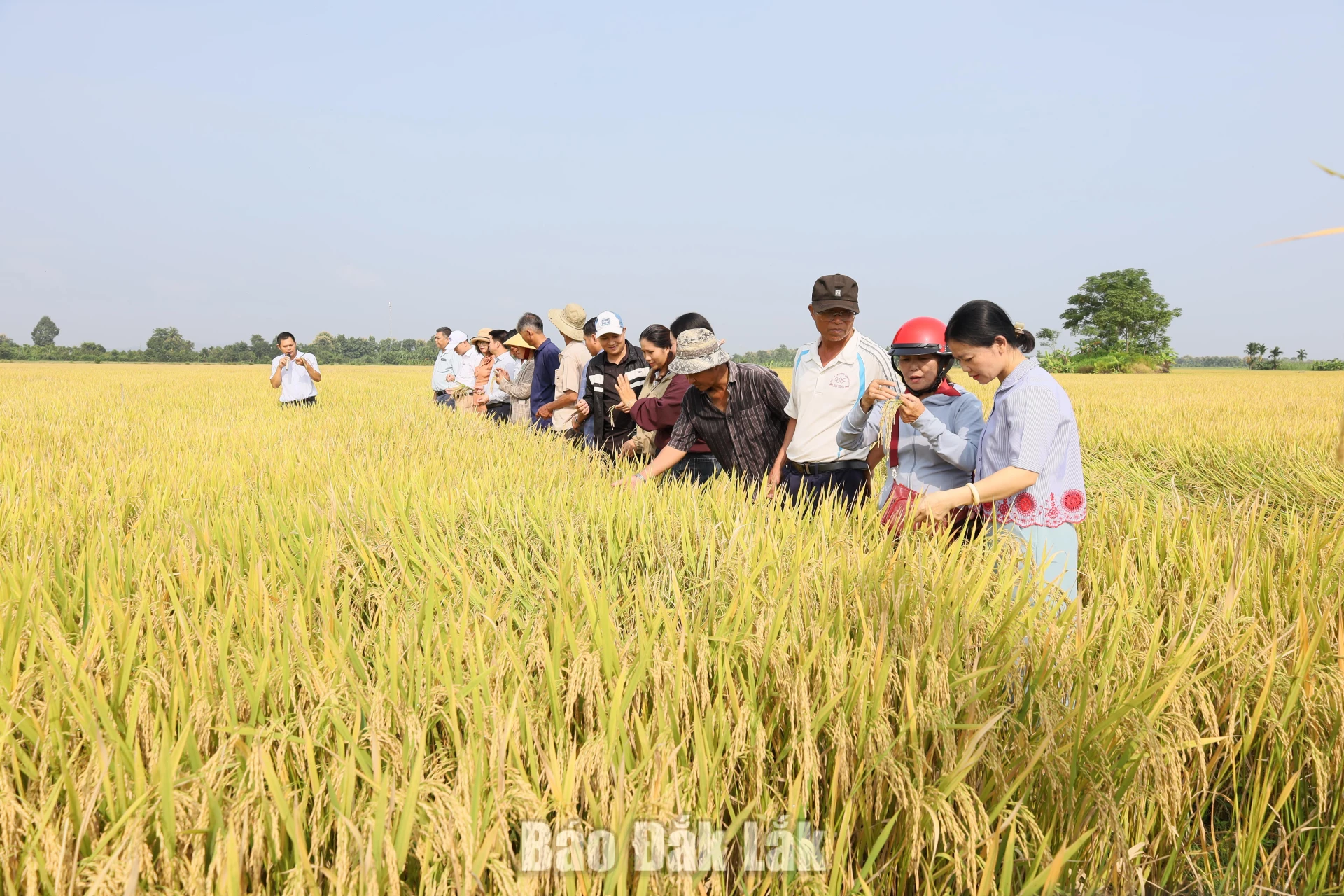
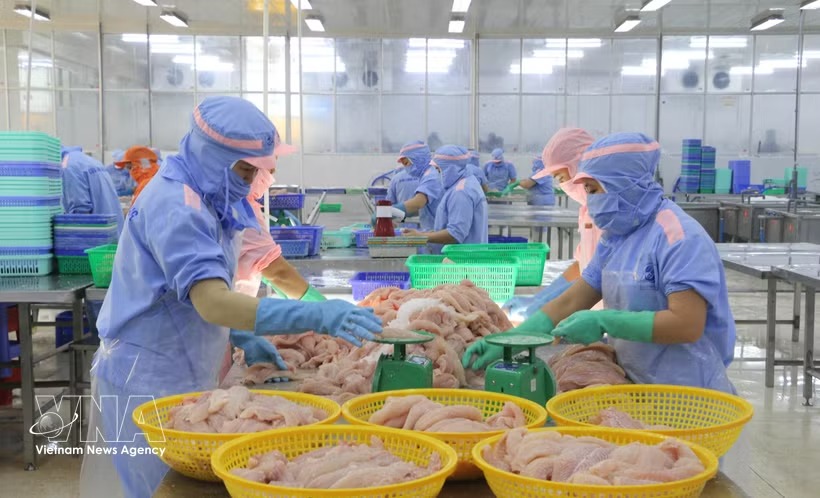
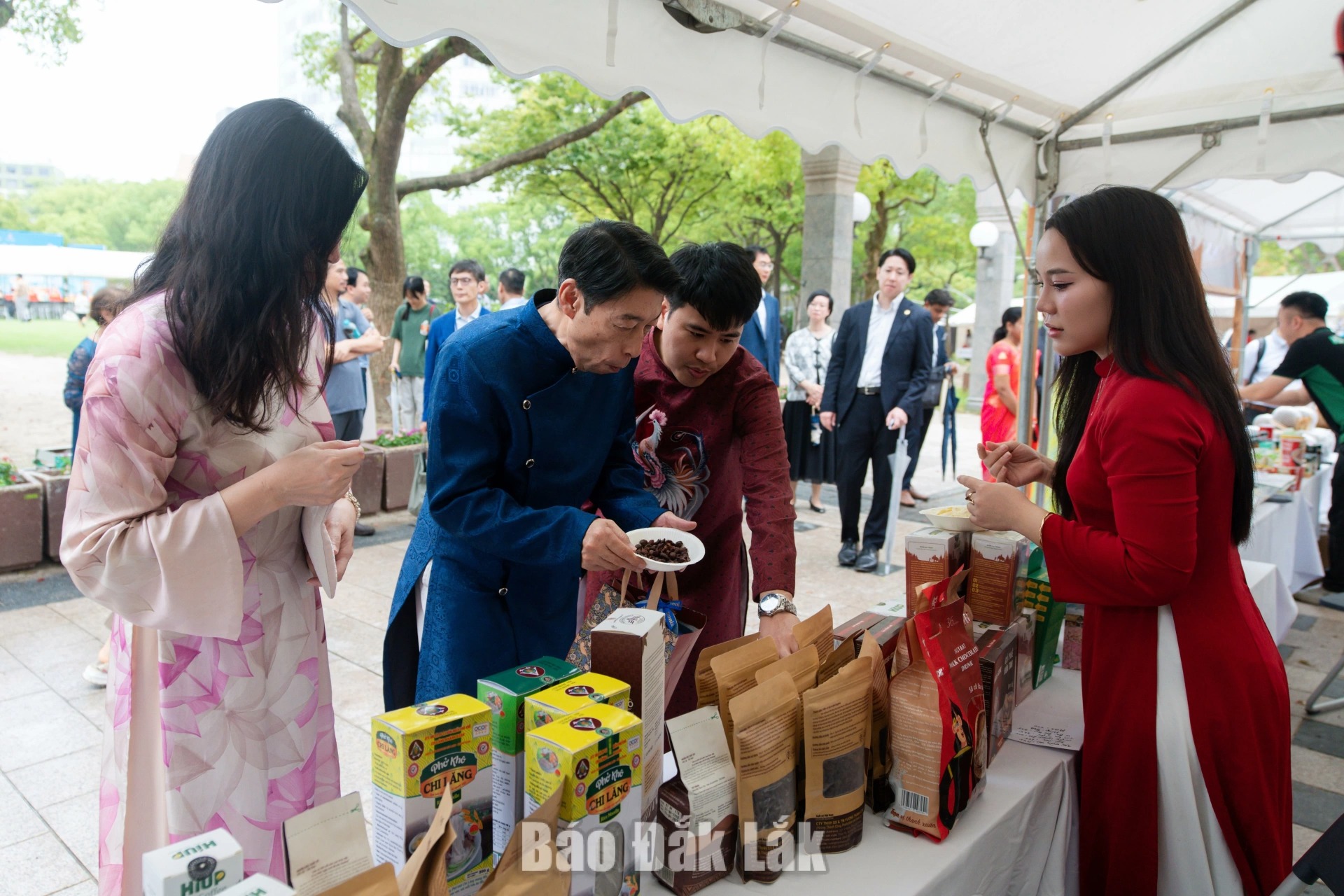
From establishing growing area codes (GACs) and organising value-chain production to deep processing, OCOP product development, digital transformation (DX) combined with enterprise partnerships, numerous cooperatives (co-ops) province-wide are gradually affirming their role in organising production and enhancing the value of agricultural products.
In agricultural production, the market is increasingly imposing stringent requirements on product quality, traceability and production stability. Against this backdrop, numerous co-ops have shifted from fragmented production to organising raw-material areas, controlling production processes while building linkages with enterprises.
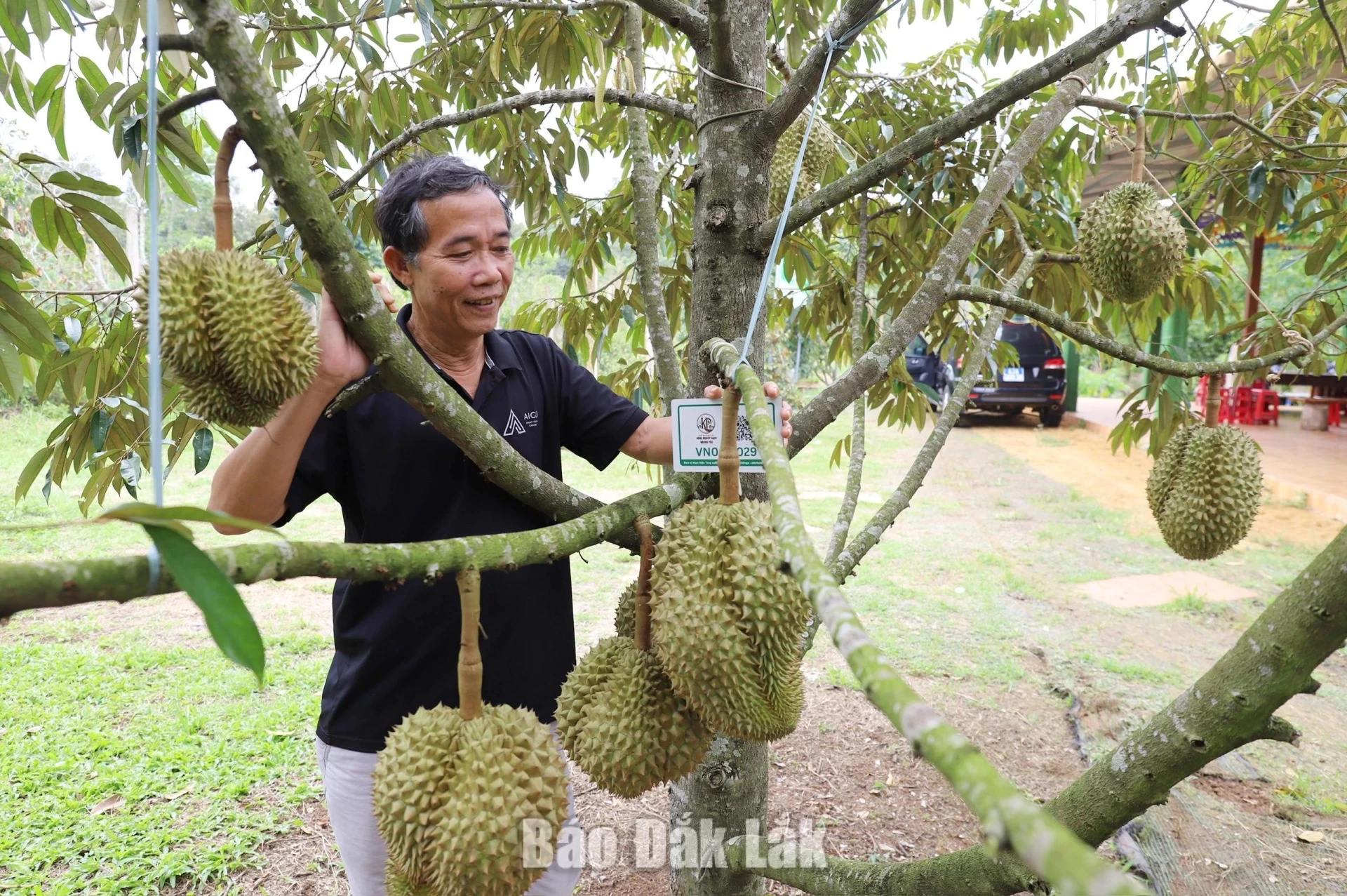 |
| Co-ops and enterprises strengthening linkages while scaling up effective models to improve product quality and increase value. |
According to Mr. Nguyen Van Thanh Binh, General Director of Green Highlands Cooperative, establishing GACs must be linked to quality control, traceability alongside market linkages. GACs are not merely a management tool but also a shared asset underpinning the reputation of an entire production area. “Enterprises need a stable supply of raw materials with consistent quality; farmers need technical guidance, updated market information and reliable outlets; while co-ops play the role of organising, coordinating and connecting the parties,” he explained.
In practice, establishing GACs is only one step in the process of reorganising production. For raw-material areas to operate effectively, co-ops and their members must comply with established processes, enterprises must fulfil their commitments, while strict controls must be maintained throughout the chain, from cultivation and harvesting to procurement coupled with sales. When these stages are effectively connected, agricultural products have greater opportunities to reach wider markets while meeting stringent market requirements.
Taking a different approach, Hala Farm Vietnam Cooperative has opted for deep processing and brand development to add value to agricultural products. Ms. Nguyen Lan, Executive Director of Hala Farm Vietnam Cooperative, said co-ops must shift their mindset by starting with consumer demand when organising production and developing suitable products. “No cooperative can develop on its own. Connecting farmers, scientists, enterprises, co-ops combined with management agencies can help harness the strengths of each link and create a more sustainable value chain,” she stressed.
Scaling up innovative models
Beyond organising raw-material areas coupled with processing, developing OCOP products and accelerating DX are opening up new opportunities for co-ops.
Mr. Nguyen Hoang Chuong, Chairman of the Board of Directors and Director of Dong Din General Agricultural Business Cooperative, said OCOP product development needs to go deeper, with emphasis on raw-material quality, production processes, packaging, trademarks along with traceability. Applying science and technology while promoting DX in production, marketing and sales, particularly through online sales channels, will help products reach a broader consumer base. Meanwhile, linking OCOP products with agricultural tourism, local culture and the community economy is another area warranting greater attention.
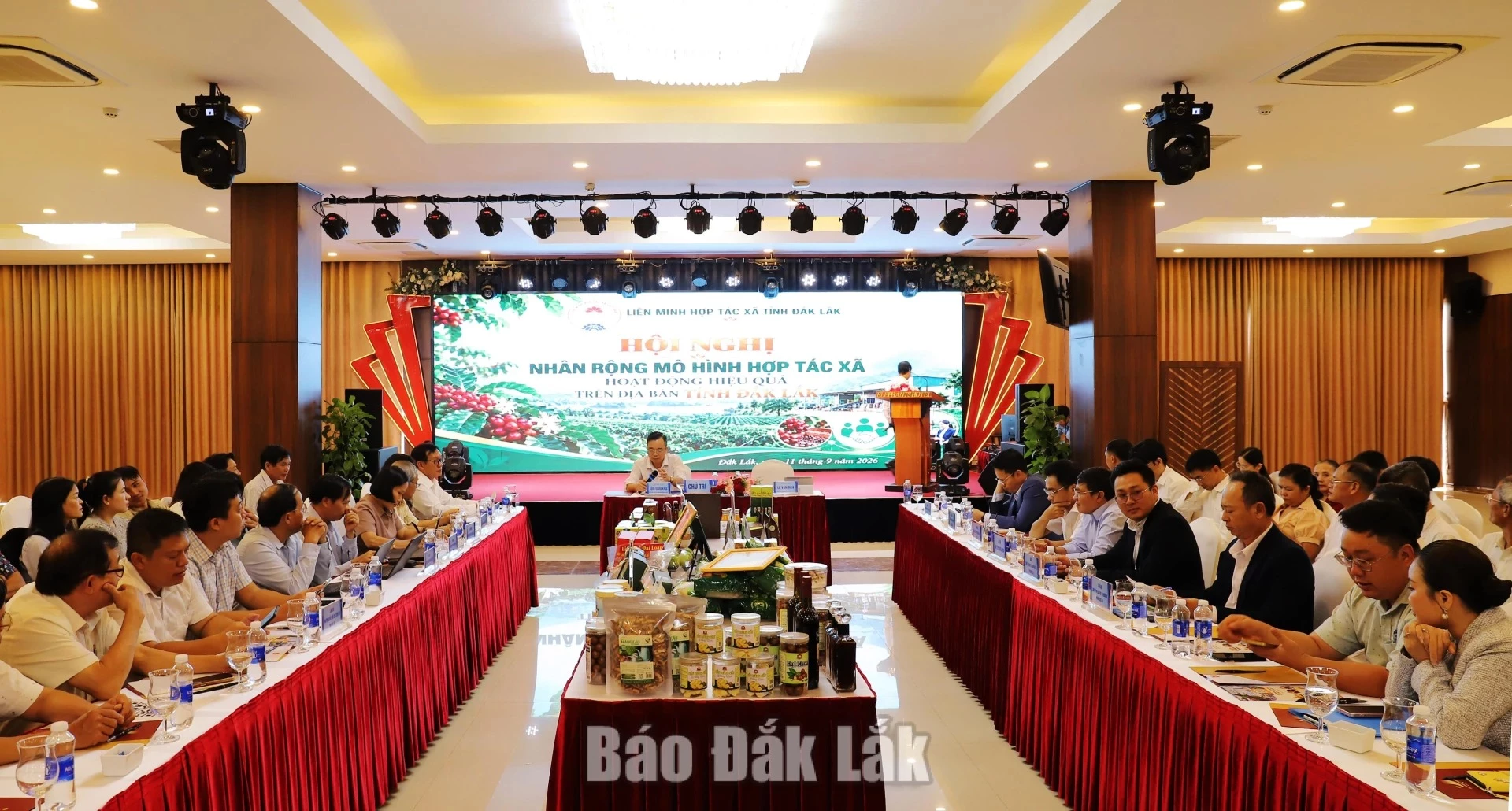 |
| Delegates attending a conference discussing solutions to scale up effective cooperative models. |
From a linkage perspective, Mr. Le Ba Canh, Vice Chairman of the provincial Viet Nam Fatherland Front Committee, stressed the need to improve management capacity, product quality, market access and the ability to establish long-term partnerships, particularly between co-ops alongside the private sector. Co-ops have advantages in bringing members together, organising production and developing raw-material areas, while enterprises have strengths in capital, technology, management, processing and markets. Effective linkages will create stable value chains while strengthening product competitiveness.
When co-ops serve as a bridge linking farmers and raw-material areas with enterprises as well as markets, the role of the collective economy will become more evident, contributing to improved operational efficiency for co-ops while creating more stable employment and sustainable incomes for their members.
Translated by KHUONG THAO