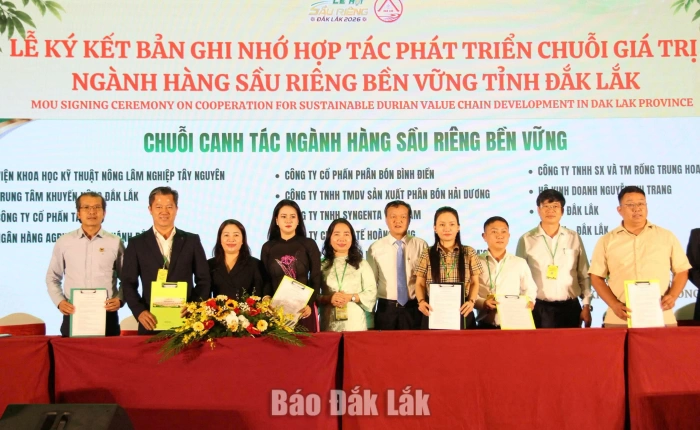
The forum titled “National Assembly deputies accompanying and facilitating the rapid, sustainable, civilised combined with identity-rich development of Dak Lak Province”, under the theme “Creating conditions for Dak Lak to become a high-tech agricultural centre”, provided a platform for frank dialogue among elected representatives, experts and voters to jointly seek comprehensive solutions to turn high-tech agriculture into a growth driver.
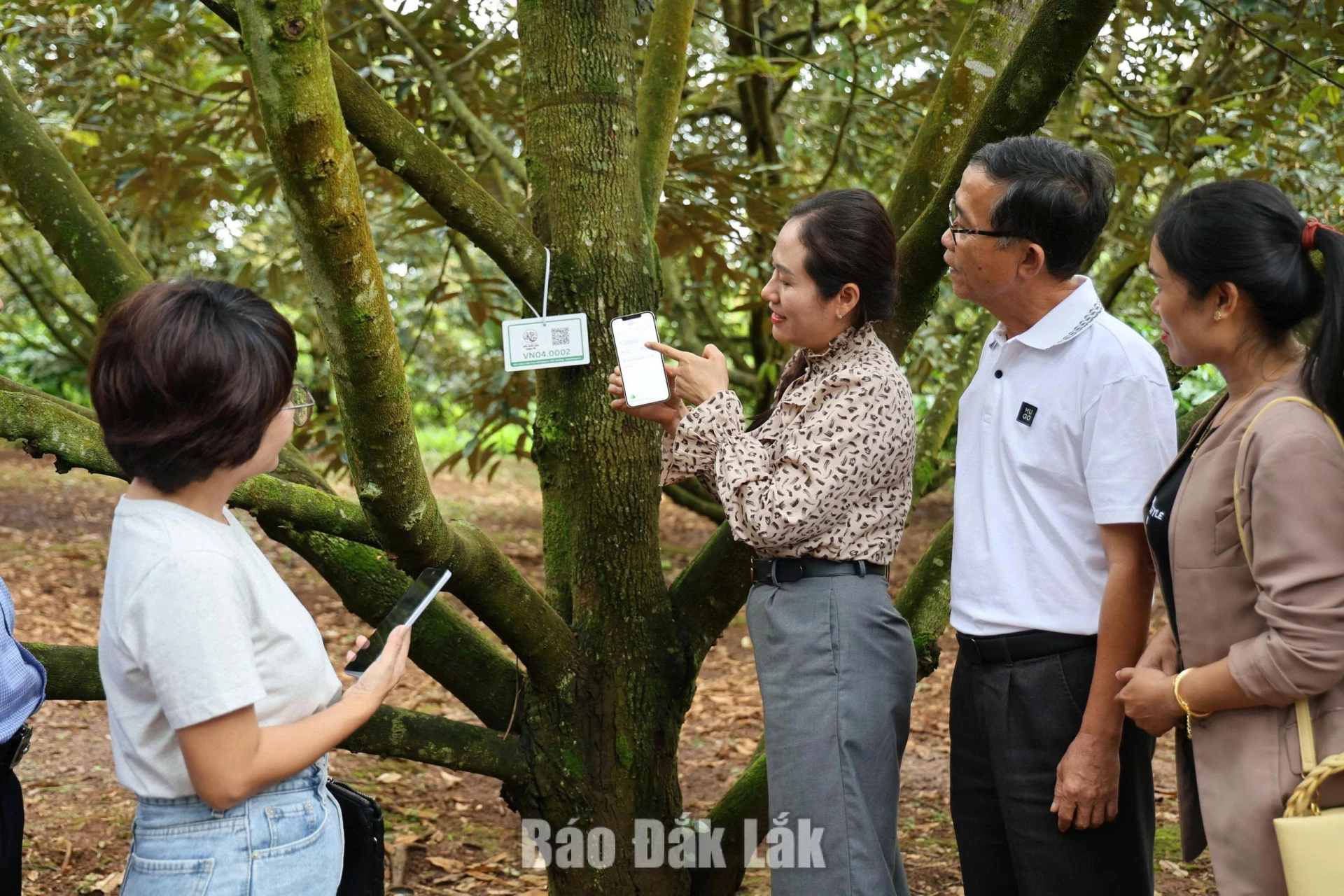 |
| Identification codes and positioning systems helping trace the origin of durian products at Krong Pac Clean Agricultural Services Cooperative in Krong Pac Commune. |
Dak Lak has long established itself as a leading hub for major agricultural commodities, including coffee alongside durian, with considerable room for further development. Rapid growth has also exposed a number of internal constraints. The province still has relatively few registered growing-area codes and packing facilities, while international standards including the EUDR impose stringent requirements on standardised cultivation practices and data management.
At a recent live televised thematic discussion organised by the Dak Lak Provincial National Assembly Delegation in coordination with Dak Lak Newspaper and Radio - Television, voters raised concerns arising from practical experience. Voters, enterprises together with agricultural commodity associations expressed concern about bottlenecks in agricultural development, particularly access to capital and markets, improving producers’ position and compliance with international standards. Numerous called on the province to step up the application of technology as well as develop a synchronised, transparent data system covering the entire chain, from growing areas to processing through consumption and border-gate connectivity, thereby increasing agricultural products value alongside their compliance with increasingly stringent export market requirements.
Experts and National Assembly deputies agreed that high-tech agriculture is not about pursuing particular models or modern machinery, but about applying technology to effectively address the practical challenges faced by farmers.
Aligning policies for sustainable development
Alongside technical solutions, removing institutional bottlenecks plays a pivotal role in creating an enabling environment for high-tech agriculture. Ms. Nguyen Thi Thu Nguyet, Deputy Head in charge of the Dak Lak Provincial National Assembly Delegation, said that the National Assembly and Government had recently taken timely action to promulgate as well as amend a number of important laws and decrees aimed at mobilising resources for modern coupled with sustainable agricultural development.
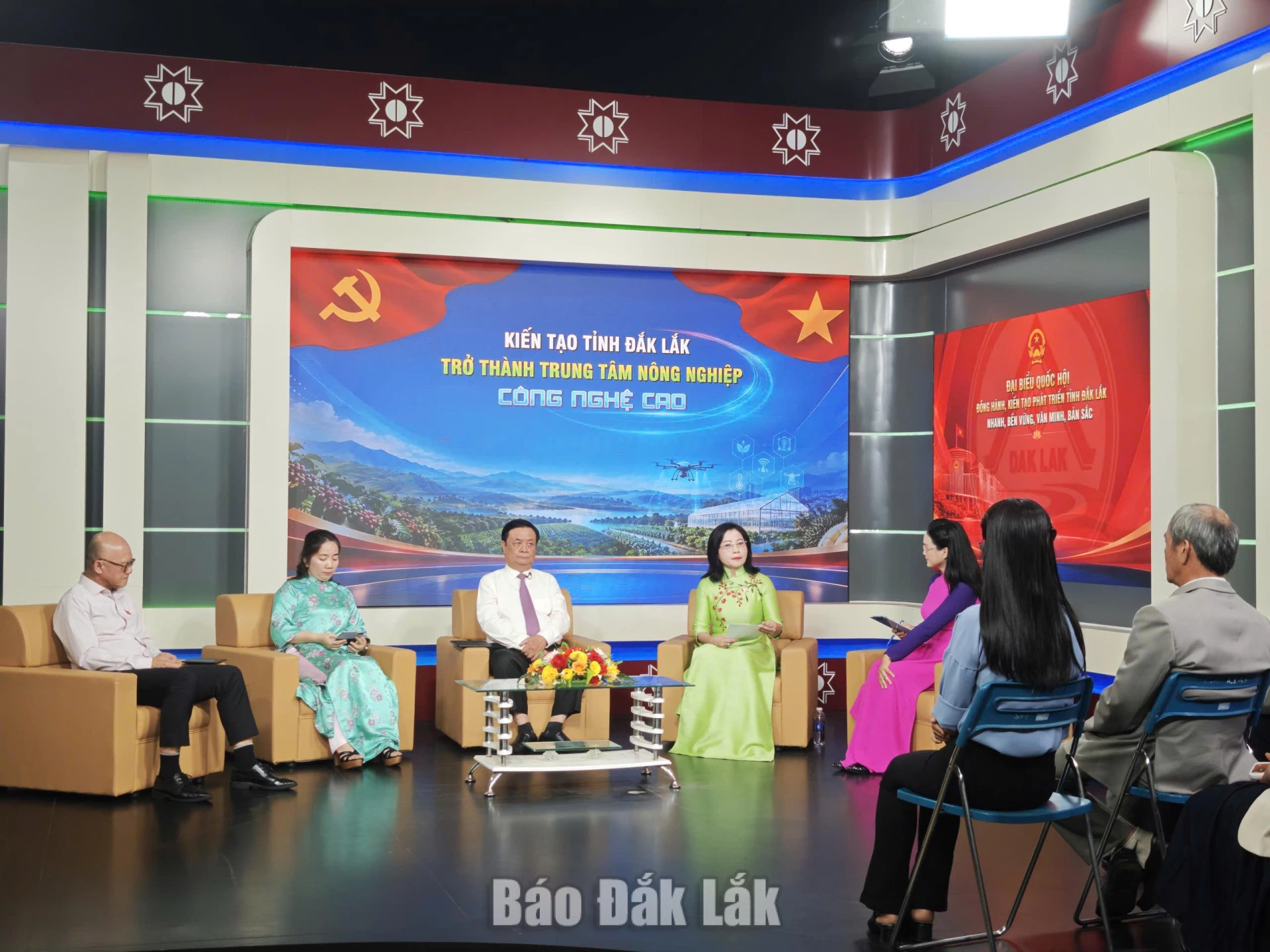 |
| Delegates attending the forum titled “National Assembly deputies accompanying while creating conditions for the rapid, sustainable, civilised and identity-rich development of Dak Lak Province”, under the theme “Creating conditions for Dak Lak to become a high-tech agricultural centre”. |
She said the Law on High Technologies, Law on Crop Production and Law on Investment, together with relevant decrees, had established a relatively comprehensive legal framework covering everything from varietal development and origin traceability through preservation along with processing of agricultural products. This provides a basis for Dak Lak to reorganise production methods, plan concentrated specialised farming areas and attract investment projects, creating a solid foundation for its development into a high-tech agricultural centre.
In response to novel development requirements, Mr. Be Trung Anh, a full-time delegate of the National Assembly Committee for Deputies Affairs, also noted that the biggest bottleneck in the current legal system lies in the lack of policy coordiation across land, credit, science, technology, and market information. Therefore, the State needs to shift from providing incentives for individual projects to building an investment ecosystem supported by infrastructure coupled with shared digital data, creating a transparent environment in which enterprises and residents can cooperate over the long term.
To ensure that the opinions and aspirations of farmers, cooperatives combined with enterprises extend beyond discussion forums, Ms. Nguyen Thi Thu Nguyet affirmed that the Dak Lak Provincial National Assembly Delegation would maintain close to grassroots communities, strengthen field surveys and thematic voter meetings, promptly propose solutions to issues under provincial jurisdiction, as well as consolidate major obstacles into specific policy recommendations for consideration by the National Assembly.
Translated by KHUONG THAO