Under the plan, Dak Lak province is expected to complete cadastral surveying, mapping, cadastral records and the national land database across the province by the end of 2026. Relevant departments together with agencies are jointly stepping up implementation.
Standardising data
The province aims to conduct cadastral surveys and mapping, register land, establish cadastral records as well as build a land database covering all land parcels without existing digital records for management, exploitation and use. Concurrently, the plan also calls for synchronised connection and sharing of a unified, common-use land database, alongside effective database management and operation, online public services, together with system security.
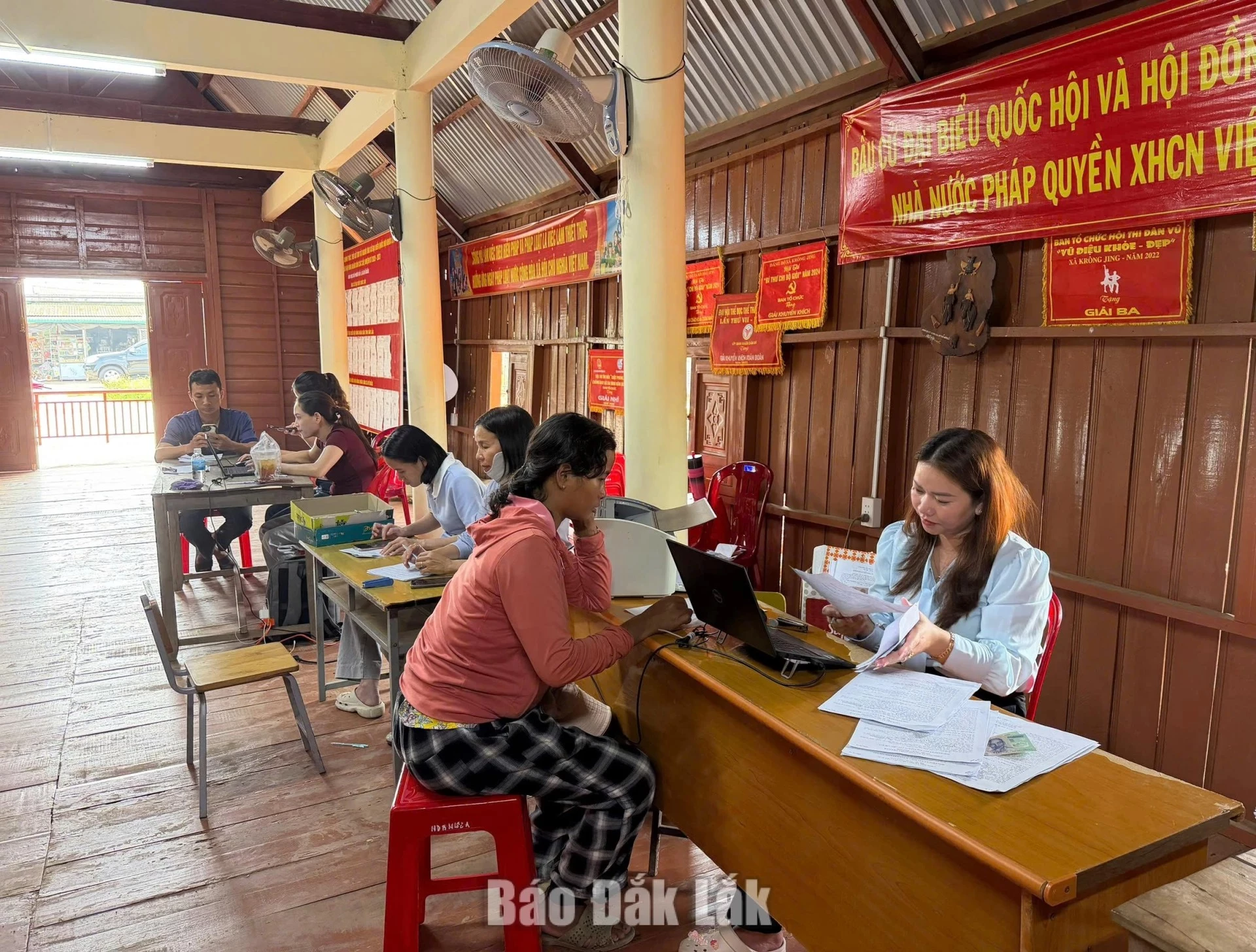 |
| Officials in M’Drak Commune receiving and processing information from residents for land database development. |
The province has established three working teams to provide guidance across 102 localities; mobilised more than 200 students to assist; assigned professional staff to work directly at the grassroots level, providing hands-on guidance, technical support and solutions to local difficulties. Communes coupled with wards have also mobilised additional personnel and youth union members to collect information as well as complete the land database.
According to the Land Registration Office, as of September 15, 2026, for areas without cadastral maps, the province had approved surveying and mapping tasks covering 17,000 hectares as a basis for implementation. For areas with existing cadastral maps, data for 2.39 million out of 3.99 million land parcels has been incorporated into the database, reaching 60%. The Land Registration Office is currently integrating while synchronising data for 366,930 out of 533,671 land parcels on the local land information system (VBDLIS), equivalent to 68.8%. Based on the Ministry of Agriculture and Environment’s progress assessment as of September 21, 2026, Dak Lak ranked eighth among 34 provinces alongside centrally run cities in Group 1 land database development.
Comrade Nguyen Thien Van, PPC Vice Chairman, said completing the provincial land database represents an important step towards building digital government, a digital society and digital economy. It will also improve land-related public services as well as streamline administrative procedures for residents and businesses.
Stepping up progress
An assessment by the Department of Agriculture and Environment shows that land database completion plan implementation has encountered several difficulties and bottlenecks. As no provincial budget funding has been provided, localities must cover expenses from commune-level budget reserves and other lawful financial sources, placing considerable pressure on communes coupled with wards.
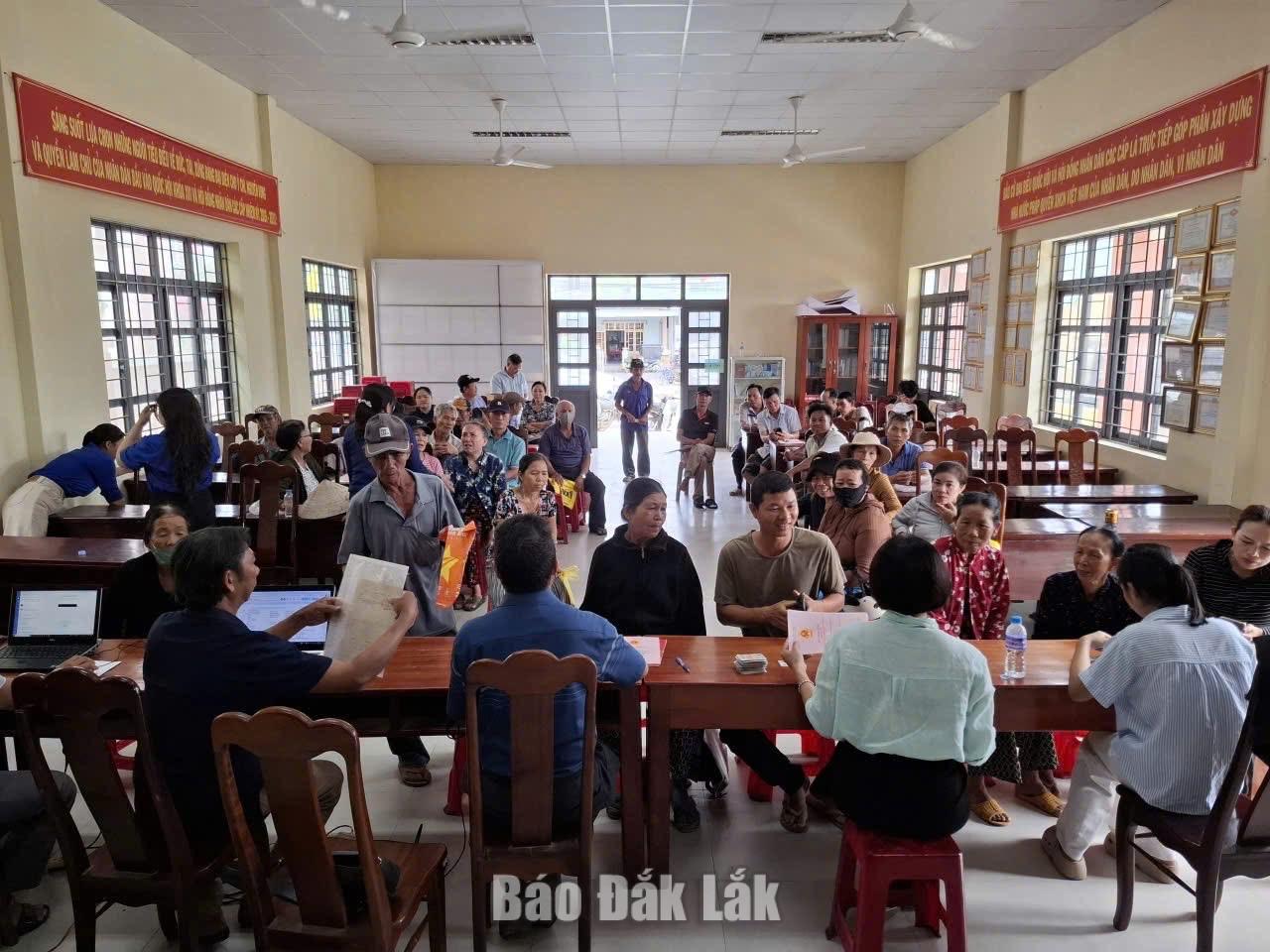 |
| Residents in Tuy An Dong Commune declaring land-related information. |
Inconsistencies between VBDLIS and the National Land Database (VNLIS) mean the VNLIS system records only 3.64 million land parcels, below the actual 3.99 million parcels recorded locally. Moreover, the requirement that each scanned file synchronised to VNLIS must not exceed 10MB has resulted in a large amount of data being classified under Group 2.
Other obstacles include verifying land users across different periods, reconciling actual land use status, while updating technical data on the system.
Dak Lak’s Plan No. 113/KH-UBND, dated April 10, 2026, sets a target of reviewing and cleaning the entire land database developed over different periods across all 102 commune-level administrative units by the end of 2026. The province also aims to ensure that 100% of eligible land-related administrative procedures are provided as fully online public services.
To meet these targets, the province has called on local Party committees and authorities to step up implementation. Professional staff will continue working closely with grassroots administrations. The Department of Agriculture and Environment, in coordination with the provincial Police, will maintain inspection as well as supervision teams in communes and wards. Particular focus will be placed on providing direct technical support to localities lagging behind schedule, helping resolve outstanding technical bottlenecks.
Translated by HAI LOAN