From fisheries and tourism to industry, seaports, logistics together with energy, the foundations are gradually taking shape, creating a basis for Dak Lak to reorganise its marine economic space towards a diversified, interconnected and sustainable model.
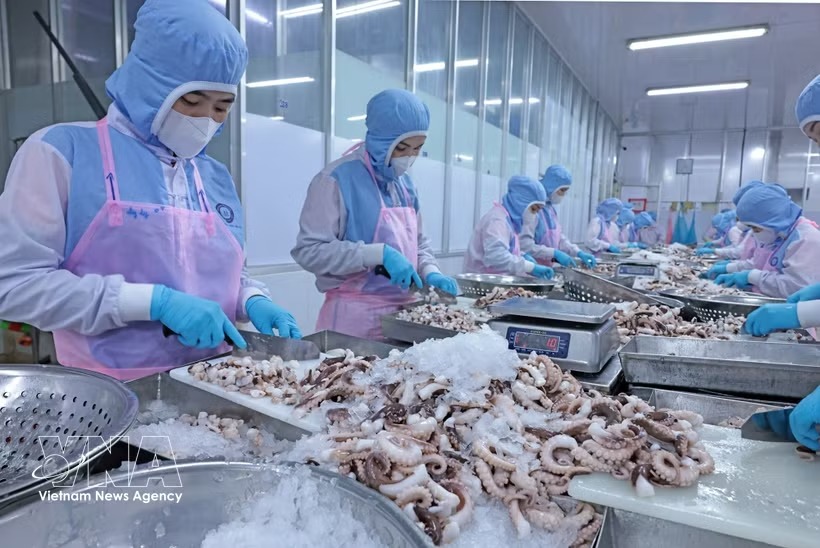
Dak Lak has a coastline of approximately 189 km, comprising 45 open beaches, 17 nearshore islands, four lagoons and bays, combined with three major river mouths. Coastal localities have developed fisheries and aquaculture, with an aquaculture area of more than 2,520 ha. The province currently has 2,576 fishing vessels, providing employment for nearly 8,000 people engaged in fishing. On average, purely marine economic sectors account for around 8 - 10% of the provincial GRDP.
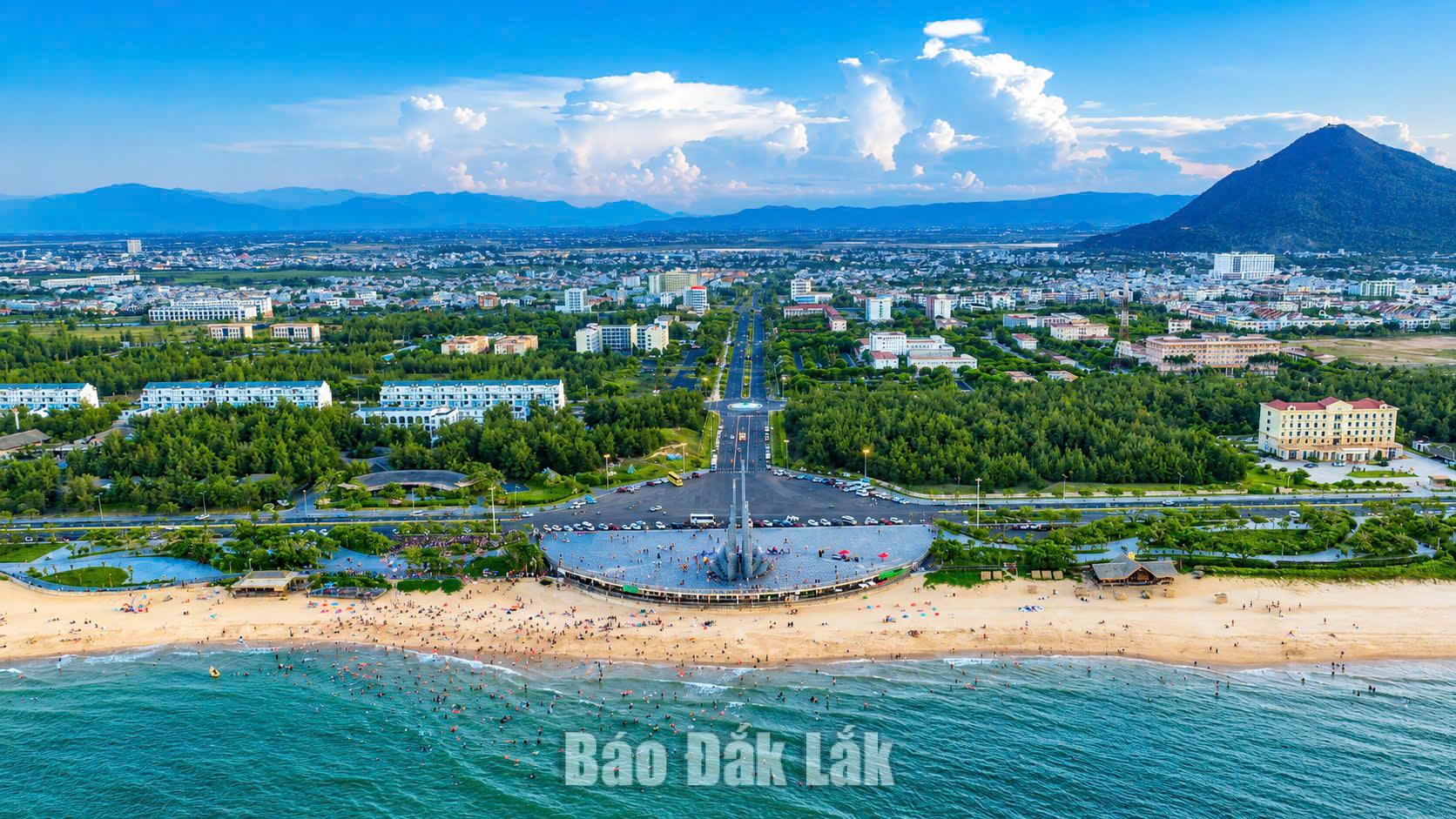 |
| With its existing potential and advantages, Dak Lak reorganising its marine economic space towards a diversified as well as sustainable model, generating growth momentum through regional connectivity. |
Mr. Huynh Nguyen Ngoc Giang, Chairman of the Hoa Hiep Ward People’s Committee, said that local authorities and residents were changing their approach to the marine economy. Rather than focusing solely on fishing coupled with aquaculture, fishers have begun engaging in marine tourism services while joining efforts to preserve the heritage of coastal fishing villages.
Dak Lak’s coastal areas boast abundant tourism resources, along with numerous historical and cultural sites, festivals together with distinctive cultural values. These provide a foundation for developing tourism products centred on the sea, islands, lagoons and bays, while incorporating community culture.
Marine resources offer diverse opportunities for marine economic development, from fisheries and aquaculture linked to processing, logistics alongside trade, to tourism connecting landscapes with culture, heritage and community life, as well as maritime transport, logistics, industry and emerging marine economic sectors. This direction is consistent with Resolution No. 20, which calls for a shift in thinking, integrated management of marine space, infrastructure development, advances in science coupled with technology, and a marine economy aligned with ecosystem protection.
Pieces taking shape
Building on its natural advantages, Dak Lak is gradually improving infrastructure together with planning, attracting investment and strengthening governance capacity to make the marine economy an important pillar of its growth structure while strengthening links between the coastal region and the Central Highlands.
One key driver is the South Phu Yen Economic Zone (EZ). Covering 20,730 ha, it is one of the country’s eight key coastal EZs, with the potential to develop into an industrial, urban, service and logistics hub for the South Central Coast while strengthening connectivity with the Central Highlands.
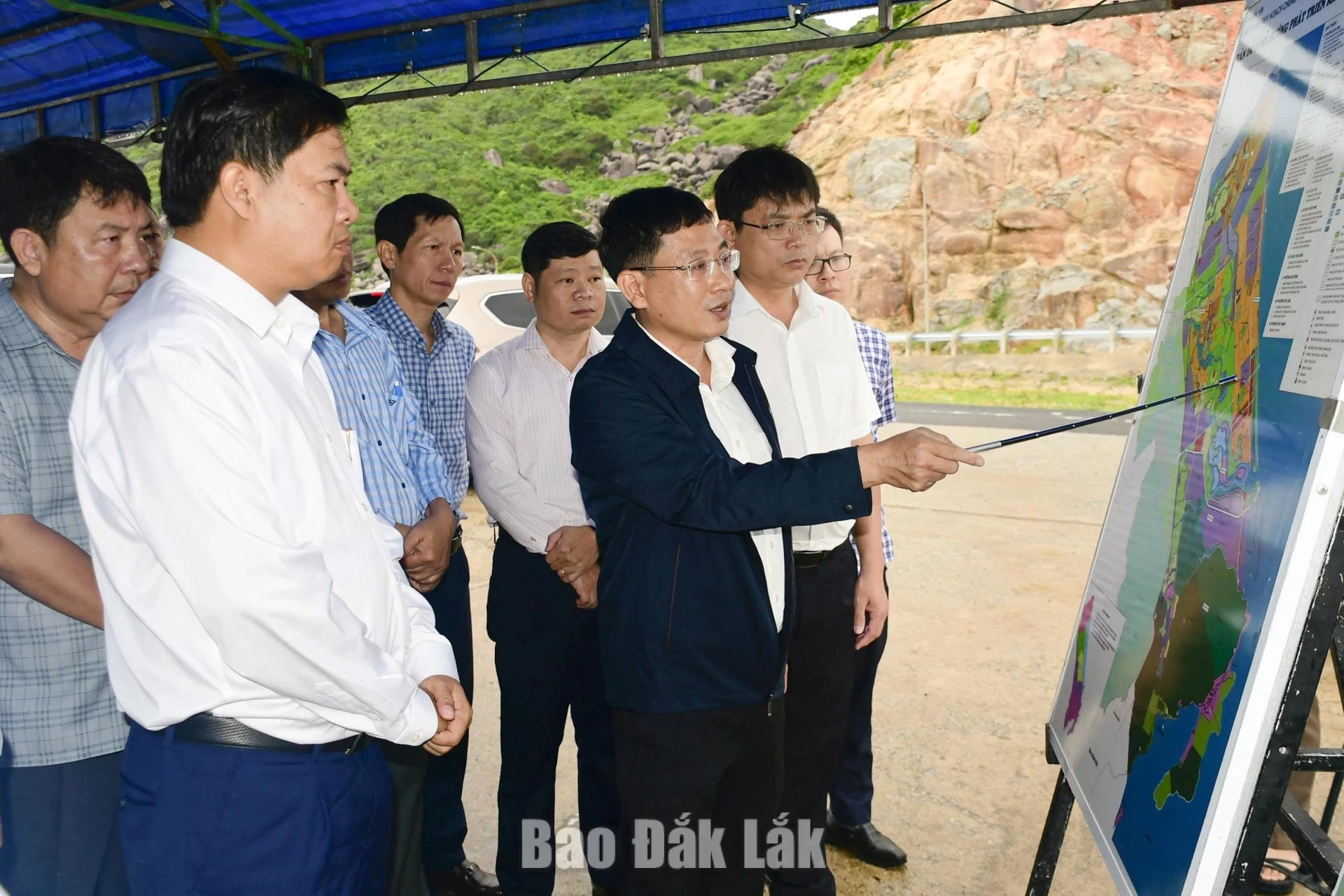 |
| Provincial Party Secretary Luong Nguyen Minh Triet receiving a briefing on projects under implementation in the South Phu Yen EZ. |
According to Mr. Huynh Lu Tan, Director of the provincial Management Board of EZs and industrial parks (IPs), infrastructure investment has significantly enhanced the area’s appeal to investors. The South Phu Yen EZ and IPs in the provincial eastern part have attracted 122 domestic investment projects with total registered capital exceeding 42 trillion VND, alongside 16 foreign direct investment (FDI) projects worth approximately USD 58.57 million. The average occupancy rate across the five operational IPs has surpassed 96%.
Meanwhile, major projects, including the Bai Goc Port project, Phase 1 of the Hoa Tam IP infrastructure project and the High-Tech IP, are laying the foundations for an integrated industrial, seaport combined with logistics system.
The province continues to prioritise infrastructure completion across EZs, IPs, seaports and logistics facilities, as well as transport routes connecting National Road 1 and the North - South Expressway with the Central Highlands.
Alongside industry and seaports, Dak Lak currently has eight offshore wind power projects with a total capacity of 2,000 MW. The province is also studying opportunities while seeking investment in marine medicinal plants, as well as the cultivation and processing of seaweed, algae along with seagrass.
Tourism development is oriented towards linking the sea, islands, lagoons and bays with the culture, agricultural products alongside community life of the provincial western part. This approach aims to create an ecosystem linking “the highlands to the ocean”, thereby enhancing the value of destinations and associated services.
Translated by KHUONG THAO