The Ministry of Health is compiling implementation results and developing guidelines for disease-specific screening, while promoting the use of existing medical data to avoid unnecessary repeat tests.
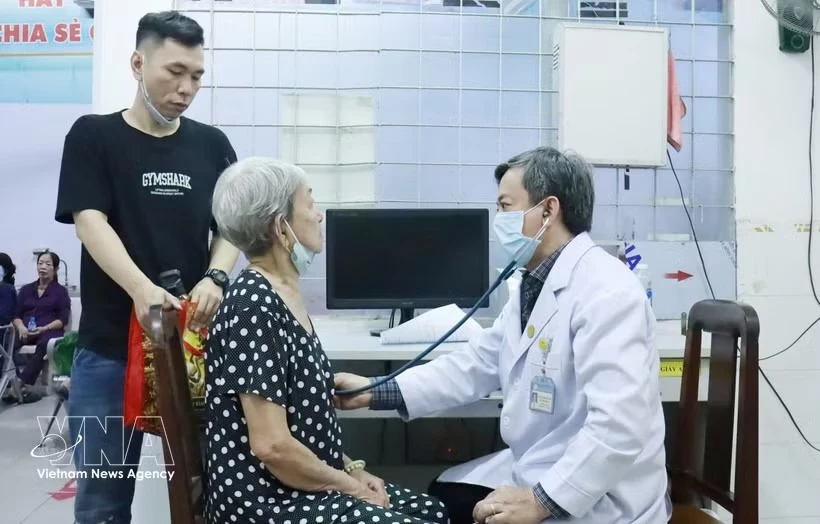 |
| A doctor from Cho Ray Hospital provides health screening for a resident at the Cho Lon ward Medical Station. (Photo: VNA) |
More than half of Viet Nam’s population has so far received free periodic health check-ups, with the rate exceeding 90% in some localities, and effectiveness and cost efficiency given the top priority.
The Ministry of Health is compiling implementation results and developing guidelines for disease-specific screening, while promoting the use of existing medical data to avoid unnecessary repeat tests.
Dr. Vuong Anh Duong, Deputy Director of the ministry’s Department of Medical Service Administration, said the ministry has received reports from 34 provinces and cities and is reviewing the results.
He stressed that the core objective is to detect diseases and risk factors at an early stage. People identified as being at risk or suspected of having a disease will be referred to appropriate medical facilities for further diagnosis and timely treatment. The check-up results will also contribute to building health records and supporting lifelong health management.
The Ministry of Health has instructed localities to organise check-ups at qualified medical facilities, with doctors from relevant specialties available. Basic tests are to be prescribed by examining doctors based on each person’s health status and clinical findings, rather than according to a fixed package.
Duong said the ministry is compiling data on the number of people receiving check-ups, electronic health records created and examination results uploaded to the health information system, in line with Politburo Resolution No. 72-NQ/TW dated September 9, 2025 on breakthrough measures to protect, care for and improve public health.
The ministry is also developing methods to analyse check-up data by age group, locality and disease patterns, serving as a basis for disease-specific screening guidelines.
Regarding the use of existing medical data, Duong said doctors are encouraged to access information from social insurance databases, the national digital identity application VNeID and electronic health records. Valid clinical and laboratory results can be reused instead of being repeated, particularly for people undergoing treatment for chronic diseases such as hypertension and diabetes.
The approach is expected to reduce unnecessary duplicate testing, ensure continuity in health monitoring and improve the use of healthcare resources.
VNA