Amid international integration and digital transformation, preserving traditional arts in Dak Lak goes beyond safeguarding artistic forms passed down through generations. More importantly, it is about ensuring that traditional melodies, gong performances, dances combined with forms of oral expression remain an integral part of contemporary life.
Dak Lak boasts a rich diversity of traditional art forms. In addition to the Central Highlands’ Gong Culture Space and Central Vietnamese Bai Choi Art, both recognized by UNESCO as intangible cultural heritage, epic storytelling, rhythmic oral poetry along with Ayray singing are also being preserved and promoted by artists, artisans as well as community performing arts groups.
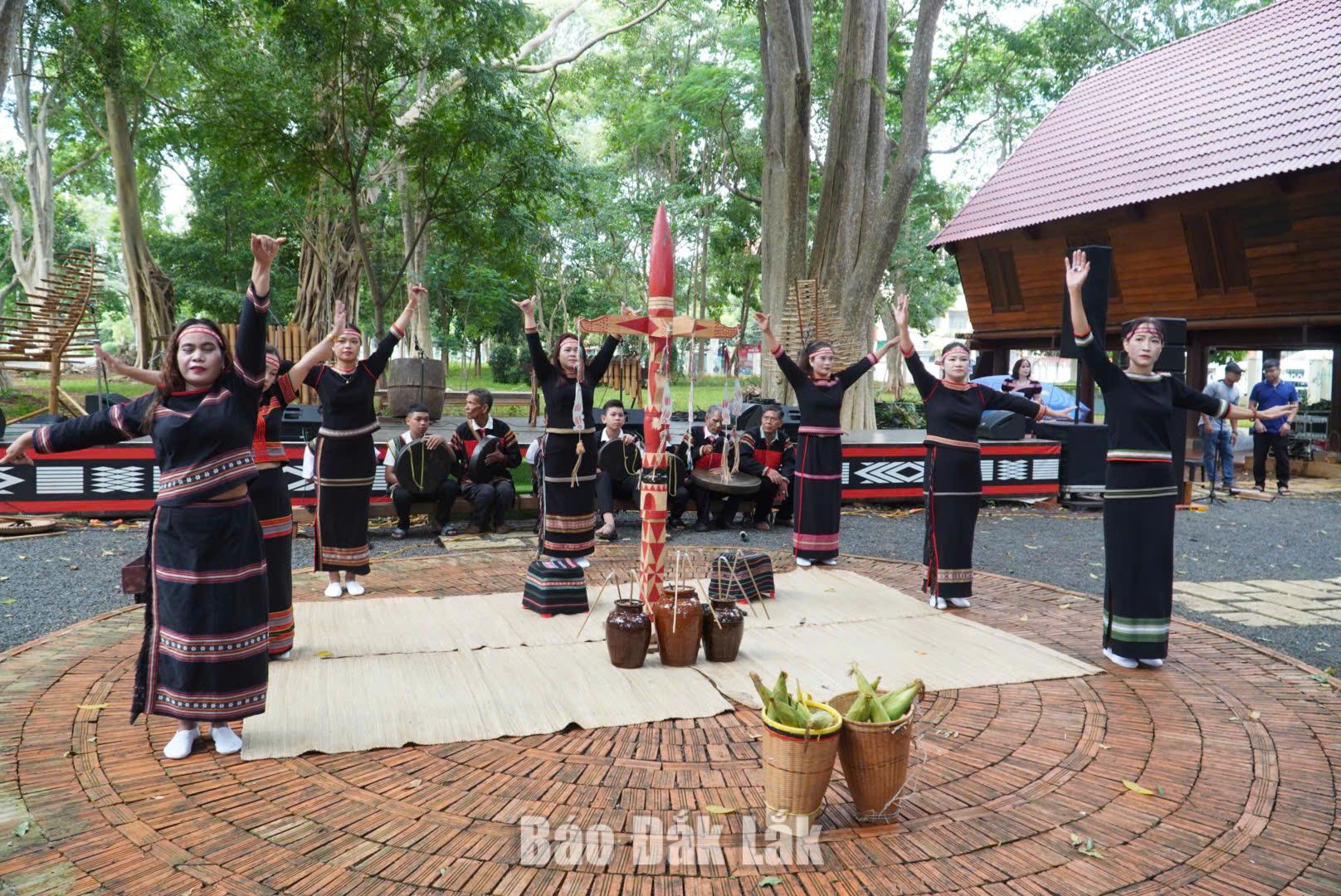 |
| Artisans perform gong music and the xoang dance to welcome visitors at the Dak Lak Museum. |
Although each art form has its own performance setting, all share one common requirement: they must be practiced regularly within the community. The provincial cultural sector and local authorities frequently organize training together with transmission classes, adopting flexible approaches that combine the introduction of cultural knowledge with hands-on practice.
According to Meritorious Artist Vu Lan, who has spent 44 years studying and engaging with the folk culture of the Central Highlands, intergenerational transmission is the vital link that prevents traditional arts from disappearing. Traditional arts need both practitioners coupled with successors. Therefore, passing on these traditions is not simply a matter of transferring performance skills; it is also a process of helping younger generations understand the origins, meanings and cultural contexts in which each art form emerged.
Renewing forms of expression
Cultural preservation does not mean rigidly maintaining traditions in their original forms. Appropriate creativity and innovation can expand performance spaces as well as make traditional arts more accessible to contemporary audiences.
The xoang dance of the Central Highlands ethnic communities is one example. Through cultural exchange and creative adaptation, villages have developed additional xoang variations featuring faster, more lively rhythms to suit modern life. The same applies to gong music: artisans continue to perform pieces handed down through generations while exploring new melodies.
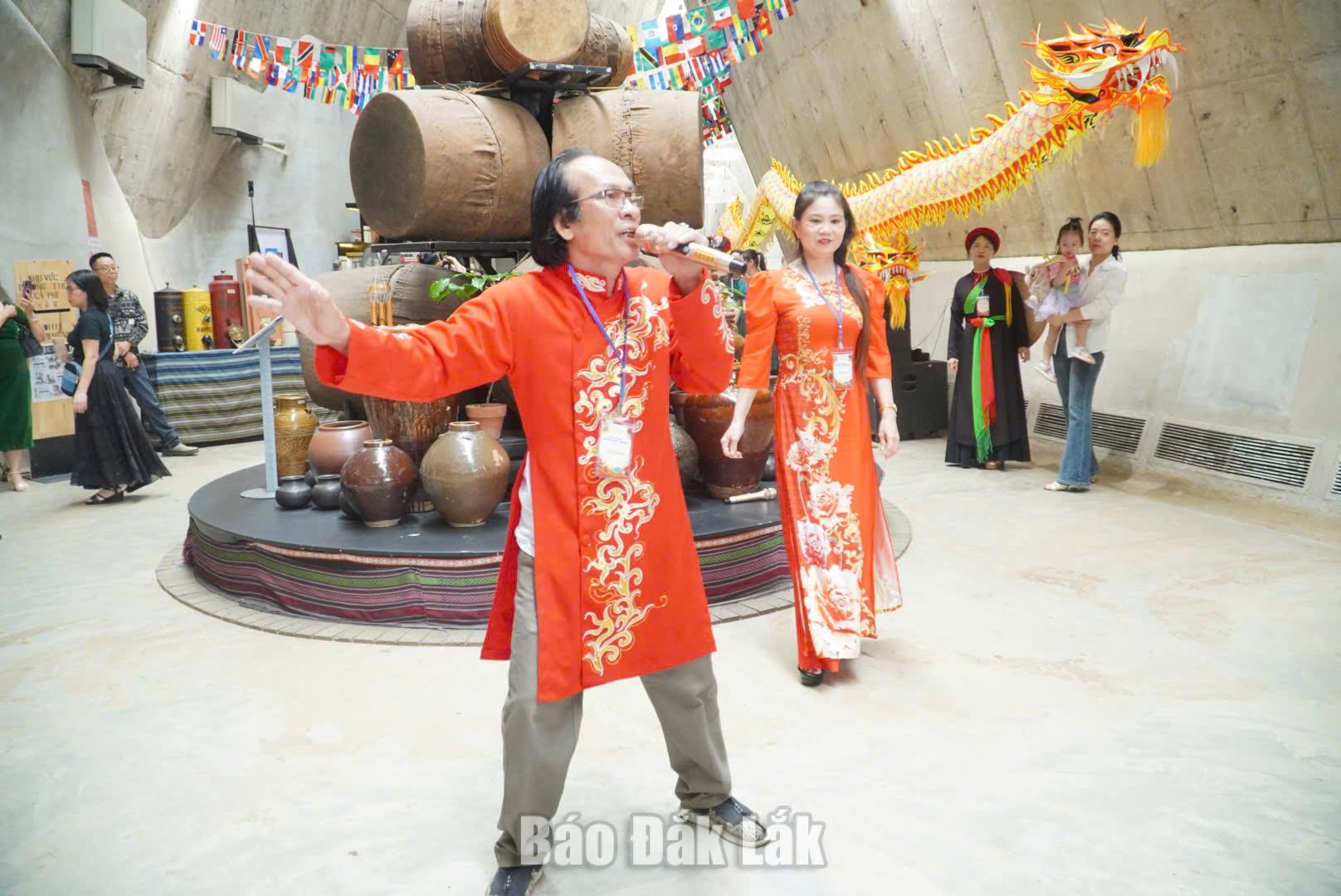 |
| Bai Choi art performance at the Museum of Coffee World. |
Artist Truong Tan Khai, Head of the Theatre and Performance Branch of the provincial Literature and Arts Association, said young audiences are fully capable of embracing traditional cultural elements when they are presented in ways that resonate with contemporary life. In recent years, numerous young artists have successfully blended folk materials with modern approaches to musical arrangement alongside orchestration. For Central Highlands cultural heritage, the key is to choose an appropriate direction that preserves the spirit of tradition while exploring new forms of expression.
Meritorious Artist Vu Lan also stressed that artists and creators must thoroughly understand the values they inherit to ensure that innovation does not undermine the essence of traditional art.
Dak Lak Province is pursuing a cultural development strategy that seeks both to preserve its distinctive identity and to harness cultural values as an endogenous resource for development. The Provincial Party Committee’s Action Program No. 14-CTr/TU, dated April 22, 2026, on cultural development in Viet Nam as implemented in Dak Lak, also identifies the development of cultural industries, the acceleration of heritage digitization and the expansion of opportunities to integrate traditional cultural values into contemporary life as key priorities.
In this process, preservation together with creativity must go hand in hand: inheritance safeguards core cultural values, while creativity enables traditional arts to remain relevant to contemporary audiences. When young people understand and practice these art forms while providing spaces for creative expression, Dak Lak’s traditional arts will continue to evolve, flourish and reach wider audiences.
Translated by THAO LINH