The Viet Nam Fatherland Front (VFF) at all levels province-wide is gradually translating the spirit of great national unity into everyday life through practical activities, thereby mobilising public strength while fostering a sense of responsibility and consensus among the people.
At the “Month of Listening to the People” forum organised by the VFF Committee of Binh Kien Ward in early November, residents spoke candidly with local authorities about issues arising in their neighbourhoods. According to Mr. Nguyen Van Thuong, President of the VFF Committee of Binh Kien Ward, grassroots activities that bring the Front closer to residents enable it to better understand their thoughts coupled with aspirations, coordinate prompt solutions to emerging issues and reinforce community consensus.
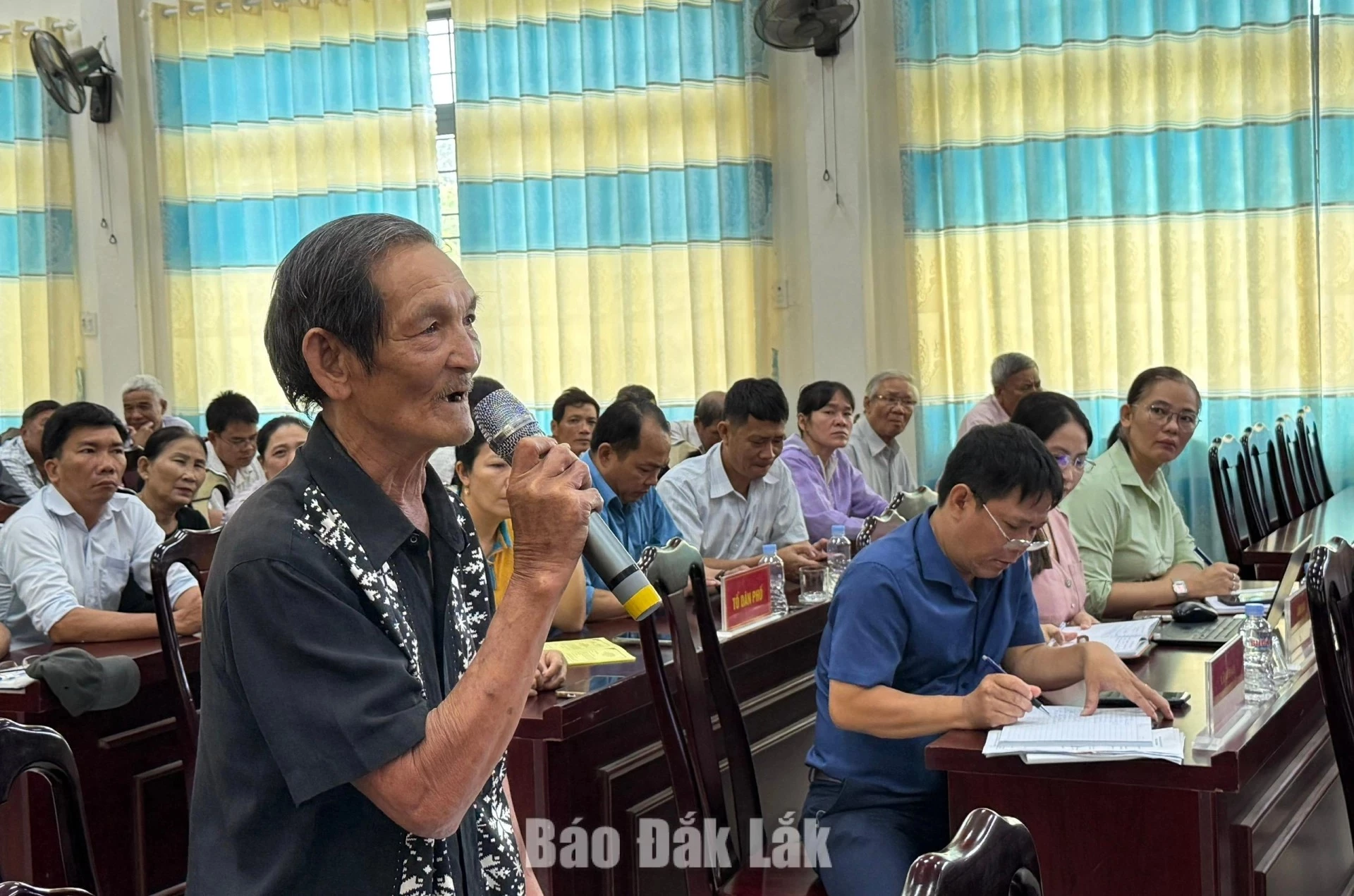 |
| Residents of Binh Kien Ward contributing their opinions on local development at the “Month of Listening to the People” forum. |
Similarly, in Son Phuoc Hamlet, Son Hoa Commune, an environmental protection model born of efforts to raise each resident’s sense of responsibility has brought households closer together. The model has encouraged greater mutual support and a stronger sense of responsibility among households towards the community. This shared commitment has helped keep small but meaningful actions going regularly, gradually turning them into positive community habits.
Mr. Nguyen Chi Phuong, whose household is among the 747 participating in the model, said what matters most is that residents are becoming increasingly conscious of protecting their living environment. Not only do they act of their own accord, but they also remind one another to get involved.
The spirit of volunteering for the common good is also evident in the story of Mr. La Chi Tam, Head of the Fatherland Front Working Committee in Phu Dong Hamlet, Phu Mo Commune, who donated more than 1.2 hectares of his family's land for public works. Having been involved in grassroots activities for more than 20 years, he has always believed that anyone seeking to mobilise residents must first lead by example. His donation has not only facilitated community projects but also spread a sense of responsibility and strengthened consensus among local residents.
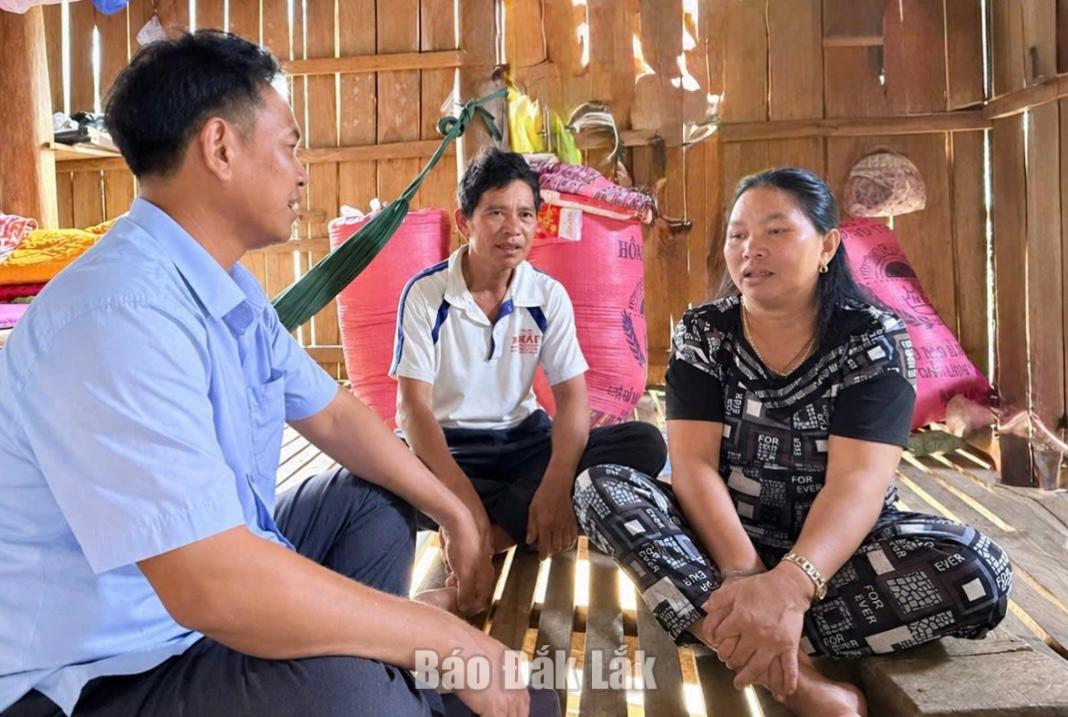 |
| Mr. La Chi Tam (left) visiting residents to listen to their concerns and help resolve problems for local development. |
According to the provincial VFF Committee, recent campaigns and patriotic emulation movements have increasingly focused on practical issues affecting communities. Notably, the environmental protection movement has drawn more than 87,500 participants across 1,600 clean-up campaigns, collecting 147,600 cubic metres of waste. The province has 1,546 Fatherland Front Working Committees in residential areas, which maintain 272 cultural, arts, fitness combined with sports models and clubs, as well as numerous self-management initiatives covering public security along with order, environmental protection, and the building of bright, green, clean as well as beautiful residential areas.
Alongside mobilising residents to participate in these movements, the provincial VFF has prioritised improving livelihoods while strengthening public trust and community ties. According to Mr. Tran Huu The, Member of the Provincial Party Standing Committee and Standing Vice President of the provincial VFF, the VFF at all levels has played a core role in consolidating the great national unity bloc as well as bringing together people from all walks of life to carry out local political tasks. For the strength of great national unity to be fully harnessed, the Front's activities must focus on residential areas and be rooted in the legitimate needs alongside interests of the people. They must also foster voluntary participation, a sense of responsibility and self-governance within each community. Accordingly, the Front at all levels must continue to renew its methods, promote the role of VFF Working Committees, prestigious community figures coupled with outstanding individuals, and promptly identify as well as replicate effective models and creative practices suited to the characteristics of each locality.
Translated by KHUONG THAO