
The Dak Lak PPC has held a meeting to review the draft Dak Lak Digital Economy Development Project for 2026 - 2030, with a vision to 2045.
Under the draft project, the province aims for the digital economy to account for at least 30% of GRDP by 2030, with it’s the digital economy’s share in each key industry and sector targeted at a minimum of 20%; 100% of the province’s shared and specialised databases to be digitised, connected and shared; 5G coverage to reach 99% of the population; and at least 95% of the working-age population to receive basic digital skills training.
With a vision to 2045, the digital economy is expected to become the province’s primary development model, accounting for at least 50% of GRDP. The province aims to rank among localities with advanced digital economies and become a regional hub for green data centres and digital services in the Central Highlands and South Central Coast.
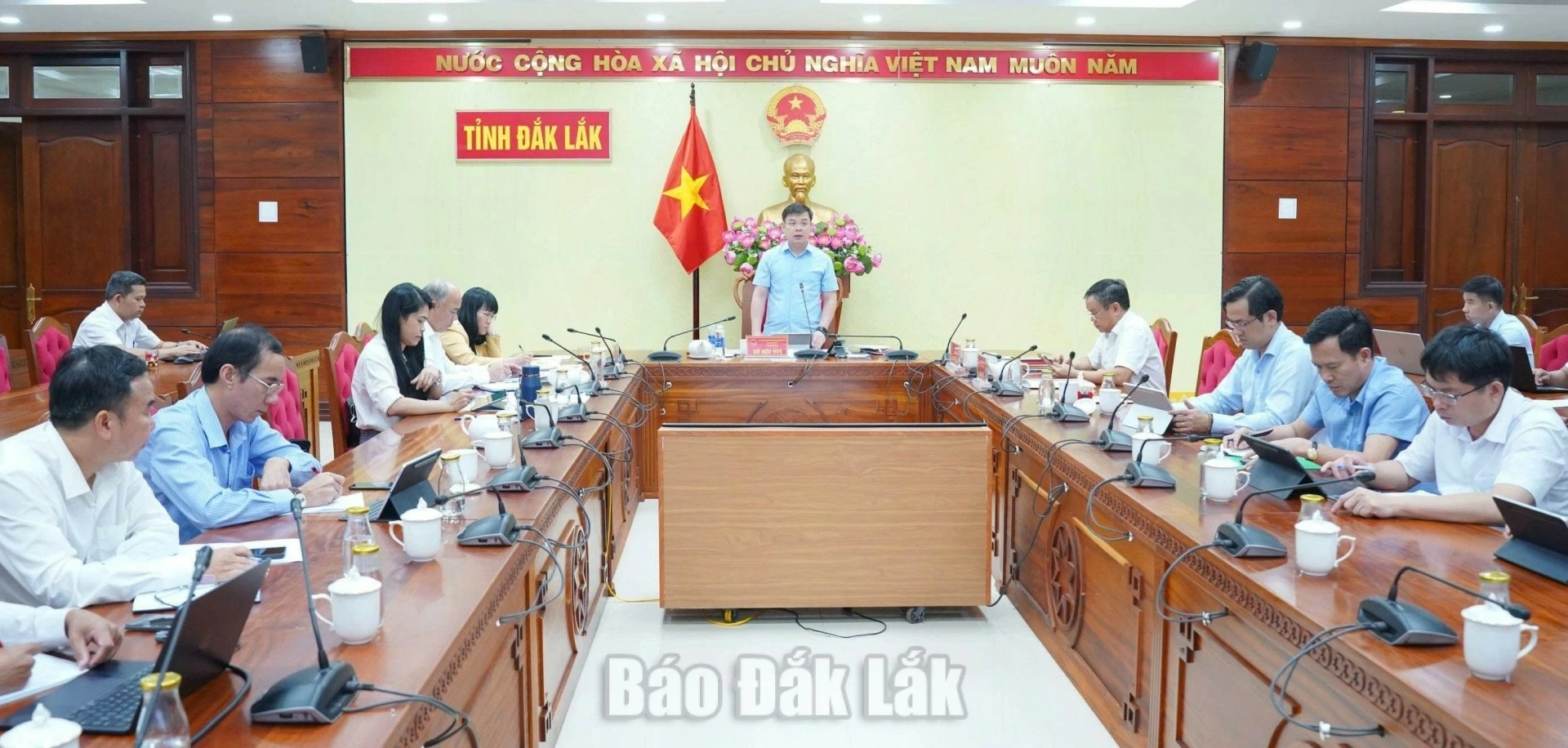 |
| Dak Lak PPC Chairman, comrade Do Huu Huy chairing the meeting. |
The project sets out a range of tasks and solutions to improve institutions, mechanisms and policies; develop digital infrastructure, digital data and the core ICT digital economy; promote digital spillovers across economic sectors; develop digital enterprises and digital human resources; ensure cybersecurity; as well as raise awareness, strengthen communications and expand cooperation.
At the meeting, delegates discussed the shift from an output-based development model to one driven by data and technology; solutions to resource constraints to generate tangible economic value; and development of a centralised dashboard for monitoring as well as managing the digital economy.
Concluding the meeting, PPC Chairman Do Huu Huy requested the agency in charge of advising on the project to first reach agreement on the officially published digital economy data as a basis for finalising the project. The project must ensure feasibility under the “six clear” principle: clear people, clear tasks, clear timelines, clear responsibilities, clear authority and clear outcomes. Each task must have a clearly designated lead agency and specific deliverables. The plan must also assign tasks to each commune and ward.
The project should also set out specific solutions to attract and develop human resources for the digital economy, including training and capacity-building for relevant officials; establishing mechanisms for the State to coordinate with and commission schools, research institutes and enterprises; and strengthening cooperation with e-commerce platforms, data centres and other partners.
Translated by KHUONG THAO


