More than a year into implementation, Politburo Resolution No. 68-NQ/TW, dated May 4, 2025, on private-sector development, the resolution has generated positive impacts. Yet businesses still face numerous barriers that need to be cleared before the sector can achieve a stronger breakthrough.
According to Dr. Nguyen Duy Thuy, Director of the Institute for Social Sciences in the Central Region and Central Highlands, most private enterprises in Dak Lak, as well as across the Central Region alongside Central Highlands, are small and micro-sized businesses combined with household enterprises. Their limited scale translates into constraints in management, finance, human resources, technology, market access and participation in value chains. Institutional barriers remain, alongside cumbersome administrative procedures as well as difficulties with land access, financing, infrastructure, preferential policies and coordination among localities.
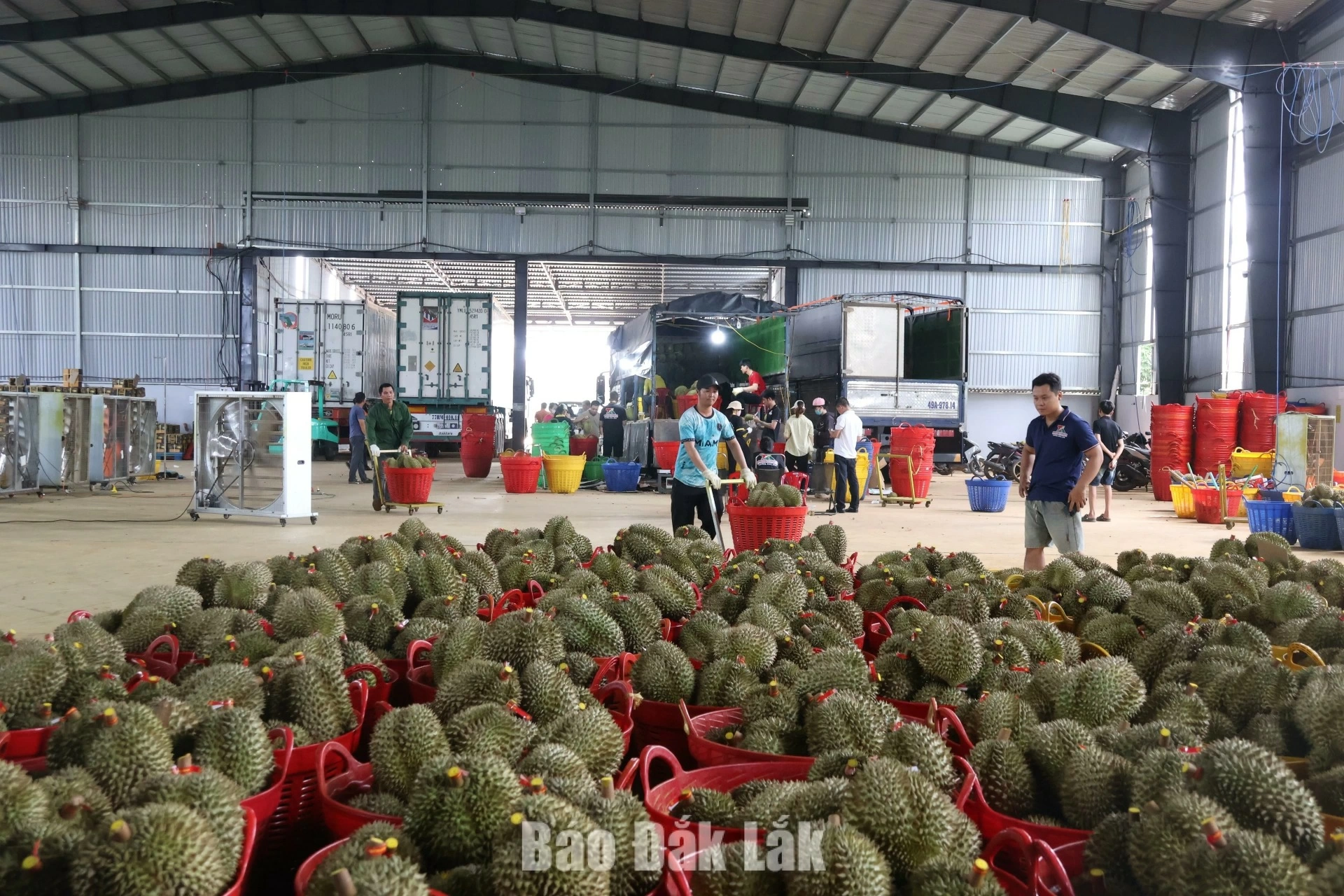 |
| Most private enterprises in Dak Lak Province, as well as across the Central Region and Central Highlands, being small or medium-sized. (Pictured: A durian trading together with export enterprise in Krong Pac Commune) |
Infrastructure, logistics together with market connectivity remain major bottlenecks. Limited infrastructure capacity, high logistics costs for agricultural products, and insufficient as well as scattered export-standard cold storage facilities continue to weigh on businesses. A shortage of large logistics providers and regional combined with inter-regional logistics hubs further limits competitiveness alongside market expansion.
Private-sector enterprises also struggle to secure land amid fragmented production areas and mismatched production-zone planning, while significant areas remain under individual households and small cooperatives.
Another barrier lies in competitiveness amid rapid digitalisation. Many businesses remain limited in customer development, policy forecasting, product innovation, science and technology adoption, innovation, digital transformation (DX) along with green transition. Small and micro businesses, meanwhile, often lack sufficient resources to capitalise on opportunities created by novel technologies.
Driving a breakthrough in private-sector development
Numerous experts believe that a changing development landscape is opening novel opportunities for the Central Region alongside Central Highlands through stronger highland-coastal connectivity, links connecting raw-material areas with processing facilities and seaports, border gates with markets, plus emerging economic corridors. Turning these advantages into tangible value will require appropriate mechanisms, infrastructure combined with forms of cooperation, while businesses should develop in line with economic spaces, corridors, value chains and broader business ecosystems.
According to Mr. Nguyen Van Hanh, Director of Hai Lam Enterprise Solutions Consulting Co., Ltd., the private sector needs stronger competitiveness, innovation capacity as well as DX capabilities. The State should support businesses in applying digital technologies to management, production, traceability, marketing and e-commerce, while encouraging product innovation, process improvements and higher product quality.
Relevant authorities should help small coupled with medium-sized enterprises access technology consulting, digital platforms, market data plus modern management tools. Simultaneously, efforts should focus on developing several large private enterprises capable of leading value chains.
At a broader regional level, Central Highlands and Central Region provinces need to develop innovation ecosystems around key growth centres including Da Nang, Quy Nhon, Nha Trang together with Buon Ma Thuot. They should also leverage high-tech parks, concentrated IT zones, universities and research institutes to support businesses in technological innovation while strengthening their capacity to absorb as well as master emerging technologies.
Another solution proposed by experts and policymakers for Dak Lak, along with other Central Highlands and Central Region provinces, is to invest in transport infrastructure, logistics along with market connectivity. Priority should be given to inter-regional routes, warehouses, cold-storage facilities, logistics centres, post-harvest preservation facilities plus digital infrastructure, alongside locally tailored support policies.
Translated by HAI LOAN