Alongside efforts to improve flood prevention infrastructure for residents, Dak Lak is comprehensively revising its disaster prevention and response plans for 2026. Rather than responding reactively to disasters, localities are shifting towards proactive risk management aimed at minimising damage.
According to the Dak Lak Provincial Hydrometeorological Station, extreme and unpredictable weather is expected during the final months of 2026. The province has therefore drawn up detailed disaster response scenarios.
Comrade Luong Nguyen Minh Triet, Member of the Party Central Committee, Secretary of the Provincial Party Committee and Head of the Provincial National Assembly Delegation, noted that the province faced a major challenge in managing two contrasting weather patterns simultaneously: when the western part enters the flood season, the east experiences drought, along with vice versa. The guiding principle is to stay one step ahead, with protecting people's lives as the top priority.
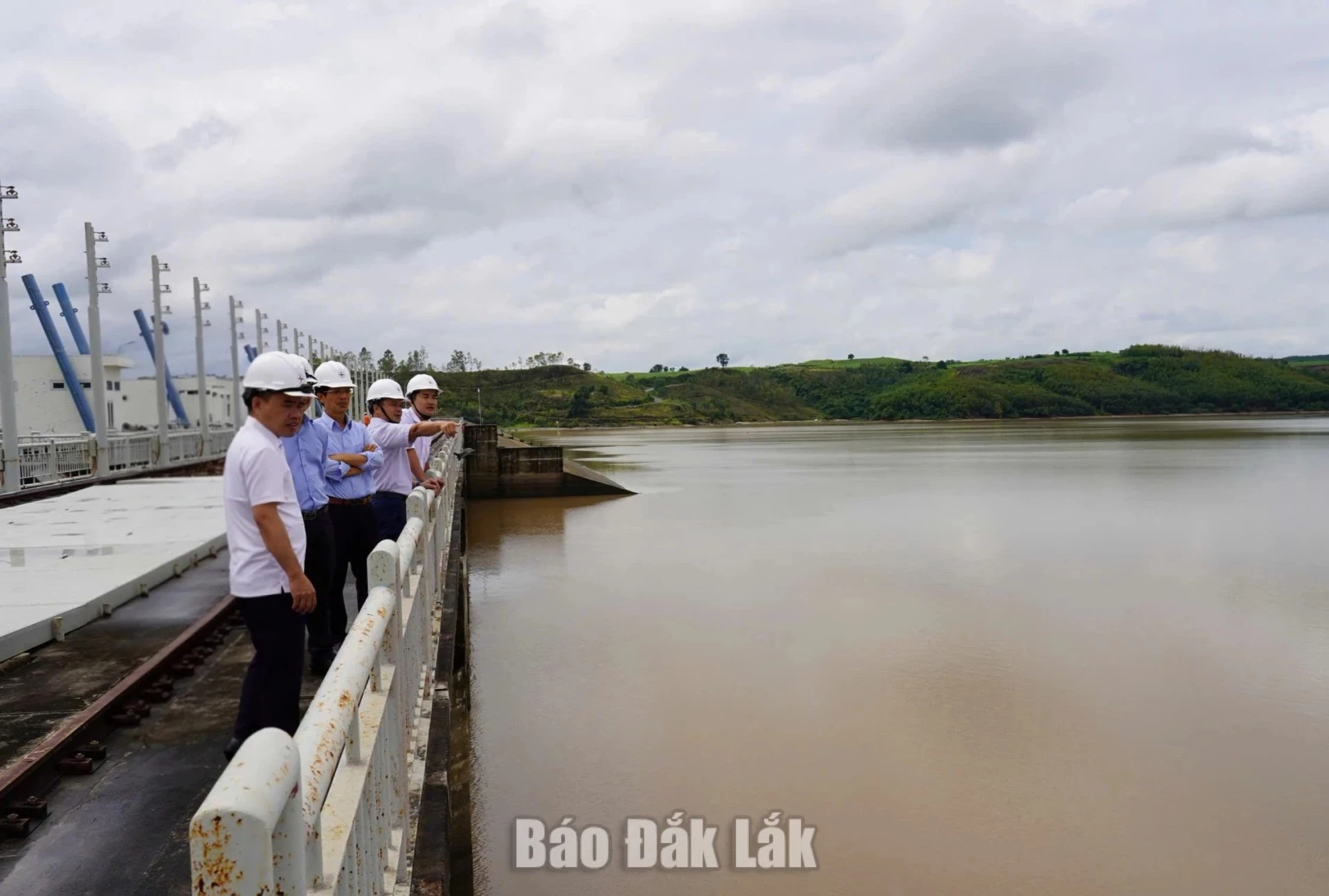 |
| An inspection team from the Department of Industry and Trade together with the Ministry of Industry and Trade inspecting Song Ba Ha Hydropower Plant. |
To translate these tasks into action, all 102 communes and wards are updating detailed response plans down to the village coupled with hamlet level under the “six clarities” principle: clearly identifying hazardous areas, commanders, response forces and equipment, evacuation routes, warning procedures alongside response times.
Yang Mao Commune has complex mountainous terrain and regularly faces hazardous weather during the rainy season, including heavy rain, flash floods combined with landslides. According to Mr. Vo Tan Truc, Chairman of the Commune People's Committee, the locality is strictly implementing the “four on-the-spot” principle, while adhering to the approach centred on “proactive prevention, timely response, and swift as well as effective recovery”.
Proactive risk management
Reducing risks before floods occur requires particular attention to the safety of 658 dams and reservoirs province-wide. Inspections by the relevant authorities identified damage components at 150 dams coupled with reservoirs.
The province has also recorded more than 100 potential landslide sites and 10 dams alongside reservoirs deemed unsafe. To address these risks before the peak rainy and flood season, it has declared emergency situations covering eight task categories, including repairing erosion along the Krong Ana River together with addressing safety concerns at Ea Tir Reservoir.
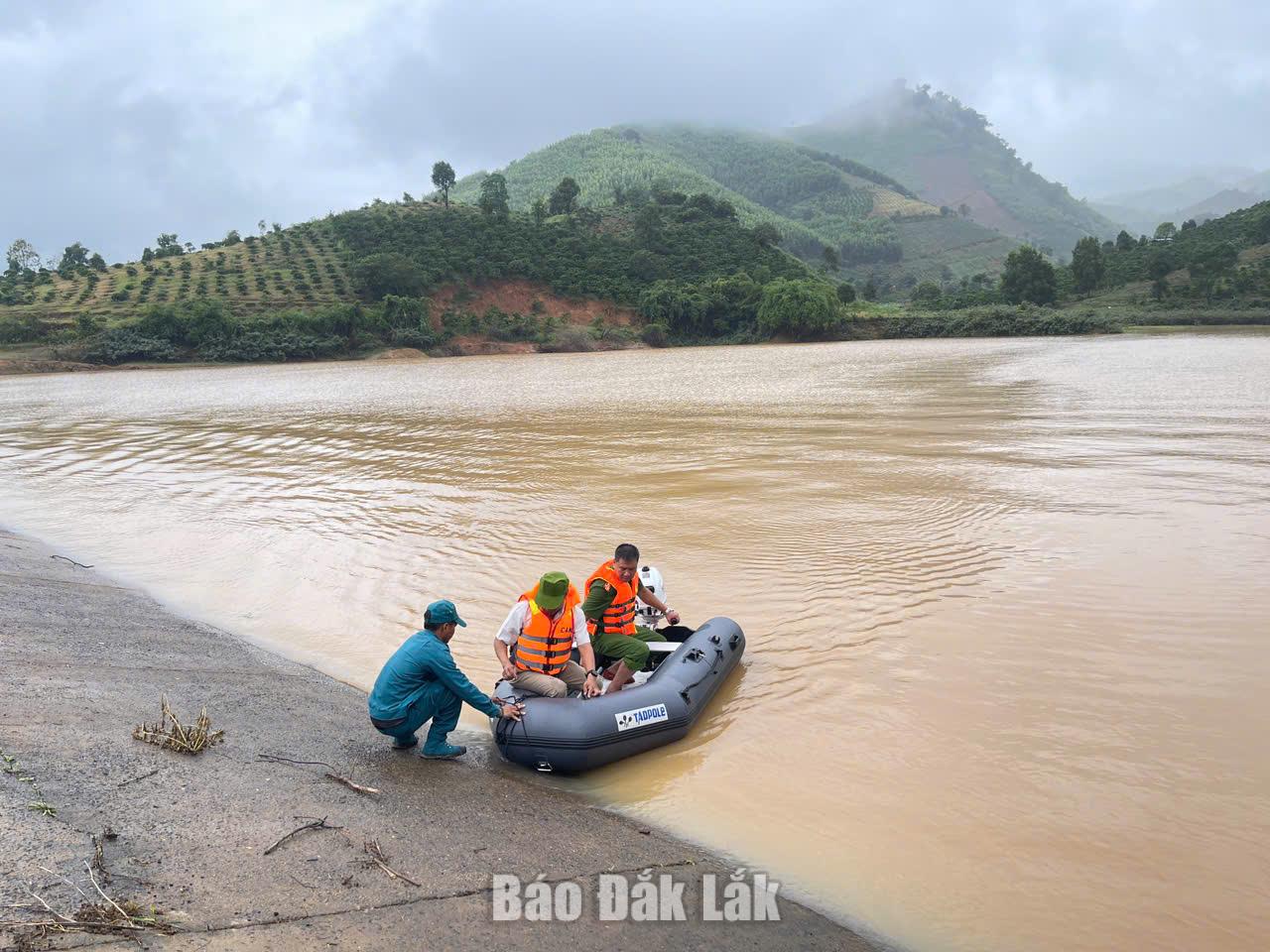 |
| Yang Mao Commune police officers conducting a trial run of a motorised boat. |
Ea Tir Reservoir in Ea Knuec Commune has been prioritised for funding to expedite repairs. Warning signs are being installed at hazardous locations, while weather conditions are being closely monitored to inform response planning.
For downstream areas, the reservoir operator has asked the Ea Knuec Commune People's Committee to coordinate public information efforts and mark hazardous areas, enabling residents to take precautions while farming around the reservoir.
Mr. Chau Dinh Quoc, Deputy General Director of Song Ba Ha Hydropower JSC, said: “This year, we have expanded our flood warning system into a multiple-layered network, including 33 remote warning stations in downstream areas. Since August 2026, the company has contracted a service to send SMS flood alerts to residents on both banks of the Ba River. The company has also arranged for flood regulation announcements to be broadcast through the public address system and provided handheld loudspeakers to trusted community representatives so they can relay information directly to residents...”
The PPC has also required local authorities, reservoir operators and relevant agencies to coordinate closely as well as implement response plans tailored to each risk level. When heavy rain is forecast, the relevant authorities and reservoir operators must coordinate assessments alongside proactively lower water levels to appropriate point to accommodate incoming floodwaters, rather than waiting for water levels to rise before regulating discharge. Above all, residents must receive timely information to protect their lives and property as well as reduce risks before floods arrive.
Communes coupled with wards frequently affected by flooding must prioritise six key tasks before the storm and flood season. These include completing flood maps, establishing warning systems capable of reaching every household even during power outages alongside network disruptions, and conducting practical drills.
PPC Vice Chairman, comrade Nguyen Thien Van
Translated by KHUONG THAO