More than places of worship, Sac Tu Khai Doan Pagoda along with Mang Lang Church stand as vivid testaments to unique cultural and architectural exchanges.
Sac Tu Khai Doan Pagoda – a distinctive architectural legacy
Sac Tu Khai Doan Pagoda in Buon Ma Thuot Ward holds a special place in Vietnamese Buddhism history, having been the last pagoda to receive royal recognition under the Nguyen Dynasty.
The pagoda was built in 1951 on a site spanning more than seven hectares. Its most striking feature is the main sanctuary. Construction of the hall began in 1953, and the structure reflects a remarkably creative architectural vision, harmoniously blending the indigenous stilt-house style of the Ede people in the Central Highlands with the traditional rường-house architecture associated with the imperial city of Hue.
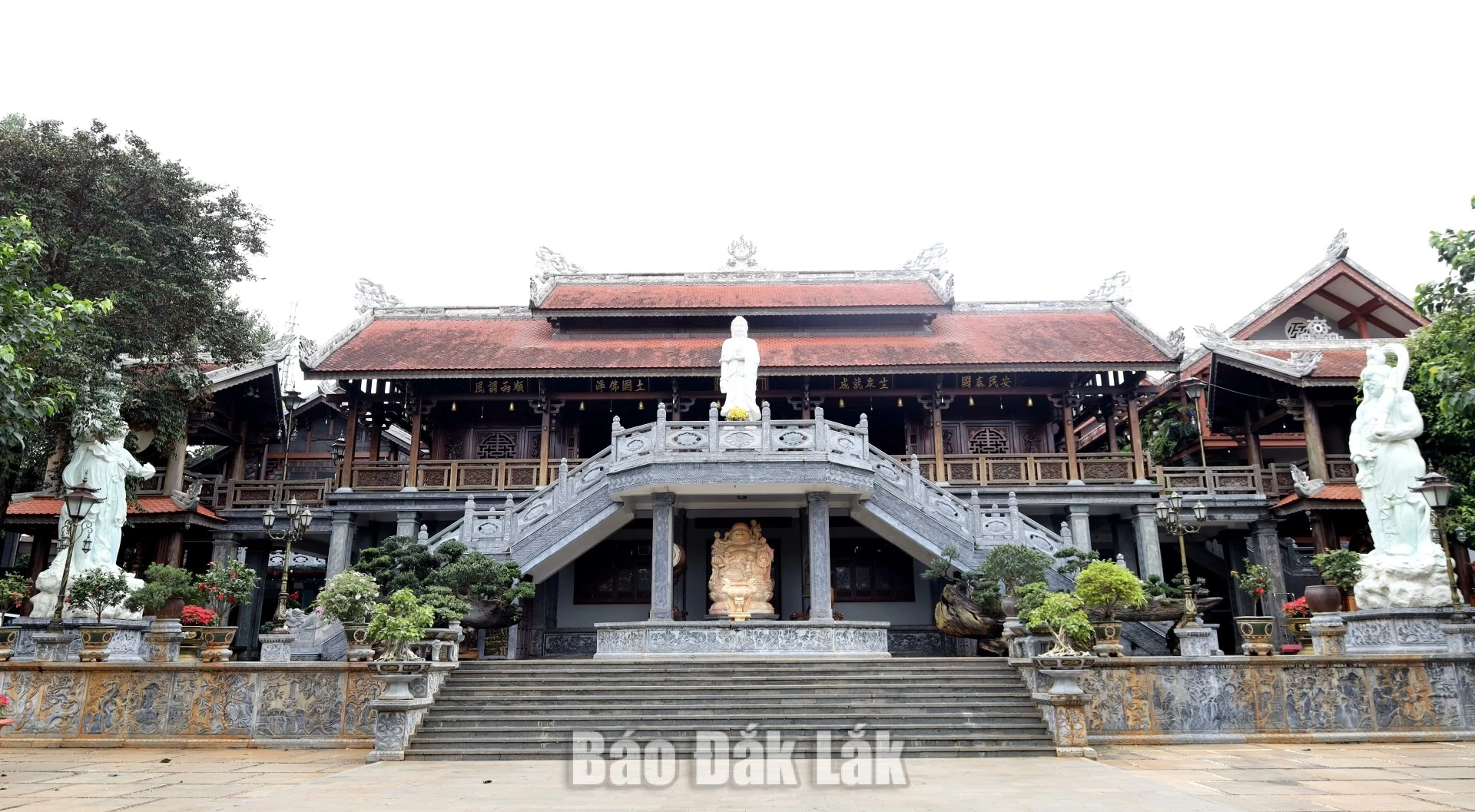 |
| The main sanctuary of Sac Tu Khai Doan Pagoda featuring a distinctive architectural style. |
After more than half a century alongside several rounds of renovation and structural expansion, Sac Tu Khai Doan Pagoda has largely retained its original architectural character – at once ancient as well as solemn in keeping with the Buddhist spirit, yet open and evocative of the Central Highlands landscape.
Venerable Thich Minh Phuong said Sac Tu Khai Doan Pagoda is the largest Buddhist centre in Dak Lak Province and the Central Highlands. It regularly hosts a wide range of religious, cultural combined with social activities, including major Buddhist ceremonies, provincial Buddhist congresses, retreats and Buddhist study programmes, as well as charitable and social welfare activities.
Viet Nam’s oldest Catholic church
At 134 years old, Mang Lang Church in Tuy An Dong Commune is one of the oldest Catholic churches in Viet Nam. More than a century after its construction, the church still preserves distinctive features of classical European architecture while remaining closely associated with an important milestone in the formation and development of the modern Vietnamese script.
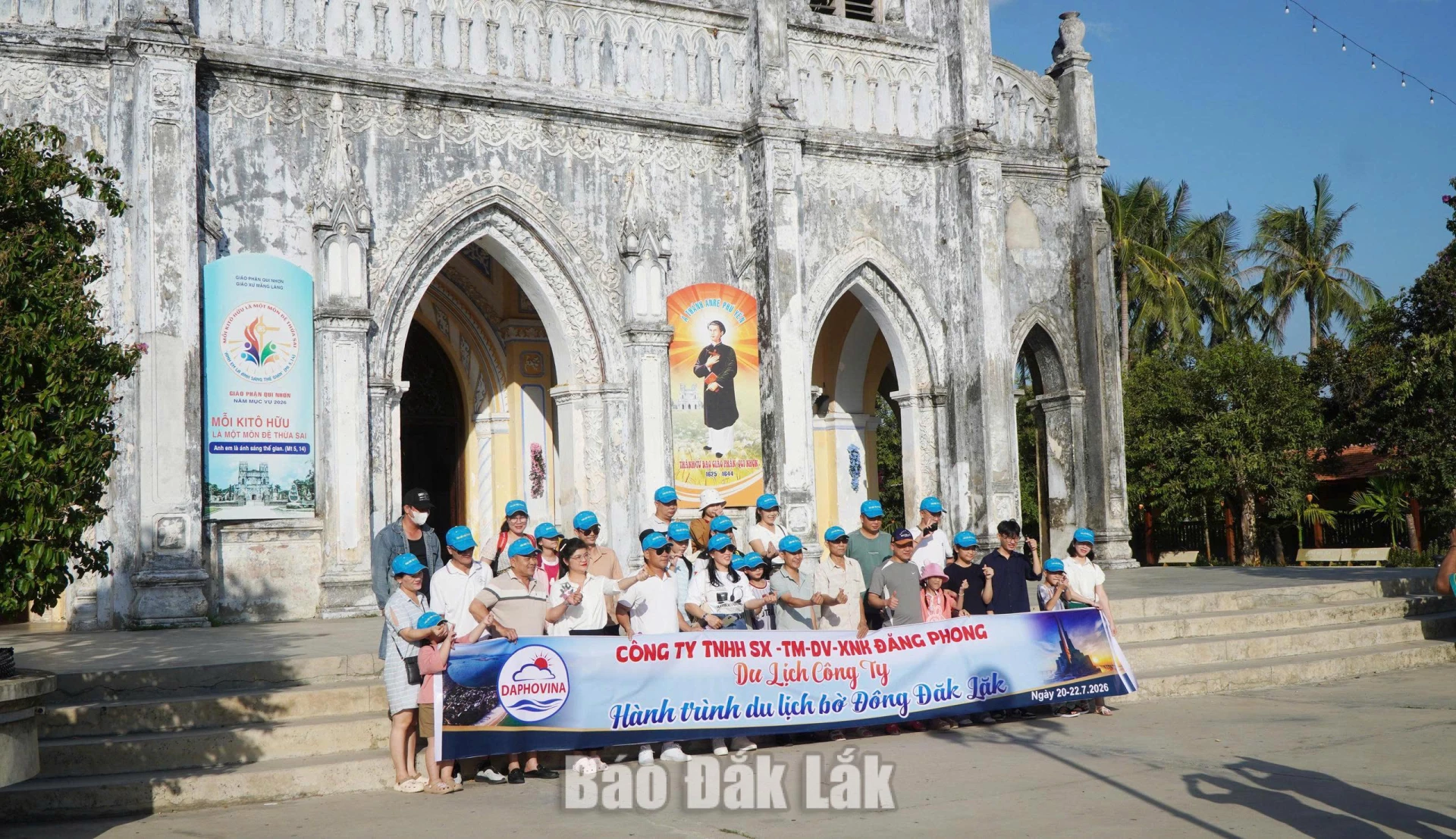 |
| Mang Lang Church being a popular tourist attraction for visitors to eastern Dak Lak. |
Priest Huynh Cong Han said the church covers 920 square metres and was built in the Gothic style, with a strong European influence. Simultaneously, Vietnamese cultural elements can still be seen in the decorative patterns carved into its wooden doors. The church has undergone four major restorations, including repairs following a typhoon in 1924, as well as was reinforced with a steel frame. Maintenance has otherwise been kept to a minimum in an effort to preserve its original, rustic architectural character.
“The church has set aside an ancient and solemn space for displaying the catechism Cathechismus, also known as Eight-Day Catechism. This is considered the first book in romanised Vietnamese script, published in Rome, Italy, in 1651,” Priest Huynh Cong Han added.
Beyond its role as a place of worship, Mang Lang Church has increasingly become an attractive cultural and community-based tourism destination for visitors exploring eastern Dak Lak. Every year, large numbers of visitors from within coupled with outside the province come to admire its historic architecture and learn about the cultural together with historical values preserved there for more than a century.
The harmonious coexistence of religious life with cultural, architectural and historical values has enabled Sac Tu Khai Doan Pagoda coupled with Mang Lang Church to transcend their roles as religious institutions and become an integral part of local cultural alongside spiritual life. In doing so, they help spread the positive values of religion within the community while contributing to local culture and tourism development.
Translated by THAO LINH