The growing demand for healthcare is creating novel opportunities for expanding medical services. In Dak Lak province, beyond improving public access to advanced medical techniques, enhancing this supply capacity facilitates spreading its operation scale combined with increasing overall value for the healthcare sector.
There are currently 9,410 hospital beds province-wide, a ratio of 31.5 beds per 10,000 people, along with 9.06 doctors per 10,000 people. The healthcare network comprises provincial-level hospitals, regional medical centers, commune and ward-level health stations, private medical facilities. Since the beginning of the year, over 3.3 million outpatient visits together with more than 400,000 inpatient admissions have been recorded. The situation requires continuous improvement in service quality while ensuring the efficient utilization in facilities, equipment, as well as human resources.
Alongside routine medical care, periodic health check-ups coupled with screening programmes planned for the 2026-2030 period, are driving a shift in the approach to public healthcare.
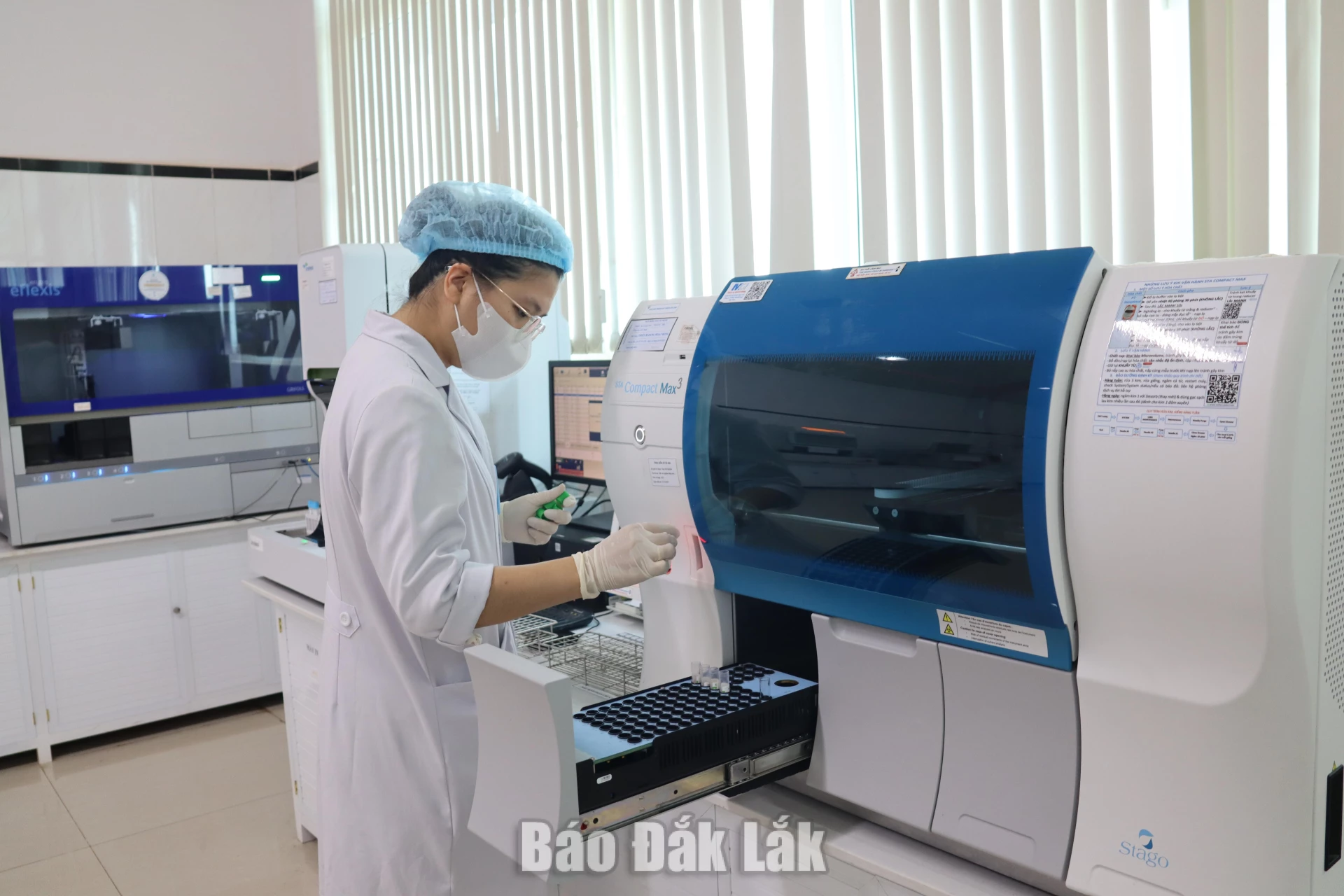 |
| The Level 4-standard laboratory at the Central Highlands Regional General Hospital contributing to strengthening diagnostic capabilities, treatment quality, and advancing specialized medical services. |
Mr. Nay Phi La, Director of the Dak Lak Department of Health, stated that by leveraging existing strengths, the province is steering its healthcare sector toward the model “Modern healthcare - Smart healthcare - Sustainable healthcare economy”. Beyond strengthening specialized medical care, the province has identified rehabilitation, traditional medicine, indigenous medicinal resources, health-focused tourism as areas with significant growth potential. While there is significant room for development, the healthcare sector continues to face challenges regarding human resources, infrastructure, investment capital. A review conducted in June 2026 revealed that 85 out of 102 local health stations lacked the required number of physicians. Simultaneously, demand is rising for investment in medical equipment, advancing specialized technical capabilities, in conjunction with upgrading IT infrastructure.
Regarding public investment, the disbursement rate for 2025 funds, extending into 2026, has reached only 17.3%. Several projects are still facing obstacles related to investment procedures, construction, bidding, payment processes. Furthermore, mobilizing social resources for high-quality healthcare services, rehabilitation, health tourism, medicinal herb sector have also fallen short of expectations.
These challenges show that enhancing the healthcare sector requires a comprehensive approach to addressing issues concerning financial mechanisms, human resources, infrastructure, together with investment efficiency.
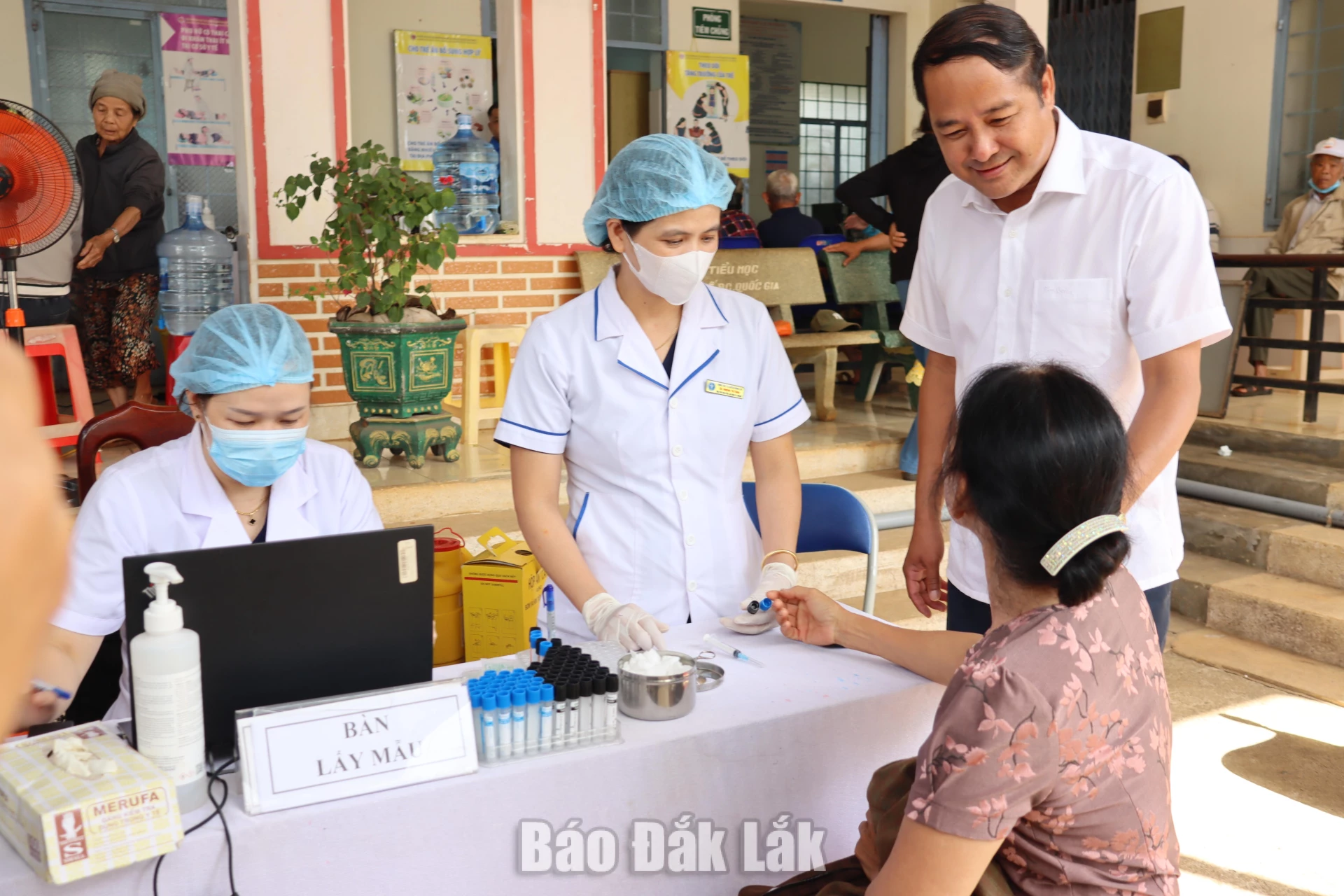 |
| PPC Vice Chairman, comrade Y Nhuan Bya inspecting the periodic health check-up process for residents. |
Emphasizing the need to improve the public healthcare quality alongside effectiveness, aligned with the goal of achieving double-digit economic growth for the 2026-2030 period, comrade Ho Thi Nguyen Thao, the PPC Permanent Vice Chairwoman, urged the healthcare sector to continue strengthening the primary healthcare system, enhancing medical examination and treatment quality, developing specialized health services, consolidating preventive medicine, proactively managing community health. She also called for effectively utilizing resources, increasing investment attraction efforts, identifying growth drivers, while concreting tasks along with solutions for the remaining months of 2026.
Additionally, the priority must be placed on developing the healthcare workforce, improving the operational efficiency across medical facilities, accelerating comprehensive digital transformation. Efforts are focused on speeding up priority tasks coupled with projects, enhancing data connectivity alongside sharing, while ensuring synchronized, efficient investment. This approach aims to gradually improve service delivery capacity, better meet the public healthcare needs, as well as leverage the health sector role in the provincial socio-eco development.
Translated by TRINH THUY