The collective economic sector, with cooperatives as its core, has been increasingly asserting its role in the socio-eco development of Dak Lak province, especially in agriculture and new rural growth.
Identifying limitations
According to the Provincial Steering Committee for the Collective Economy Development, in 2025, the provincial collective economic sector continued to maintain stable growth, with multiple indicators meeting and surpassing targets. The province established 80 new cooperatives, bringing the total to over 1,220 ones, involving approximately 183,000 members as well as 27,000 workers. Average revenue reached roughly 2.7 billion VND/cooperative annually; average profit at 320 million VND/cooperative; and average member income at about 68 million VND/year.
 |
| The cooperative economic zone, with large-scale model fields promoting the science and technology application in production, emerging as a strong development trend for cooperatives. |
The operation quality of cooperatives has been also gradually improving significantly. Many cooperatives have proactively transformed their production methods, boldly applying science and technology (S&T), while developing products aligned with VietGAP and OCOP standards, thereby increasing the value of local agricultural products. However, the collective economic sector in the province is still facing many “bottlenecks” that need to be removed.
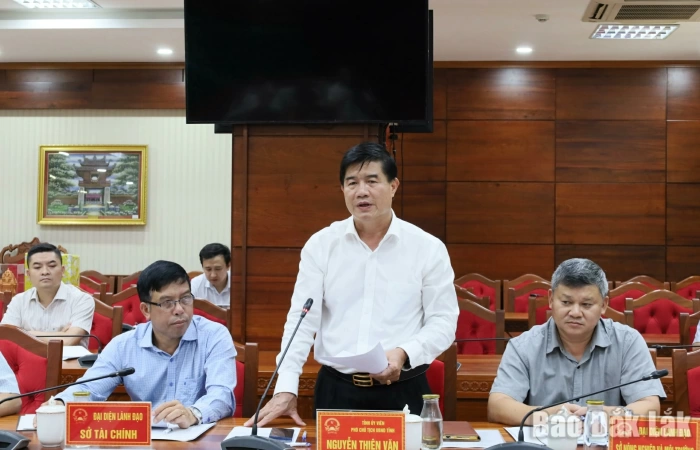
According to Mr. Nguyen Danh Thang, Deputy Director of the Department of Finance, the biggest limitation currently is that the production scale of many cooperatives is still small and fragmented, resulting in low competitiveness alongside weak alignment with market demand. The linkage between production and consumption remain unsustainable. Many linkage models are still spontaneous, lacking legal binding, as well as risky. Moreover, the lack of capital and difficulty accessing credit also directly affects the ability of cooperatives to expand production combined with business.
From an organizational perspective, Mr. Huynh Bai, Chairman of the Provincial Cooperative Union, said that the quality of human resources remains an inherent weakness of many cooperatives. The management team is limited in professional qualifications, lacks market-based management skills, and has not kept pace with the development requirements in the new context. Even the Provincial Cooperative Union is facing difficulties in terms of specialized human resources, lacking a team of experts with sufficient capacity to advise along with support cooperatives in a systematic and effective manner.
Promoting development in the new phase
Dak Lak province is orienting the cooperative economy development in the coming period towards dynamism, efficiency, and sustainability, linked to digital transformation together with economic integration. By 2026, the province aims to establish 75 new cooperatives, bringing the total to approximately 1,325 cooperatives, with more than 195,000 members participating. Average revenue is expected to reach 2.8 billion VND/cooperative annually; while worker income is expected to reach around 75 million VND/year.
 |
| Some cooperative models developing experiential tourism opening up new directions in exploiting economic potential associated with tourism while preserving traditional cultural values. |
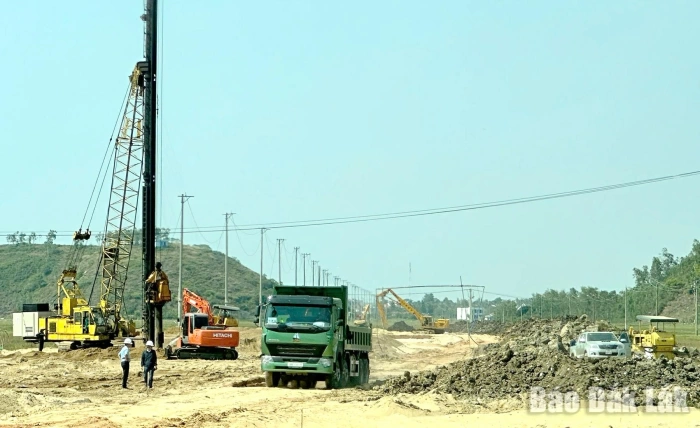
To realize this goal, the Provincial Steering Committee for the Development of the Cooperative Economy has identified the need to continue improving the system of support mechanisms and policies, with a focus on developing a new resolution for the 2026-2030 period in accordance with the 2023 Cooperative Law. Simultaneously, it aims to increase the allocation of budget resources to support infrastructure development, capital, trade promotion, and the S&T transfer to cooperatives.
The province sets a target of at least 25% of cooperative managers holding college or university degrees; while promoting high-tech application, striving to have approximately 210 agricultural cooperatives applying advanced technology in production.
Another important task is to promote value chain linkages, with the goal of having approximately 350 cooperatives linked with businesses in production and product consumption; as well as to build and replicate exemplary along with effective cooperative models.
At the macro level, the province also requested the Central government to pay attention to allocating capital to support infrastructure development, especially rural transportation and processing facilities; alongside to remove land-related obstacles so that cooperatives can conveniently implement investment projects and expand production scale.
Translated by TRINH THUY