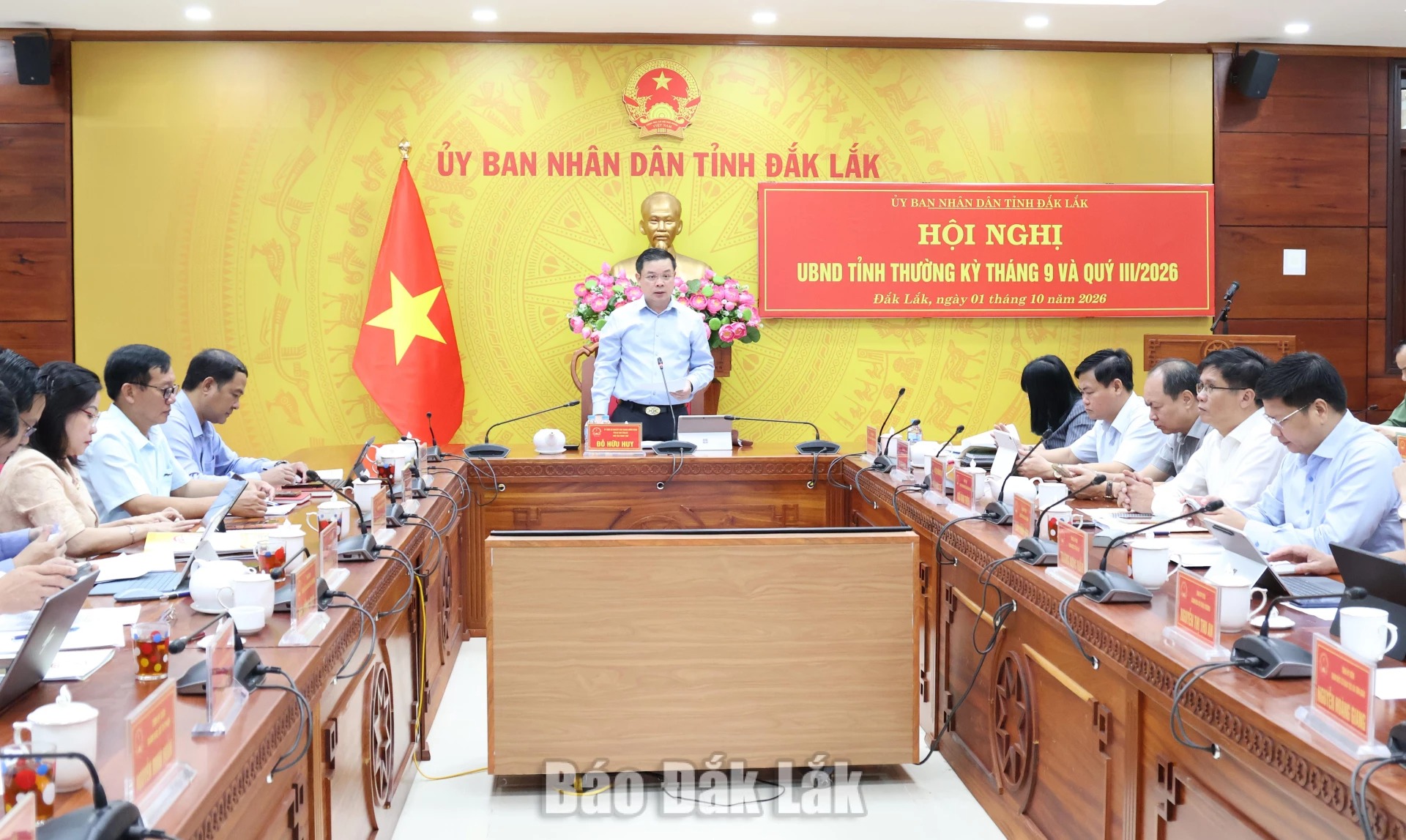
The PPC recently held a meeting to hear a report on the Project for Digital Economy Development in Dak Lak Province for 2026 - 2030, with a vision to 2045 (the Project).
The Project focuses on developing the digital economy across three components: the core digital economy; the digital economy in industries and sectors; as well as new data-driven digital economy models. Dak Lak aims to make the digital economy a key growth driver and turn the province into a digital economy growth pole in the Central Highlands.
By 2030, the digital economy is targeted to account for at least 30 % of GRDP; 100 % of the provincial shared and specialised databases are to be digitised, connected and shared; 5G coverage is expected to reach 99 % of the population alongside more than 99 % of commune- and ward-level centres; along with more than 80 % of small and medium-sized enterprises are expected to use digital platforms.
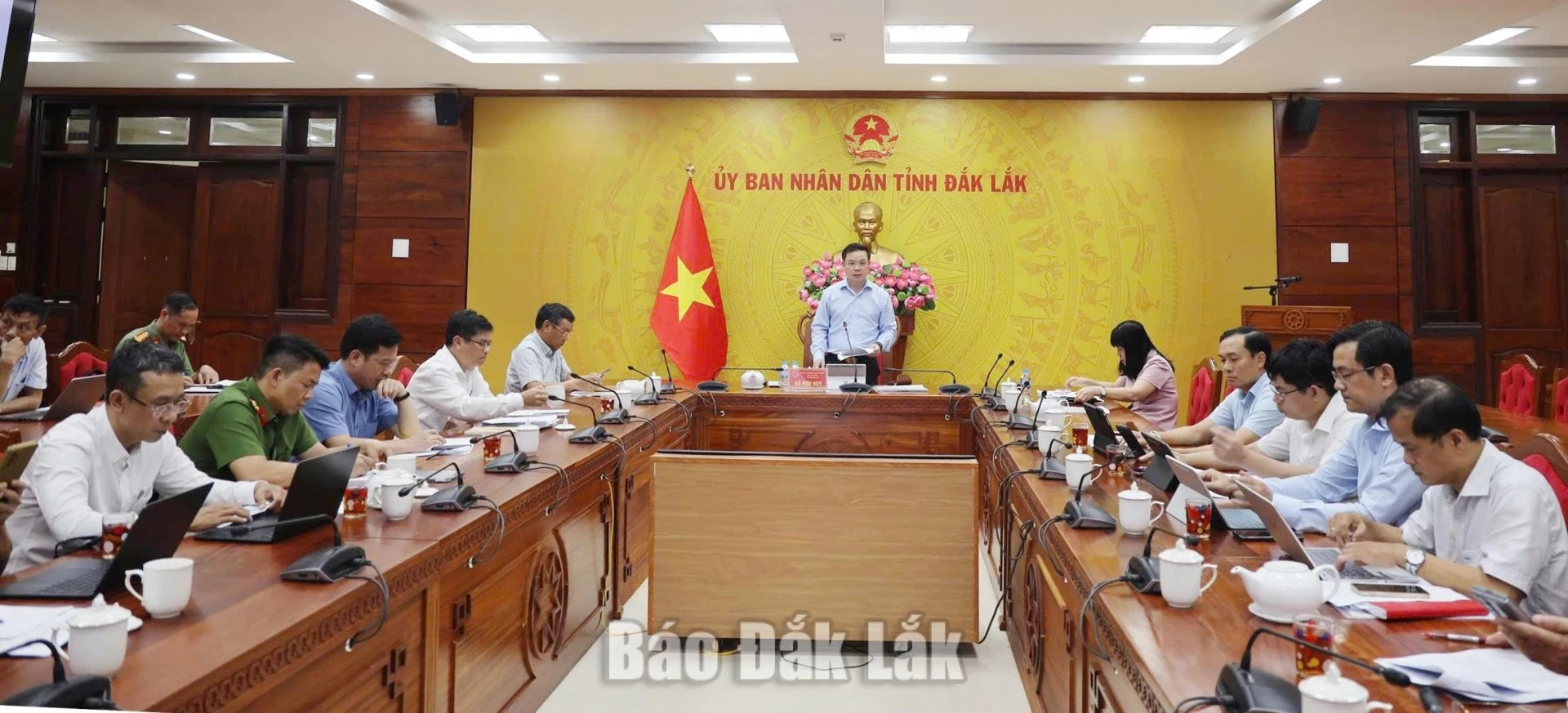 |
| Provincial leader chairing the meeting. |
The Project sets out tasks together with solutions for improving institutions and digital governance; developing digital infrastructure coupled with shared databases; promoting AI applications and ensuring cybersecurity; developing digital enterprises as well as human resources; while advancing the digital economy across industries and sectors through breakthrough areas.
At the meeting, leaders of departments, sectors along with agencies discussed the legal framework, current situation, targets, tasks, resources and roadmap for digital economy development during 2026 - 2030.
Concluding the meeting, Alternate Member of the Party Central Committee, Deputy Secretary of the Provincial Party Committee and PPC Chairman, comrade Do Huu Huy stressed that the Project must be developed to a high standard, with strong feasibility alongside without vague or generalised targets. The provincial leader asked the Department of Science and Technology, as the lead agency, along with the consulting unit to incorporate opinions raised at the meeting and review as well as finalise the Project in line with the provincial requirements.
The drafting process should be based on data and databases relating to the digital economy, while effective models that could be applied locally should also be studied. The Project must set out specific quantities alongside outputs linked to the tasks of agencies, units and localities. On that basis, it should clearly identify the provincial advantages to attract investment in the digital economy as well as develop industries, sectors and products towards higher value.
Translated by HAI LOAN